
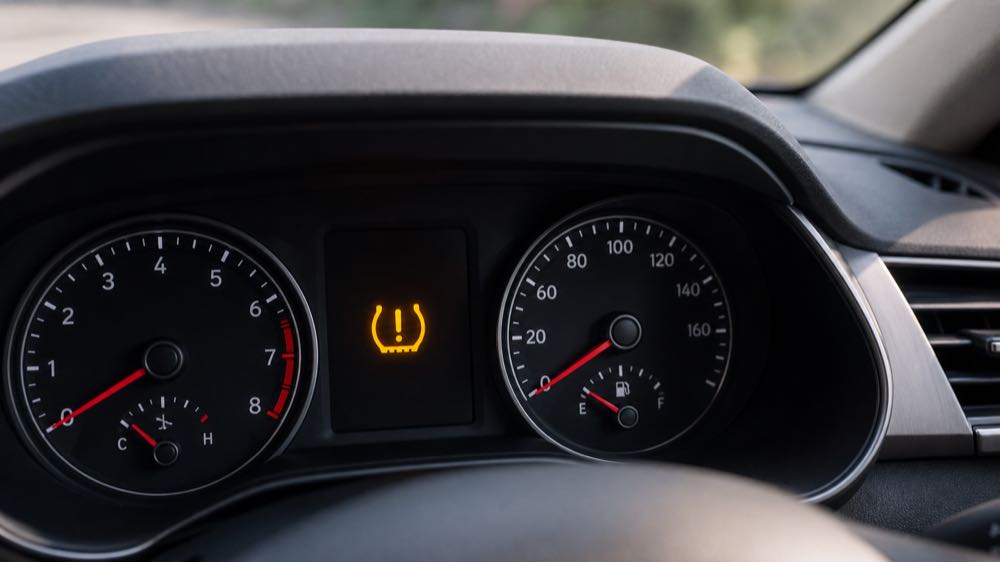
The TPMS light is one of the common dashboard warning lights and means your tire pressure monitoring system has detected low tire pressure or a system problem. Most of the time, a solid TPMS light means one or more tires need air. A flashing TPMS light often points to a sensor or system fault.
Do not ignore it. Underinflated tires can overheat, wear unevenly, reduce fuel economy, and make the car harder to control during braking or emergency steering.
Solid vs Flashing TPMS Light
Start by watching how the light behaves.
| TPMS Light Behavior | What It Usually Means | What to Do |
|---|---|---|
| Solid light stays on | One or more tires may be low | Check all tire pressures |
| Light flashes then stays on | TPMS sensor or system fault | Check pressure, then diagnose sensor |
| Light comes on in cold weather | Pressure dropped as temperature fell | Inflate to recommended PSI |
| Light returns after adding air | Slow leak or wrong pressure | Inspect tires for leaks |
| Light stays on after tire service | Sensor reset/relearn may be needed | Follow vehicle reset procedure |
What to Do First
If the TPMS light comes on:
- Find a safe place to stop.
- Visually check tires for obvious flats or damage.
- Use a tire pressure gauge.
- Check pressure when tires are cold if possible.
- Inflate to the PSI listed on the driver door placard.
- Recheck after driving a short distance.
- Inspect for leaks if the light returns.
If a tire looks flat, do not keep driving on it. Pull over safely and use roadside assistance, a spare tire, or a tire repair option if appropriate.
Use the Door-Jamb PSI, Not the Tire Sidewall
The correct pressure for normal driving is usually listed on the driver door placard or in the owner’s manual. Do not inflate to the maximum PSI printed on the tire sidewall unless the vehicle manufacturer specifically calls for it.
The sidewall number is the tire’s maximum pressure rating, not the recommended pressure for your car.
Why Cold Tire Pressure Matters
Tire pressure changes with temperature. A tire checked after highway driving may read higher because heat raises pressure. A tire checked in the morning before driving gives a more accurate cold tire pressure reading.
Cold weather can also turn on the TPMS light because air pressure drops as temperature falls. If the light appears on a cold morning and the tires are not damaged, check and adjust pressure to the recommended PSI.
Common Causes of a TPMS Light
Low Tire Pressure
Low pressure is the most common reason. A tire may be underinflated because of normal air loss, temperature changes, or a small leak.
Even if the tire does not look flat, it can still be low enough to trigger the warning.
Slow Leak
A nail, screw, valve stem leak, bead leak, or damaged wheel can cause pressure to drop slowly. If the same tire keeps losing air, inspect it instead of adding air over and over.
Cold Weather
Temperature changes can lower tire pressure overnight. This is common in fall and winter. Inflate tires to the vehicle’s recommended cold PSI, then monitor whether the light returns.
TPMS Sensor Battery or Fault
TPMS sensors have batteries that can wear out over time. A flashing TPMS light may mean the sensor is not communicating correctly.
Sensor issues can also happen after tire replacement, wheel damage, or incorrect sensor programming.
Spare Tire Pressure
Some vehicles monitor the spare tire too. If the spare tire is low, the TPMS light may stay on even when the four road tires look fine.
Check your owner’s manual to see whether your vehicle monitors the spare.
Can You Drive With the TPMS Light On?
You may be able to drive carefully if the tires are not flat and pressure is only slightly low. But you should check pressure as soon as possible.
Do not keep driving if:
- a tire looks flat
- the car pulls strongly
- the steering feels unstable
- you hear thumping
- the tire sidewall looks damaged
- pressure drops again after inflation
Driving on a severely underinflated tire can damage the tire and increase blowout risk.
Why Low Tire Pressure Matters
Low tire pressure changes how the tire carries the weight of the vehicle. The sidewall flexes more, heat builds faster, and the tread may wear unevenly. That can reduce handling, braking stability, and tire life.
Overinflation is also a problem. Too much pressure can reduce the tire’s contact patch and make the ride harsher. The goal is not maximum pressure; the goal is the vehicle manufacturer’s recommended cold PSI.
How to Reset the TPMS Light
Some vehicles reset automatically after you inflate the tires and drive for a few minutes. Others require a reset button, dashboard menu, or sensor relearn procedure.
Do not reset the light before confirming tire pressure. Resetting the system with incorrect pressure can hide the real problem.
If the light flashes or returns quickly, the system may need sensor diagnosis.
TPMS Is Not a Replacement for Checking Tires
TPMS is a warning system, not a full tire-maintenance plan. It may not warn you until pressure is significantly low, and it may not catch every tire problem early.
Check tire pressure monthly, before long trips, and when seasons change. Also inspect tread depth, sidewall damage, uneven wear, and visible objects stuck in the tire.
When to Visit a Tire Shop or Mechanic
Get help if:
- the same tire keeps losing air
- the TPMS light flashes
- the light stays on after correct inflation
- a tire has sidewall damage
- you find a nail or screw near the sidewall
- the vehicle needs a TPMS relearn
- the sensor battery may be dead
A tire shop can check for leaks, sensor faults, valve stem problems, and reset requirements.
FAQ
What does the TPMS light mean?
It means the tire pressure monitoring system detected low tire pressure or a system fault. A solid light usually points to low pressure, while a flashing light often points to a sensor or system problem.
Can I drive with the TPMS light on?
You may be able to drive carefully if the tire is not flat, but you should check pressure as soon as possible. Do not drive on a tire that looks flat or feels unstable.
Why is my TPMS light flashing?
A flashing TPMS light often means a sensor, sensor battery, relearn, or system communication problem. Check tire pressure first, then diagnose the system if the light keeps flashing.
What PSI should I inflate my tires to?
Use the recommended PSI on the driver door placard or owner’s manual. Do not use the tire sidewall maximum pressure as your normal inflation target.
Why does my TPMS light come on when it gets cold?
Air pressure drops as temperature falls. Cold weather can lower tire pressure enough to trigger the TPMS warning.
Why does the TPMS light stay on after adding air?
The pressure may still be wrong, the system may need a reset, a tire may have a slow leak, or a TPMS sensor may have a fault.
Final Takeaway
A TPMS light is usually a tire-pressure warning, but the way it behaves matters. A solid light often means check and inflate the tires. A flashing light may mean a sensor or system problem.
Use a gauge, inflate to the door-jamb PSI, check pressure cold when possible, and do not keep driving on a tire that looks flat or unstable.