
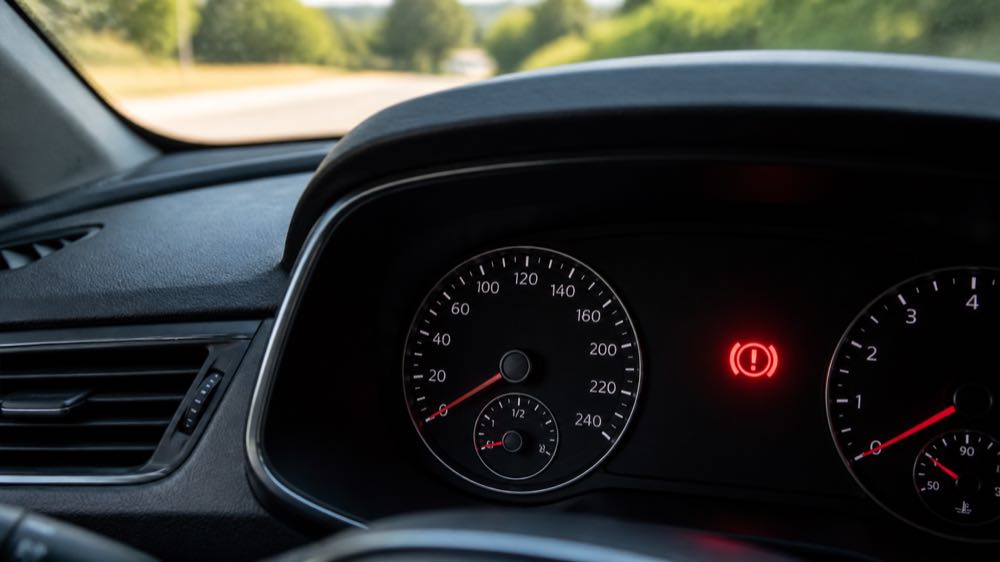
A red brake warning light is one of the more important dashboard warning lights means your car wants attention from the brake system. Sometimes it is as simple as the parking brake being slightly engaged. Other times it can point to low brake fluid, a hydraulic brake problem, worn pads, or a leak.
Before you think about the cause, think about the brake pedal. If the pedal feels soft, sinks toward the floor, the car pulls hard while braking, or stopping distance feels longer than normal, do not keep driving. Pull over safely and call for help.
First Check: How Do the Brakes Feel?
The way the brake pedal feels matters more than the light by itself.
Stop driving and get help if:
- the brake pedal feels soft or spongy
- the pedal sinks too far
- the car takes longer to stop
- the car pulls sharply when braking
- you hear grinding
- you smell burning near the wheels
- the brake warning light stays on with low fluid
If the brakes feel normal and the light just came on, you can do a few safe checks before deciding what to do next.
Brake Warning Light Quick Guide
| What You Notice | Possible Meaning | Driving Risk | What to Do |
|---|---|---|---|
| Brake light on, parking brake engaged | Parking brake not fully released | Low if fixed immediately | Release parking brake fully |
| Brake light on, pedal feels soft | Hydraulic issue or low fluid | High | Pull over and tow |
| Brake light on, fluid low | Pad wear or leak | Medium/high | Inspect before driving far |
| Brake light plus ABS light | Brake/ABS system fault | High | Drive only if brakes feel normal, inspect soon |
| Brake light plus grinding noise | Severe pad/rotor wear possible | High | Stop driving and inspect |
| Brake light flickers | Fluid level, sensor, or wiring issue | Medium | Check fluid and inspect soon |
Common Causes of a Brake Warning Light
Parking Brake Not Fully Released
Start here because it is the simplest possibility. A slightly engaged parking brake can turn on the brake warning light.
Release the parking brake fully. If the light turns off and the car drives normally, that may have been the issue. If the light stays on, do not assume it is harmless.
Low Brake Fluid
Low brake fluid is a common reason for a red brake warning light. The brake fluid reservoir has a level sensor, and when the fluid drops below a safe range, the warning can appear.
Low fluid can happen because brake pads are worn and the caliper pistons have moved outward. It can also happen because of a brake fluid leak. A leak is more serious because hydraulic pressure can drop and braking can become unsafe.
Brake Fluid Leak
A brake leak may show up near a wheel, under the car, around brake lines, near the master cylinder, or at a caliper or wheel cylinder.
Do not drive if you suspect a brake fluid leak. Brake fluid is part of the hydraulic brake system. If pressure is lost, the pedal may sink and stopping power can drop.
Worn Brake Pads
Some vehicles use a brake pad wear sensor or dashboard warning to tell you pads are getting thin. In other vehicles, worn pads may indirectly lower brake fluid level as the pads wear down.
Grinding, squealing, vibration, or longer stopping distance should be checked quickly.
Master Cylinder or Hydraulic Fault
The master cylinder helps create hydraulic pressure when you press the brake pedal. If it fails internally or leaks, the pedal may feel soft, sink, or require more effort.
This is not a DIY guessing situation. If pedal feel changes, do not keep driving.
Sensor or Wiring Issue
Sometimes the brake warning light comes from a faulty fluid level sensor, parking brake switch, or wiring problem. That is possible, but it should be diagnosed only after confirming fluid level and brake function are safe.
Brake Warning Light vs ABS Light
The red brake warning light and the ABS light are not the same.
The red brake warning light can involve the parking brake, brake fluid level, or a hydraulic brake system warning. The ABS light points to the anti-lock braking system. If only the ABS light is on, regular brakes may still work, but anti-lock braking may not help during hard braking or slippery conditions.
If the red brake warning light and ABS light come on together, treat it as more serious. Have the brake system inspected before driving far.
Can You Drive With the Brake Warning Light On?
Only if the brakes feel normal and the cause is clearly minor, such as the parking brake not being fully released and the light turns off after you release it.
Do not keep driving if:
- the brake pedal feels wrong
- brake fluid is low
- you see a leak
- the light stays on
- braking distance increases
- the car pulls while braking
- you hear grinding
- both brake and ABS lights are on
Brakes are not a system to “wait and see” with. If braking feels unsafe, stop driving.
Should You Add Brake Fluid?
Adding brake fluid may raise the level, but it does not fix the reason the fluid is low.
If fluid is low because the pads are worn, the brakes need inspection. If fluid is low because of a leak, adding fluid only buys time and may not be safe. Use only the brake fluid type listed on the reservoir cap or owner’s manual, and avoid contaminating the fluid.
If the fluid level drops again, do not drive.
What a Mechanic May Check
A brake inspection may include:
- brake fluid level and condition
- leaks at calipers, wheel cylinders, lines, hoses, and master cylinder
- brake pad and rotor thickness
- parking brake switch
- brake fluid level sensor
- ABS codes if the ABS light is also on
- brake pedal feel and hydraulic pressure
The goal is to confirm whether the warning is a simple switch/fluid issue or a real braking safety problem.
When to Tow the Vehicle
Tow the vehicle or call roadside assistance if the pedal feels soft, fluid is very low, you see a leak, the car does not stop normally, or the red brake warning light stays on after basic checks.
Towing may feel inconvenient, but brake failure risk is not worth driving through.
FAQ
What does the brake warning light mean?
It can mean the parking brake is engaged, brake fluid is low, brake pads are worn, or the hydraulic brake system has a fault. The exact cause depends on the vehicle and symptoms.
Is it safe to drive with the brake warning light on?
Do not drive if the pedal feels soft, fluid is low, braking distance increases, or the light stays on. If the light was caused by the parking brake and turns off after release, driving may be okay.
Can low brake fluid turn on the brake light?
Yes. Low brake fluid can trigger the red brake warning light. Low fluid may come from worn pads or a leak, so it should be inspected.
Why are my brake light and ABS light both on?
That can indicate a more serious brake or ABS system fault. Regular braking and anti-lock braking may be affected, so the vehicle should be inspected before driving far.
Can worn brake pads cause the brake warning light?
Yes, on some vehicles. Worn pads can also lower the fluid level as caliper pistons extend, which may trigger the warning light.
Should I add brake fluid if the light is on?
Only add the correct brake fluid if the level is low, but do not treat that as a full repair. Find out why the fluid dropped, especially if there is a leak or the level drops again.
Final Takeaway
A brake warning light is a safety warning first and a repair question second. Check whether the parking brake is released, then pay close attention to pedal feel and brake fluid level.
If the pedal feels wrong, fluid is low, a leak is visible, or the light stays on, do not keep driving. Pull over safely and have the brake system inspected.