
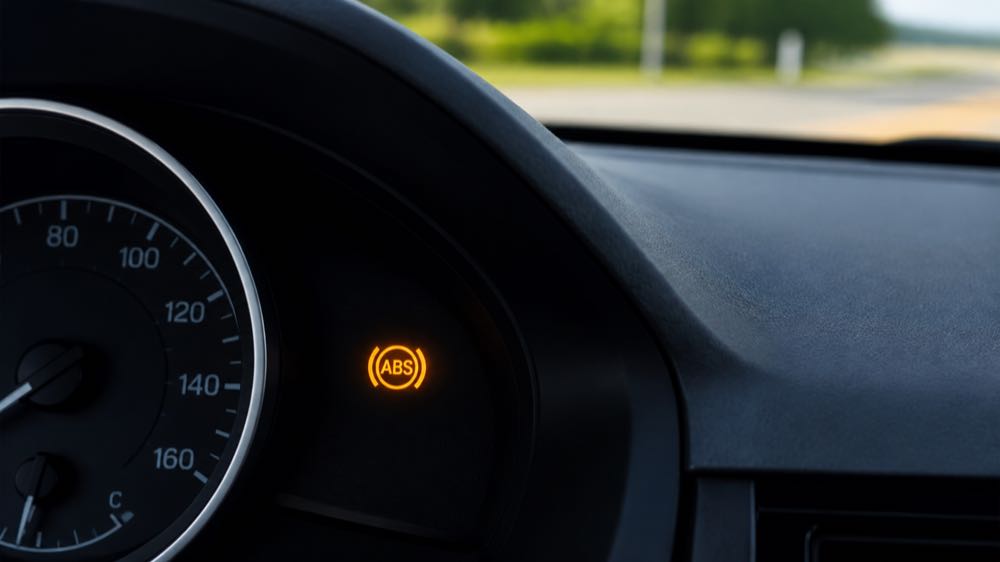
The ABS light is one of the common dashboard warning lights and means the anti-lock braking system has detected a problem. Your regular brakes may still work, but the anti-lock feature may not help during hard braking, panic stops, or slippery-road situations.
An ABS warning is different from a red brake warning light. The ABS light usually points to the electronic anti-lock system. A red brake light can point to parking brake, low brake fluid, or hydraulic brake issues. If both lights are on, treat the situation as more serious.
What Changes When ABS Is Not Working?
ABS helps prevent wheel lockup during hard braking. When it works correctly, it rapidly modulates brake pressure so you can keep more steering control in emergency stops.
If ABS is disabled, the car may still stop, but wheels can lock more easily on wet, icy, gravel, or slippery roads. That can increase stopping distance and reduce steering control during panic braking.
What ABS Feels Like When It Works
When ABS activates, the brake pedal may pulse or vibrate under your foot. You may also hear a grinding, buzzing, or rapid clicking sound. That can feel strange, but it is normal during hard braking when ABS is working.
If the ABS light is on, that pulsing assistance may not happen when you need it. In rain, snow, ice, or loose gravel, leave more following distance and brake earlier than usual until the system is inspected.
ABS Light Quick Risk Guide
| Situation | Likely Risk | What to Do |
|---|---|---|
| ABS light only, brakes feel normal | Moderate | Drive carefully and inspect soon |
| ABS light plus red brake light | High | Pull over if braking feels abnormal |
| ABS light plus soft brake pedal | Very high | Do not keep driving |
| ABS light plus traction control light | Medium/high | Stability/traction systems may be affected |
| ABS light after wheel/tire work | Medium | Check sensor wiring or wheel speed sensor |
| ABS light comes and goes | Medium | Scan for stored ABS codes |
Common Causes of an ABS Light
Bad Wheel Speed Sensor
Wheel speed sensors tell the ABS module how fast each wheel is turning. If one sensor fails or reads incorrectly, the ABS light can turn on.
This is one of the most common ABS faults. Dirt, corrosion, wiring damage, or sensor failure can all affect the signal.
Damaged Sensor Wiring
ABS sensor wiring lives near the wheels, where it can be exposed to road debris, water, salt, heat, and suspension movement. A broken wire or loose connector can trigger the light.
This is especially possible after brake, wheel bearing, axle, or suspension work.
Low Brake Fluid
Low brake fluid is more closely tied to the red brake warning light, but some vehicles may also disable ABS if brake fluid level or hydraulic pressure is not safe.
If the ABS light appears with a brake warning light, check brake fluid level and pedal feel before driving.
ABS Module Problem
The ABS module controls anti-lock braking operation. Module faults are less common than sensor issues, but they can be more expensive.
A scan tool that can read ABS codes is usually needed. A basic engine-only OBD2 scanner may not read ABS module codes.
Wheel Bearing or Tone Ring Issue
Some vehicles use a tone ring or magnetic encoder near the wheel bearing. If it is damaged, corroded, or misread by the sensor, ABS may not work correctly.
Symptoms can include intermittent ABS activation, warning lights, or speed sensor codes.
Blown Fuse or Electrical Fault
ABS relies on electrical power, fuses, relays, wiring, and module communication. A blown fuse or voltage issue can disable the system and turn the light on.
Can You Drive With the ABS Light On?
You may be able to drive carefully if only the ABS light is on and the brakes feel normal. But you should leave extra following distance, avoid aggressive braking, and get the system inspected soon.
Do not keep driving if:
- the red brake warning light is also on
- the brake pedal feels soft or sinks
- stopping distance feels longer
- the car pulls while braking
- brake fluid is low
- you hear grinding or feel severe vibration
If regular braking feels unsafe, pull over and call roadside assistance.
ABS Light vs Brake Warning Light
The ABS light and brake warning light are related but not the same.
The ABS light points to the anti-lock braking system. The red brake warning light may indicate parking brake, brake fluid level, or hydraulic brake system issues. A red brake light can be more urgent because it may involve the basic braking system, not just the anti-lock feature.
If both are on, the safest move is to stop driving if the pedal feels abnormal or fluid is low.
Why Traction Control May Turn On Too
ABS, traction control, and stability control often share wheel speed sensor information. If a wheel speed sensor fails, the ABS light, traction control light, and stability control light may appear together.
That does not always mean three separate systems failed. It may mean one shared input is missing.
How ABS Problems Are Diagnosed
A technician may:
- scan ABS diagnostic trouble codes
- inspect wheel speed sensor data
- check sensor wiring and connectors
- inspect brake fluid level
- check fuses and power supply
- inspect tone rings or wheel bearings
- test ABS module communication
The important point: a normal engine-code scanner may not be enough. ABS diagnosis often needs a scan tool that can read chassis or ABS modules.
Repair Cost Context
Repair cost depends on the cause. A wheel speed sensor or wiring repair is usually less expensive than an ABS module or hydraulic control unit issue.
Diagnosis matters because replacing the wrong sensor or module can get expensive quickly. If the light appeared after brake, axle, bearing, or suspension work, mention that to the technician.
Mistakes to Avoid
Avoid these mistakes:
- ignoring the ABS light during winter or rainy driving
- assuming regular braking is perfect without checking pedal feel
- confusing the ABS light with the red brake warning light
- replacing the ABS module before checking sensors and wiring
- using only an engine-code scanner and assuming there are no codes
ABS is a safety feature. Treat the warning with respect, especially before highway driving or bad weather.
FAQ
What does the ABS light mean?
It means the anti-lock braking system detected a fault. Regular brakes may still work, but ABS may not help during hard braking or slippery-road stops.
Is it safe to drive with the ABS light on?
It may be safe to drive carefully if only the ABS light is on and the brake pedal feels normal. If the red brake light is also on or braking feels abnormal, do not keep driving.
What is the most common cause of an ABS light?
A bad wheel speed sensor or damaged sensor wiring is one of the most common causes. ABS module faults, low brake fluid, fuses, and tone ring issues can also trigger the light.
Can low brake fluid cause the ABS light?
It can on some vehicles, especially if the system disables ABS because brake fluid level or hydraulic pressure is not safe. Low brake fluid should be inspected right away.
Why are my ABS and traction control lights on together?
ABS and traction control often share wheel speed sensor data. A sensor or wiring problem can cause both lights to come on.
Can a basic OBD2 scanner read ABS codes?
Many basic OBD2 scanners read engine codes only. ABS codes often require a scan tool that can access ABS or chassis modules.
Final Takeaway
An ABS light does not always mean your regular brakes have failed, but it does mean an important safety system may be disabled. Drive carefully, leave more stopping distance, and get the system checked soon.
If the red brake warning light is also on, the pedal feels soft, brake fluid is low, or stopping feels abnormal, stop driving and get help.