
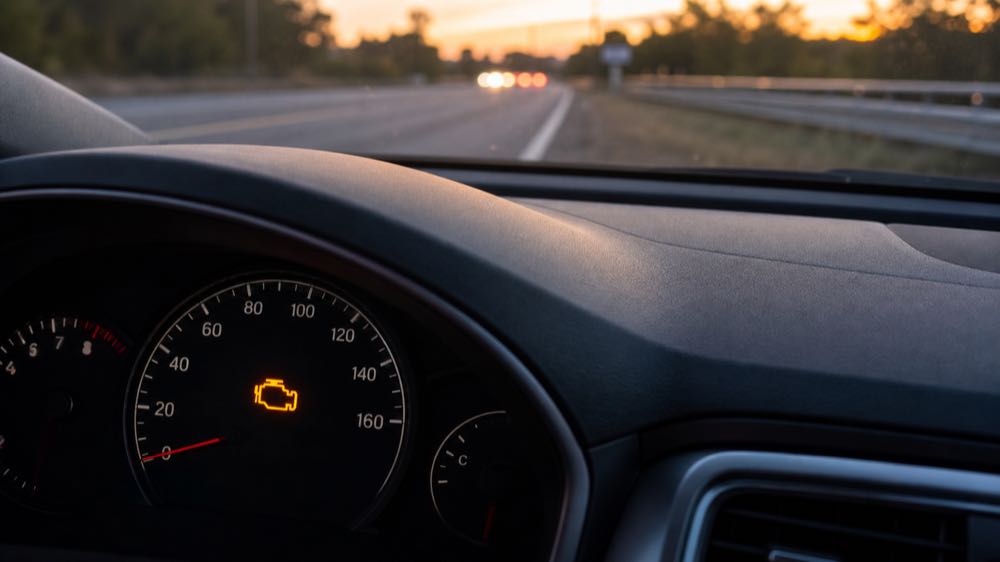
Sometimes you can drive with the check engine light on, but you should not treat every check engine light the same. A steady amber light with no symptoms may give you time to drive carefully to a repair shop. A flashing check engine light, engine shaking, fuel smell, overheating, or major power loss means you should stop driving as soon as it is safe.
Think of the check engine light as a warning from the car’s onboard diagnostics system. It does not always mean the engine is about to fail, but it does mean the computer found a fault that needs attention. If you are comparing it with other symbols on the instrument cluster, see our dashboard warning lights guide.
Quick Decision Guide
Use this table before deciding whether to keep driving.
| Situation | Can You Keep Driving? | What to Do |
|---|---|---|
| Steady light, car feels normal | Usually short-term, with caution | Check gas cap, scan codes, schedule diagnosis |
| Steady light with rough idle | Limit driving | Scan codes and avoid long trips |
| Flashing check engine light | No, not if avoidable | Pull over safely and get help |
| Light plus engine shaking | No | Stop driving and diagnose possible misfire |
| Light plus fuel smell | No | Pull over safely and call for help |
| Light plus overheating | No | Stop and let the engine cool |
| Light plus limp mode | Only to a safe place | Avoid highway driving and get diagnosis |
When It May Be Safe to Drive Briefly
You may be able to drive a short distance if the light is steady and the car feels normal. That means no shaking, no fuel smell, no overheating, no oil pressure warning, no smoke, and no major loss of power.
Even then, “safe to drive” does not mean “safe to ignore.” A steady malfunction indicator lamp can still point to an emissions system problem, oxygen sensor issue, EVAP leak, fuel trim problem, or early misfire.
If you keep driving, take it easy:
- avoid hard acceleration
- avoid towing
- avoid high-speed trips
- keep an eye on temperature and other warning lights
- scan the vehicle for diagnostic trouble codes soon
When You Should Stop Driving
Stop driving as soon as it is safe if the check engine light is flashing. A flashing light often means an active engine misfire. Raw fuel can enter the exhaust and overheat the catalytic converter, which can turn a repairable problem into an expensive one.
You should also stop driving if the light appears with:
- strong engine shaking
- fuel smell
- smoke
- overheating
- oil pressure warning
- brake or steering problems
- sudden power loss
- repeated stalling
If you are on a highway, do not slam the brakes or stop in a dangerous place. Signal, move to the shoulder or a safe exit, and call roadside assistance if needed.
How Far Can You Drive With the Check Engine Light On?
There is no safe universal mileage number. Some drivers can go a short distance to a shop with a steady light and no symptoms. Others should stop immediately because the light is flashing or the engine is running badly.
The better question is: what changed when the light came on?
If nothing changed and the light is steady, drive gently and get it checked soon. If the car started shaking, lost power, overheated, or smelled like fuel, distance is not the priority. Safety is.
What to Check Before You Continue
Before driving farther, do a quick check:
- Is the light steady or flashing?
- Does the engine sound or feel different?
- Is the temperature gauge normal?
- Do you smell fuel, burning oil, or coolant?
- Are any red warning lights on?
- Did the light come on after refueling?
- Is the gas cap loose or damaged?
- Can you scan the car with an OBD2 scanner?
If the gas cap is loose, tighten it until it clicks. The light may not turn off right away because the vehicle may need several drive cycles to retest the EVAP system.
Why an OBD2 Code Matters
An OBD2 scanner can read diagnostic trouble codes from the vehicle’s powertrain control module. Those codes do not always name the failed part, but they point you toward the system that needs testing.
Examples:
- P0300 can point to a random misfire
- P0420 can point to catalytic converter efficiency
- P0171 can point to a lean fuel condition
- P0455 can point to a large EVAP leak
- P0128 can point to a coolant temperature issue
Do not clear codes just to turn the light off. Save the code first. Clearing it too early can erase freeze-frame data and reset emissions readiness monitors.
Can You Pass Inspection With the Check Engine Light On?
In many US inspection and emissions programs, a car will not pass if the check engine light is on. Even if you clear the light, the vehicle may still fail or be rejected if readiness monitors are incomplete.
Rules vary by state, county, and inspection type, so check your local requirements. As a general rule, fix the cause before relying on a cleared light.
Common Reasons the Light Is On But the Car Feels Fine
Sometimes the car feels normal even though a fault is stored. Common reasons include:
- loose or damaged gas cap
- small EVAP leak
- oxygen sensor issue
- catalytic converter efficiency code
- thermostat code
- mild fuel trim issue
- intermittent sensor or wiring problem
This is why scanning the code matters. The car may feel fine today, but the stored fault can still affect emissions, fuel economy, or long-term reliability.
Mistakes to Avoid
Avoid these common mistakes:
- driving for weeks with the light on
- ignoring a flashing check engine light
- replacing parts based only on one code
- clearing codes before writing them down
- taking a long road trip before diagnosis
- assuming the car is fine because it still starts
The check engine light is not meant to scare you. It is meant to get your attention early enough to prevent a bigger problem.
What If the Light Turns Off by Itself?
If the light turns off, the computer may no longer see the fault. That does not always mean the issue is gone forever. Some problems are intermittent, especially sensor, wiring, EVAP, and misfire issues.
If the light comes back, scan it and save the code. A pattern is more useful than a single guess.
FAQ
Is it safe to drive with the check engine light on?
It may be safe for a short distance if the light is steady and the car feels normal. It is not safe to keep driving if the light is flashing, the engine is shaking, the car smells like fuel, or the engine is overheating.
Can I drive to work with the check engine light on?
If the light is steady and there are no symptoms, you may be able to drive carefully, but you should scan the code soon. If the light is flashing or the car runs badly, do not drive to work.
How long can I drive with a steady check engine light?
There is no fixed safe number of miles. A steady light with no symptoms usually gives you more time than a flashing light, but it still needs diagnosis soon.
What happens if I ignore the check engine light?
Ignoring it can lead to poor fuel economy, failed emissions inspection, catalytic converter damage, engine damage, or a more expensive repair depending on the cause.
Can low oil cause the check engine light?
Low oil more commonly triggers an oil pressure warning light, but engine problems related to oil level or oil pressure can sometimes contribute to codes. If the oil pressure light is on, stop driving.
Should I reset the check engine light?
Do not reset it before reading and saving the code. If the problem is still there, the light will return, and clearing it can erase helpful diagnostic information.
Final Takeaway
You can sometimes drive with the check engine light on, but only if the light is steady and the car feels normal. A flashing light, rough running, fuel smell, overheating, or major power loss changes the answer. In those cases, stop driving as soon as it is safe and get help.
Read the code, pay attention to symptoms, and avoid guessing at parts. A careful first response can save money and prevent a small warning from becoming a larger repair.