
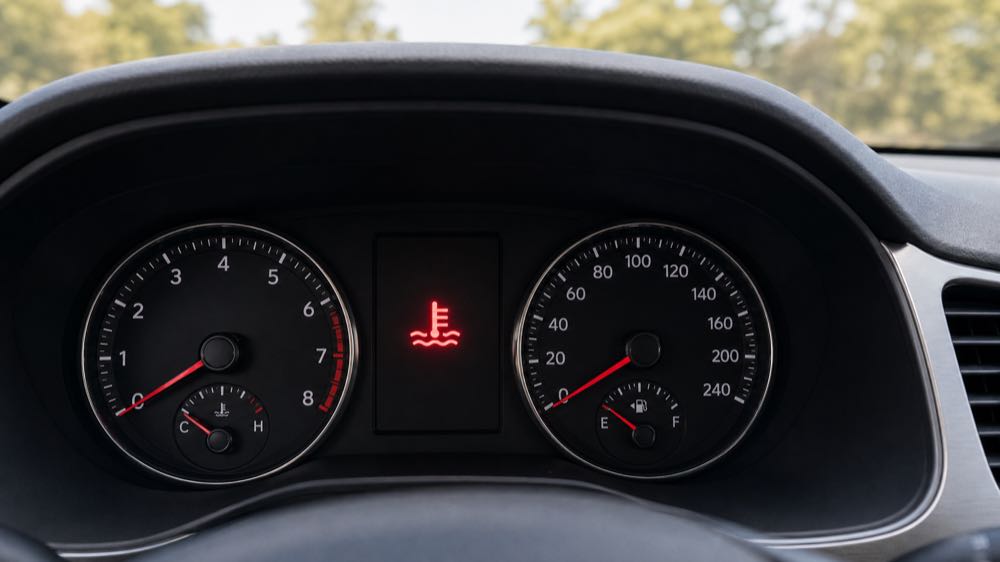
The coolant temperature warning light is one of the urgent dashboard warning lights and means the engine is getting too hot or the cooling system is not controlling temperature properly. If the light turns red or the temperature gauge climbs into the hot zone, pull over as soon as it is safe and let the engine cool.
Do not keep driving an overheating engine. Heat can damage the head gasket, cylinder head, radiator, hoses, and other engine parts quickly.
What to Do Immediately
If the coolant temperature warning light comes on:
- Turn off the air conditioning.
- Turn the heater on only if it is safe and tolerable.
- Reduce speed and avoid hard acceleration.
- Pull over to a safe place.
- Put the car in park and turn the engine off.
- Let the engine cool before checking anything.
- Do not open a hot radiator cap or coolant reservoir cap.
Hot coolant is under pressure and can spray out violently. Wait until the engine cools before opening the cooling system.
Quick Overheating Risk Guide
| What You See | Risk Level | Best Action |
|---|---|---|
| Temperature gauge rising | Medium/high | Reduce load and find a safe place |
| Red temperature warning light | High | Pull over and shut engine off |
| Steam from engine bay | Very high | Stop and keep hood closed until safe |
| Coolant smell or puddle | High | Do not continue far |
| Warning light plus no heat from vents | High | Coolant may be low or not circulating |
| Light returns after adding coolant | High | Tow or inspect for leak/fault |
What the Coolant Temperature Light Means
Your engine creates heat every time it runs. The cooling system moves coolant through the engine, radiator, thermostat, water pump, hoses, and heater core to keep temperature under control.
When the coolant temperature warning light appears, the system may be too hot, low on coolant, leaking, blocked, or unable to circulate coolant properly.
Some vehicles show a gauge. Others show only a warning light. Either way, a red temperature warning is urgent.
Common Causes of a Coolant Temperature Warning Light
Low Coolant Level
Low coolant is one of the most common causes. If there is not enough coolant, heat cannot move away from the engine properly.
Coolant can be low because of a leak, poor maintenance, a loose cap, a bad hose, radiator damage, water pump leak, or head gasket problem.
Coolant Leak
A coolant leak may show as a sweet smell, steam, colored fluid under the car, wet hoses, or crusty residue near connections.
Do not keep topping off coolant without finding the leak. If coolant level drops again, the engine can overheat suddenly.
Bad Thermostat
The thermostat controls coolant flow based on temperature. If it sticks closed, coolant may not circulate to the radiator, causing the engine to overheat.
A stuck-open thermostat usually causes the engine to run too cool, but a stuck-closed thermostat can create an urgent overheating problem.
Radiator Fan Problem
The radiator fan helps move air through the radiator, especially when the car is stopped or moving slowly. If the fan fails, the car may overheat in traffic but cool down at highway speed.
Fan motors, relays, fuses, wiring, and temperature sensors can all be involved.
Water Pump Failure
The water pump circulates coolant through the engine. If it fails, leaks, or the belt driving it fails, coolant may not move properly.
Overheating from poor circulation can get serious quickly.
Clogged Radiator or Cooling System
Rust, sludge, old coolant, or internal blockage can reduce cooling performance. A clogged radiator may not remove heat effectively, especially in hot weather or traffic.
Can You Drive With the Coolant Temperature Warning Light On?
No, not safely if the light is red or the engine is overheating. Pull over and shut the engine off as soon as it is safe.
If the gauge is only starting to rise, reducing load and turning off AC may help you reach a safe pull-off spot. But do not try to finish a long trip with the warning active.
Should You Add Coolant?
Only add coolant after the engine has cooled. Never open a hot radiator cap. If the coolant reservoir is empty and the engine is cool, adding the correct coolant may help you move the car a short distance to a repair location.
But adding coolant does not fix the cause. If the light returns, coolant leaks out, or the engine overheats again, stop driving and have the cooling system inspected.
What to Check After the Engine Cools
After the engine has cooled completely, look for clues before restarting:
- coolant level in the reservoir
- wet spots under the front of the car
- cracked or swollen radiator hoses
- coolant smell near the engine bay
- visible steam residue or dried coolant
- loose or damaged radiator cap
- broken belt if your vehicle uses one for the water pump
Do not put your face or hands near hot coolant parts. If coolant is gone, leaking quickly, or the warning returns soon after topping off, the safest move is to tow the car.
When to Tow the Car
Tow the vehicle or call roadside assistance if:
- the temperature light is red
- steam is coming from the engine bay
- coolant is leaking heavily
- the warning returns after adding coolant
- the engine makes knocking or ticking sounds
- the heater blows cold while the engine overheats
- the car overheats again after cooling down
Driving an overheated engine can cost far more than a tow.
What a Mechanic May Check
A cooling-system diagnosis may include:
- coolant level and condition
- pressure test for leaks
- radiator cap test
- thermostat operation
- radiator fan operation
- water pump leaks or circulation
- hose condition
- coolant temperature sensor data
- head gasket signs
- stored diagnostic trouble codes
The exact test depends on whether the car overheats at idle, highway speed, after coolant loss, or only in traffic.
Repair Cost Context
Repair cost depends heavily on the cause. A hose, cap, thermostat, or fan relay is usually much less expensive than a head gasket or engine damage.
The safest way to keep repair costs down is to stop early. Repeated overheating can turn a cooling-system repair into major engine work.
FAQ
What does the coolant temperature warning light mean?
It means the engine is too hot or the cooling system is not controlling temperature properly. Common causes include low coolant, leaks, thermostat problems, fan issues, water pump failure, or radiator problems.
Can I drive with the coolant temperature light on?
No, not if the light is red or the engine is overheating. Pull over safely, shut the engine off, and let it cool.
Can I add coolant when the engine is hot?
Do not open a hot radiator cap or coolant reservoir cap. Hot coolant is under pressure and can cause severe burns. Wait until the engine cools.
Why does my car overheat in traffic but not on the highway?
That often points to a radiator fan problem, airflow issue, low coolant, or cooling-system weakness that shows up when the car is not moving fast enough for airflow through the radiator.
What if the temperature light comes on and then goes off?
Do not ignore it. The engine may be close to overheating, the coolant level may be low, or a sensor/system fault may be intermittent. Check coolant level when safe and inspect soon.
Can overheating damage the engine?
Yes. Overheating can damage the head gasket, cylinder head, pistons, hoses, radiator, and other components. Severe overheating can lead to engine failure.
Final Takeaway
The coolant temperature warning light is a stop-and-cool-down warning. Pull over safely, turn the engine off, and never open a hot radiator cap.
Once the engine cools, check coolant level only if it is safe. If the warning returns, coolant leaks, steam appears, or the engine overheats again, tow the vehicle and have the cooling system inspected.