
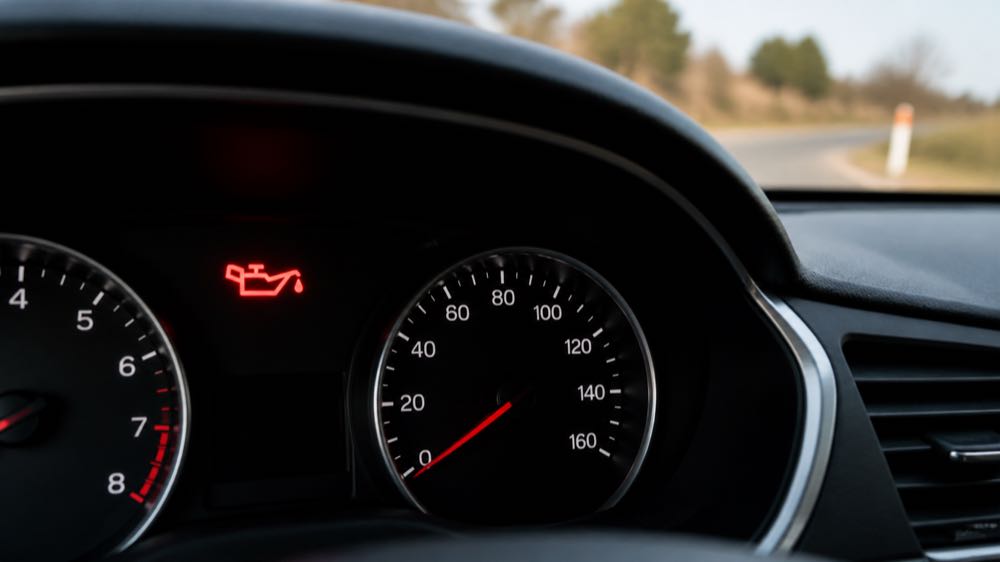
The oil pressure warning light is one of the most serious dashboard warnings. If it comes on while driving, pull over as soon as it is safe and shut the engine off. The light can mean the engine lubrication system is not building enough pressure to protect internal parts.
Low oil pressure can damage engine bearings, camshafts, timing components, and other moving parts quickly. This is not the same as a routine oil-change reminder.
What to Do Immediately
If the oil pressure warning light turns on:
1. Ease off the accelerator. 2. Signal and move toward a safe place to stop. 3. Turn the engine off once parked safely. 4. Wait a few minutes before checking the oil. 5. Check the dipstick if it is safe and accessible. 6. Do not restart the engine if the oil level is very low or the light stays on. 7. Call roadside assistance if you are unsure.
If the light appears with knocking, ticking, burning smell, smoke, or oil leaking under the car, do not keep driving.
Quick Safety Table
| Situation | Risk Level | What to Do |
|---|---|---|
| Oil light comes on while driving | High | Pull over safely and shut off engine |
| Oil light plus knocking noise | Very high | Do not restart; tow the vehicle |
| Oil light flickers at idle | Medium/high | Stop and check oil level; inspect soon |
| Oil level very low on dipstick | High | Add correct oil only if safe, then inspect for leaks |
| Oil level normal but light stays on | Very high | Do not drive; pressure problem may still exist |
| Oil light after oil change | Medium/high | Check oil level and filter area immediately |
Oil Level vs Oil Pressure
Low oil level and low oil pressure are related, but they are not the same.
Oil level is how much oil is in the engine. You usually check it with the dipstick. Oil pressure is the force that moves oil through the engine lubrication passages while the engine runs.
An engine can have low oil pressure because the oil level is low. But it can also have low oil pressure even when the dipstick looks normal. A weak oil pump, clogged pickup tube, wrong oil viscosity, internal engine wear, or faulty pressure control can all cause pressure problems.
That is why you should not assume the car is safe just because oil appears on the dipstick.
Common Causes of an Oil Pressure Warning Light
Low Engine Oil Level
Low oil level is one of the first things to check. If there is not enough oil in the pan, the oil pump may draw air instead of oil, reducing pressure.
Common reasons include oil leaks, oil burning, delayed maintenance, or an oil filter/drain plug problem after service.
Oil Leak
Oil leaks can happen from the drain plug, oil filter, valve cover gasket, oil pan gasket, timing cover, rear main seal, or other engine seals.
If you see fresh oil under the car or smell burning oil, avoid driving until the source is checked.
Bad Oil Pressure Sensor
The oil pressure sensor or sending unit can fail and trigger a warning even if pressure is normal. That is possible, but do not assume it is only a sensor.
A technician may verify actual pressure with a mechanical gauge before blaming the sensor.
Failing Oil Pump
The oil pump moves oil through the engine. If it fails or cannot maintain pressure, the engine can be damaged quickly.
Oil pump problems are less common than low oil level, but they are serious.
Clogged Oil Pickup Tube or Filter Problem
Sludge, debris, or a blocked pickup screen can restrict oil flow. A collapsed or incorrect oil filter can also affect oil flow in some cases.
If the light appears after an oil change, check the oil level, filter seal, drain plug area, and whether the correct oil/filter was used.
Wrong Oil Viscosity
Oil viscosity matters. Oil that is too thin, too thick for conditions, contaminated, or badly overdue for service can affect lubrication and pressure.
Use the oil grade recommended in your owner’s manual.
Internal Engine Wear
High-mileage engines can lose oil pressure from worn bearings or internal clearances. This is one reason a normal oil level does not always mean normal pressure.
Can You Drive With the Oil Pressure Light On?
No, not safely. If the oil pressure light is on, stop driving as soon as it is safe. Continuing to drive can turn a low-cost issue into a major engine repair or engine replacement.
Adding oil may help only if the level is low and there is no severe leak. If the oil level is normal and the light stays on, do not drive. The engine may still have a pressure problem.
What If the Light Flickers?
A flickering oil pressure light is still a warning. It may happen at idle, during turns, braking, or acceleration if oil level is low or pressure is borderline.
Do not ignore a flicker because it goes away. Check oil level and get the system inspected before taking a long drive.
What a Mechanic May Check
A proper diagnosis may include:
- engine oil level and condition
- oil leaks
- correct oil viscosity
- oil filter installation
- oil pressure sensor circuit
- actual oil pressure with a mechanical gauge
- oil pump operation
- sludge or pickup tube restriction
- engine noise and bearing wear signs
This is one of those warnings where diagnosis matters more than guessing.
Repair Cost Context
The cost depends on the cause. Adding oil or replacing a sensor is very different from repairing an oil pump problem or internal engine damage.
If the engine was driven with low oil pressure, repair costs can rise quickly. Severe damage may require major engine work or replacement.
The best way to reduce cost is to stop driving early and diagnose before the engine runs without proper lubrication.
Mistakes to Avoid
Avoid these mistakes:
- driving home with the oil pressure light on
- assuming it is only a sensor
- restarting the engine repeatedly after the light appears
- adding oil and ignoring the reason it was low
- using the wrong oil viscosity
- ignoring knocking or ticking noises
The light is warning you about pressure, not just maintenance.
FAQ
What does the oil pressure warning light mean?
It means the engine may not have enough oil pressure to lubricate internal parts. It can be caused by low oil level, oil pump problems, sensor faults, leaks, clogged passages, or engine wear.
Can I drive with the oil pressure light on?
No. Pull over safely and shut the engine off. Driving with low oil pressure can cause severe engine damage.
Is oil pressure the same as oil level?
No. Oil level is the amount of oil in the engine. Oil pressure is the force moving oil through the engine while it runs. You can have pressure problems even if the oil level looks normal.
What if the oil light comes on but oil level is full?
Do not keep driving. The issue could be a bad sensor, wiring problem, failing oil pump, clogged pickup tube, wrong oil viscosity, or internal engine wear. Actual oil pressure should be tested.
Why does my oil light flicker at idle?
It may mean oil pressure is borderline at low engine speed. Common causes include low oil level, worn engine parts, thin oil, sensor issues, or oil pump problems.
Can the oil pressure light come on after an oil change?
Yes. Check the oil level, oil filter, drain plug, and whether the correct oil was used. If the light stays on, shut the engine off and inspect immediately.
Final Takeaway
The oil pressure warning light is a stop-driving warning. Pull over safely, shut the engine off, check oil level only when safe, and do not restart if the oil is very low or the light stays on.
Low oil pressure can damage an engine fast. Treat this warning seriously, diagnose the cause, and call roadside assistance if you are not sure the engine is safe to run.