
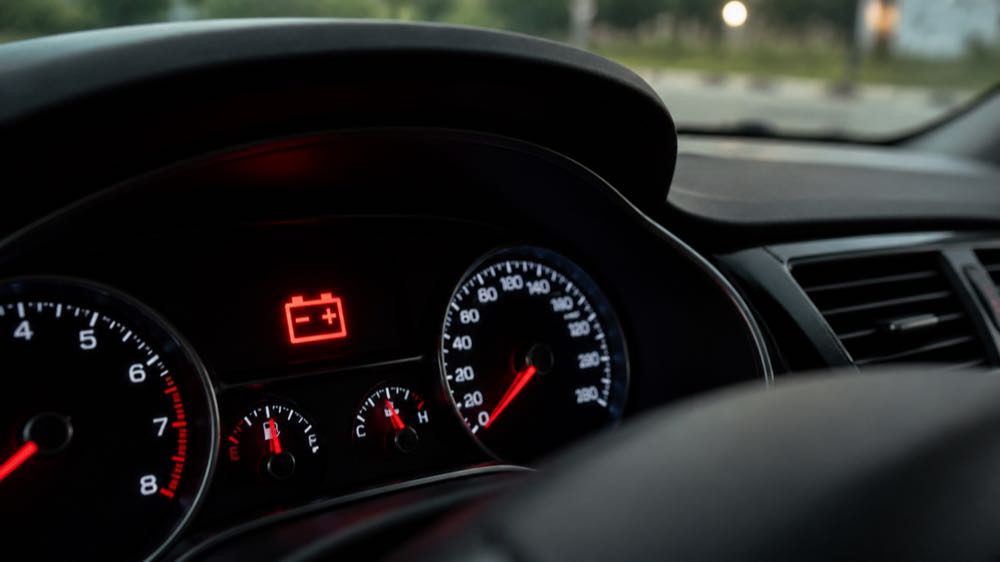
If the battery light comes on while driving, your car may not be charging the 12-volt battery properly. The problem is often the charging system, not just the battery itself. A failing alternator, loose drive belt, bad connection, or wiring issue can all trigger the warning.
The car may keep running for a short time on battery power, but once voltage drops, electrical systems can shut down. That is why this warning deserves quick attention, especially at night, in traffic, or far from home.
What to Do Right Away
If the battery warning light turns on while you are driving:
1. Stay calm and keep the car moving smoothly. 2. Turn off nonessential electrical accessories. 3. Avoid using heated seats, rear defroster, extra lights, or loud audio. 4. Do not shut the engine off unless you are in a safe place. 5. Head toward a safe parking spot, repair shop, or home if very close. 6. Pull over if steering, temperature, or other warning lights change.
If the steering suddenly feels heavy, the temperature gauge rises, or multiple dashboard warning lights appear, pull over safely and call roadside assistance.
Battery Light Quick Decision Table
| Situation | Risk Level | What It May Mean | Best Action |
|---|---|---|---|
| Battery light on, car drives normally | Medium | Charging system fault starting | Turn off accessories and get checked soon |
| Battery light plus dim headlights | High | Battery voltage dropping | Drive only to a safe place |
| Battery light plus heavy steering | High | Belt or accessory drive issue | Pull over safely |
| Battery light plus overheating | Very high | Belt may not be driving water pump | Stop driving |
| Battery light after jump start | Medium/high | Battery or alternator may be weak | Test charging system |
| Battery light flickers | Medium | Loose belt, wiring, or connection | Inspect soon |
Does the Battery Light Mean the Battery Is Bad?
Not always. The battery light is better understood as a charging-system warning light. It means the car’s electrical system is not seeing the charging voltage it expects.
The battery starts the car and stores electrical power. The alternator charges the battery while the engine is running. If the alternator stops charging, the car begins using stored battery power until it runs out.
That is why a car can start normally, drive for a while, and then show a battery light on the road.
How Long Can You Drive With the Battery Light On?
There is no safe fixed mileage. Some cars may run for several minutes. Others may lose electrical power quickly, especially if the battery is weak or many accessories are on.
At night, the battery can drain faster because headlights and other systems are using power. In modern vehicles, low voltage can also affect electronic power steering, transmission controls, engine management, and dashboard electronics.
If the light comes on, do not start a long drive. Get to a safe place and have the charging system tested.
Common Causes of a Battery Light While Driving
Failing Alternator
The alternator is the part most people think of first, and for good reason. It creates electrical power while the engine runs and keeps the battery charged.
Signs of a weak alternator can include:
- battery light on while driving
- dim or flickering headlights
- slow power windows
- warning lights appearing together
- whining noise from the engine area
- car dies after driving
Loose or Broken Serpentine Belt
The serpentine belt, also called a drive belt, may run the alternator and other accessories. If it slips, breaks, or comes off, the alternator may stop charging.
On some vehicles, the same belt can also drive the water pump. If that happens, the engine may overheat quickly. A battery light plus rising temperature is a stop-driving warning.
Bad Battery Connection
Loose or corroded battery terminals can interrupt charging. The battery may be fine, but the connection may not carry current properly.
Look for white or blue-green corrosion around the terminals, loose clamps, damaged battery cables, or a weak ground connection.
Weak or Failing Battery
A weak battery can contribute to charging-system warnings, especially after a jump start or in cold weather. Still, if the battery light appears while the engine is running, the alternator and charging system should be tested too.
Voltage Regulator or Wiring Problem
The voltage regulator controls charging output. On many vehicles it is built into the alternator. Wiring faults, blown fusible links, damaged connectors, or computer-controlled charging issues can also cause the battery light.
What You Should Turn Off
To reduce electrical load, turn off anything you do not need:
- heated seats
- rear defroster
- extra interior lights
- phone chargers
- loud audio system
- fog lights if not needed
- climate fan if safe to reduce
Do not turn off headlights at night or in low visibility. Safety comes first.
Can You Restart the Car After the Battery Light Comes On?
Avoid shutting the engine off until you are parked somewhere safe. If the charging system is not working, the car may not restart.
If you are at a gas station, parking lot, or repair shop, shutting it off is less risky. If you are on the road and trying to reach a safe place, keep the engine running unless the vehicle becomes unsafe.
How a Mechanic Tests the Charging System
A technician may check:
- battery voltage with the engine off
- charging voltage with the engine running
- alternator output
- battery load-test results
- belt condition and tension
- battery terminal condition
- ground and power cable voltage drop
- stored diagnostic trouble codes
A multimeter can help with basic voltage checks, but diagnosis can vary by vehicle because many modern charging systems are computer controlled.
Basic Voltage Clues
If you have a multimeter and the car is parked safely, voltage readings can offer clues. A healthy fully charged 12-volt battery often reads around 12.6 volts with the engine off. With the engine running, many traditional charging systems read roughly 13.5 to 14.7 volts.
Those numbers are only a guide. Some modern vehicles use smart charging strategies, so voltage can change depending on battery state, electrical load, temperature, and computer control. If the battery light is on, do not rely on one voltage reading alone. Use it as a clue, not a final diagnosis.
When to Tow the Car
Call roadside assistance or tow the car if:
- the battery light stays on and the car loses electrical power
- headlights or dashboard lights become very dim
- steering becomes heavy
- the engine temperature rises
- the car stalls
- multiple warning lights appear
- you are far from a safe repair location
Towing is often cheaper than being stranded in traffic with a dead electrical system.
FAQ
What does it mean when the battery light comes on while driving?
It usually means the charging system is not keeping the 12-volt battery charged. The cause may be the alternator, drive belt, battery terminals, wiring, voltage regulator, or battery.
Can I drive with the battery light on?
You may be able to drive a short distance to a safe place, but you should turn off unnecessary accessories and avoid long trips. If steering gets heavy, the engine overheats, or lights dim badly, pull over.
Is the battery light the same as a dead battery?
No. A dead battery may prevent the car from starting, while a battery light during driving often points to a charging-system problem.
Can a bad alternator cause the battery light?
Yes. A failing alternator is one of the most common reasons the battery light comes on while the engine is running.
Why did the battery light come on after a jump start?
The battery may be weak, but the alternator may also not be charging properly. Have both the battery and charging system tested.
Should I turn off the car when the battery light comes on?
Do not shut it off until you are parked safely. If the charging system is failing, the engine may not restart.
Final Takeaway
A battery light while driving is a charging-system warning. The battery may be involved, but the alternator, belt, wiring, voltage regulator, and battery terminals all matter.
Turn off unnecessary electrical accessories, avoid a long drive, and get to a safe place. If the steering changes, the engine overheats, lights dim badly, or the car starts losing power, pull over and call for help.