
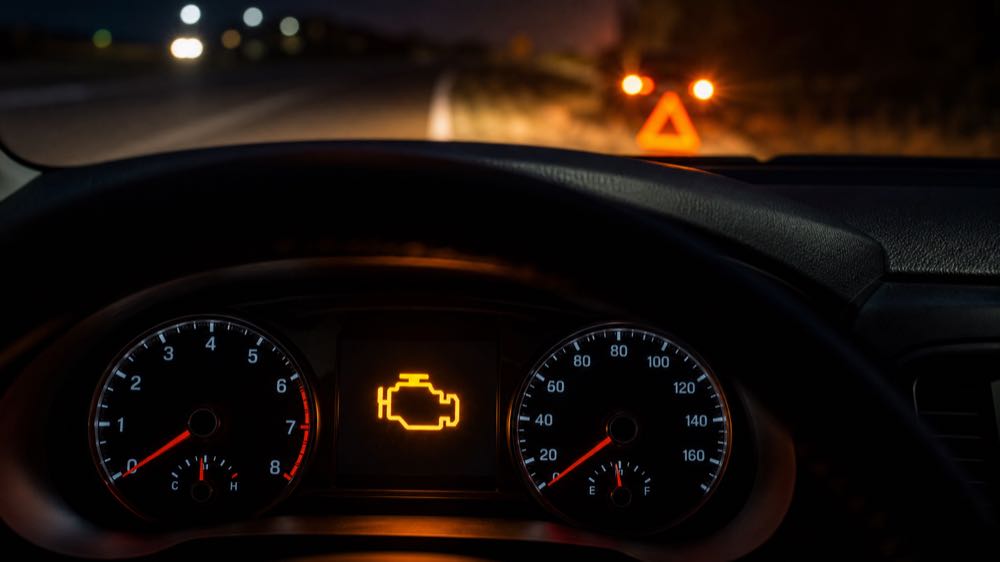
A flashing check engine light is more urgent than a steady check engine light. It often means the engine is misfiring badly enough that raw fuel may reach the exhaust system and overheat the catalytic converter. If the light is flashing while the car is shaking, losing power, or running rough, stop driving as soon as it is safe.
For a broader color-by-color overview of urgent and non-urgent symbols, see our dashboard warning lights guide.
This is not the warning to ignore for a few weeks. A blinking check engine light can turn a repairable ignition or fuel problem into a much more expensive exhaust or engine repair.
What to Do Right Now
If the check engine light is flashing while you are driving:
1. Ease off the accelerator. 2. Avoid hard acceleration or high RPM. 3. Turn off unnecessary loads if the car is struggling. 4. Move to the right lane or a safe shoulder when possible. 5. Do not keep driving if the engine is shaking, overheating, or losing power. 6. Call roadside assistance if the car feels unsafe.
If you are only a few blocks from a repair shop and the car is running smoothly, you may be able to drive carefully at low speed. But if the engine is shaking or the light keeps flashing, towing is the safer choice.
Flashing vs Steady Check Engine Light
| Light Behavior | Typical Urgency | What It Often Means | Best Response |
|---|---|---|---|
| Steady check engine light | Moderate | Stored fault code, emissions or engine issue | Scan soon and limit hard driving |
| Flashing check engine light | High | Active misfire or serious fault | Stop driving when safe |
| Flashing light plus shaking | Very high | Severe misfire likely | Pull over and get help |
| Flashing light plus fuel smell | Very high | Possible fuel or combustion issue | Stop driving immediately |
| Flashing light plus overheating | Very high | Engine/cooling problem plus fault code | Stop and let engine cool |
Why a Flashing Check Engine Light Is Serious
The check engine light, also called the malfunction indicator lamp, is controlled by the powertrain control module. When it flashes, the computer is warning that the fault may be severe enough to damage emissions components or the engine.
The most common reason is an engine misfire. A misfire happens when one or more cylinders fail to burn fuel correctly. Unburned fuel can move into the exhaust system, where it can overheat and damage the catalytic converter.
That is why a flashing light is treated differently from a steady light. The risk is not just that the car has a code. The risk is that continuing to drive may make the repair more expensive.
Common Causes of a Flashing Check Engine Light
Several problems can trigger a flashing check engine light. The exact cause depends on the vehicle, symptoms, and diagnostic trouble codes.
Worn Spark Plugs
Spark plugs ignite the air-fuel mixture inside the engine. If they are worn, fouled, or overdue for replacement, the cylinder may misfire under load.
This can feel like shaking, hesitation, poor acceleration, or a rough idle.
Bad Ignition Coil
An ignition coil sends high voltage to the spark plug. A weak coil can cause one cylinder to misfire, especially during acceleration or under load.
Misfire codes like P0301, P0302, P0303, or P0304 can sometimes point toward a specific cylinder, but testing is still needed before replacing parts.
Fuel Injector Problem
A clogged or failing fuel injector can cause a cylinder to run lean, run rich, or misfire. Fuel injector issues may also cause rough running, poor fuel economy, or fuel smell.
Vacuum Leak or Air Intake Problem
Extra unmetered air entering the engine can upset fuel trim and cause misfires or lean codes. A cracked hose, intake leak, or mass airflow sensor issue can contribute.
Low Compression or Mechanical Engine Problem
Not every misfire is electrical. A valve problem, timing issue, head gasket problem, or low compression can also cause misfires. These are more serious and need proper diagnosis.
Catalytic Converter or Exhaust Restriction
A failing catalytic converter usually is not the first assumption, but severe misfires can damage it. If the converter overheats, the car may lose power, smell unusual, or set catalyst efficiency codes later.
Can You Drive With a Flashing Check Engine Light?
In most cases, you should not keep driving with a flashing check engine light. If the light flashes for a few seconds and then stops, reduce load on the engine and get the car scanned soon. If it continues flashing, or the car shakes, stop driving when safe.
Driving with an active misfire can damage the catalytic converter. On some vehicles, the car may also enter limp mode to reduce power and protect the powertrain.
If you are unsure, treat a flashing light as a stop-driving warning.
What Codes Might Show Up?
An OBD2 scanner can read diagnostic trouble codes and freeze-frame data. Common codes related to a flashing check engine light include:
- P0300: random or multiple-cylinder misfire
- P0301: cylinder 1 misfire
- P0302: cylinder 2 misfire
- P0303: cylinder 3 misfire
- P0304: cylinder 4 misfire
- P0171: system too lean
- P0420: catalyst system efficiency below threshold
The code is a starting point, not a final answer. For example, a P0302 code means cylinder 2 misfired. It does not automatically prove that the spark plug, coil, injector, or engine compression is the cause.
What Not to Do
Avoid these mistakes:
- Do not keep driving at highway speed while the light flashes.
- Do not clear the code before saving it.
- Do not replace the catalytic converter without checking for misfires first.
- Do not assume a cylinder misfire code always means a spark plug is bad.
- Do not ignore fuel smell, smoke, overheating, or severe shaking.
The goal is to reduce damage risk first, then diagnose.
Repair Cost Context
The cost depends on the cause. A worn spark plug or ignition coil is usually far less expensive than catalytic converter damage or internal engine trouble.
A basic code scan may be free at some parts stores, but a real diagnosis can require live data, misfire counters, fuel trim readings, coil testing, injector testing, compression testing, and inspection of freeze-frame data.
Paying for diagnosis can save money if it prevents replacing the wrong parts.
When to Tow the Car
Tow the vehicle or call roadside assistance if:
- the check engine light keeps flashing
- the engine is shaking hard
- the car loses power
- you smell fuel
- the temperature gauge rises
- another red warning light appears
- the car stalls or feels unsafe
Towing may feel inconvenient, but it can be cheaper than driving a misfiring engine until the catalytic converter overheats.
FAQ
What does a flashing check engine light mean?
A flashing check engine light often means the engine is actively misfiring. It can also indicate a serious fault that may damage the catalytic converter or other powertrain components.
Can I drive with a flashing check engine light?
You should avoid driving with a flashing check engine light, especially if the car is shaking, losing power, overheating, or smelling like fuel. Pull over safely and get help.
Why is my check engine light flashing and my car shaking?
That combination often points to an active engine misfire. Common causes include spark plugs, ignition coils, fuel injectors, vacuum leaks, or mechanical engine problems.
Will a flashing check engine light damage the catalytic converter?
It can. A severe misfire can send raw fuel into the exhaust system, where it may overheat and damage the catalytic converter.
Can a bad gas cap cause a flashing check engine light?
A loose gas cap usually causes a steady check engine light, not a flashing one. A flashing light is more commonly linked to misfires or severe engine faults.
Should I clear a flashing check engine light code?
Do not clear the code before saving it and diagnosing the cause. Clearing it can erase freeze-frame data that helps identify what happened.
Final Takeaway
A flashing check engine light is a warning to reduce risk immediately. Ease off the throttle, avoid high-speed driving, and stop as soon as it is safe if the engine is shaking, losing power, overheating, or smelling like fuel.
Scan the codes, save the freeze-frame data, and diagnose before replacing parts. The faster you respond, the better your chance of avoiding catalytic converter damage and a bigger repair bill.