
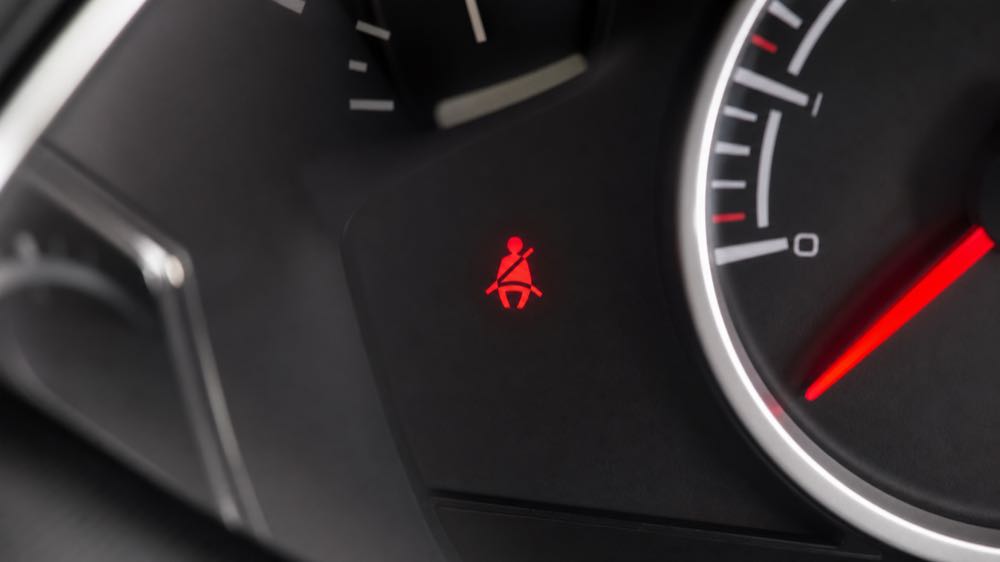
The seat belt warning light is a reminder that the driver or a passenger may not be buckled correctly. In most cases, it is simple: latch the seat belt, remove heavy items from the passenger seat, and the warning should turn off. If the seat belt light stays on after everyone is buckled, the car may have a buckle switch, passenger occupancy sensor, wiring, or restraint-system fault.
This warning is usually less urgent than a red oil pressure light or overheating warning, but it still matters. Seat belts are the first layer of crash protection, and modern vehicles connect some seat belt components to the airbag and SRS system. A warning that will not clear should be checked instead of ignored or bypassed.
For a wider symbol-by-symbol guide, see our full page on dashboard warning lights. This article focuses only on the seat belt warning light and chime.
Quick Checks Before You Panic
Start with the simple checks. Many seat belt light problems are caused by something ordinary inside the cabin.
- Make sure the driver seat belt is fully latched until it clicks.
- Ask every passenger to buckle and re-latch their belt.
- Remove bags, laptops, tools, groceries, or child seats from the front passenger seat if no one is sitting there.
- Check that the belt is not twisted, trapped in the door, or only partly inserted.
- Turn the vehicle off, open and close the doors, then restart if the light seems stuck after moving items.
- Look for an airbag/SRS warning light at the same time.
Do not insert fake buckles, disable the chime, or unplug seat wiring to silence the warning. That can interfere with restraint-system logic and may create bigger safety problems.
Seat Belt Warning Light Quick Guide
| What you see | Likely meaning | Best next step |
|---|---|---|
| Light turns off after buckling | Normal reminder behavior | No repair needed |
| Light stays on with driver buckled | Belt latch, buckle switch, or wiring issue possible | Re-latch, inspect buckle area, scan if persistent |
| Light or chime starts with bag on passenger seat | Passenger occupancy sensor thinks someone is sitting there | Remove the item from the seat |
| Light stays on with passenger buckled | Passenger buckle switch or occupancy sensor issue possible | Try re-latching; inspect if it continues |
| Seat belt light plus airbag light | Restraint-system fault possible | Have SRS codes checked |
What the Seat Belt Warning Light Means
The seat belt warning light is controlled by the vehicle’s reminder system. It uses seat belt buckle switches, door or ignition status, vehicle speed, and sometimes passenger occupancy sensors to decide when to show the warning or sound a chime.
On many vehicles, the light comes on when you start the car and turns off after the driver buckles up. Some vehicles also monitor the front passenger seat. If the passenger seat sensor detects weight but the passenger buckle is not latched, the light or chime may stay active.
This is why a heavy backpack, laptop bag, package, tool bag, or grocery load can trigger the warning even when no passenger is there. The car is not being dramatic; it is reacting to weight on the seat.
Why the Seat Belt Light Stays On
The Belt Is Not Fully Latched
A seat belt can look connected without being fully latched. Dirt, crumbs, coins, or a weak latch spring can stop the buckle from confirming the belt is locked. Press the release button, remove the belt, and latch it again firmly.
If the buckle feels loose, sticky, or inconsistent, do not force objects into it. A damaged buckle can affect both the reminder and the belt’s ability to hold properly.
Heavy Items Are on the Passenger Seat
The front passenger seat may have an occupancy sensor. If it senses enough weight, the car may assume a passenger is present. If the passenger belt is not buckled, the warning light or chime can turn on.
This is common with backpacks, laptops, large handbags, toolboxes, grocery bags, and sometimes child seats. Move the item to the floor or rear seat and see whether the warning changes.
Buckle Switch Problem
Inside or near the buckle is a switch that tells the car whether the belt is latched. If that switch fails, the car may think the belt is unbuckled even when it is clicked in.
Symptoms can include a warning light that flickers, a chime that starts and stops randomly, or a light that only clears when the belt is pushed a certain way. A scan tool that can read body or restraint-system data may show buckle status.
Passenger Occupancy Sensor Issue
If the passenger seat sensor is out of calibration or damaged, the car may incorrectly detect a passenger or fail to recognize one. This can affect the seat belt reminder and, in some vehicles, passenger airbag logic.
Because passenger occupancy sensors may connect to the restraint system, diagnosis should follow the service information for the exact vehicle. Guessing with seat wiring is not a good idea.
Under-Seat Wiring Connector
Seat movement, interior cleaning, water spills, or previous seat removal can disturb wiring under the seat. A loose connector can create a seat belt warning, airbag warning, or both.
Many airbag and pretensioner connectors are under or near the seats. They are often color-coded, but the safest approach is to avoid unplugging them casually. If the warning appeared after seat work, have the wiring inspected properly.
Seat Belt Pretensioner or SRS Fault
Some seat belt components are part of the supplemental restraint system. A pretensioner can tighten the belt during certain crashes, working with airbags to help control occupant movement.
If the seat belt warning appears with an airbag warning light, treat it as more than a reminder problem. The SRS module may have stored a diagnostic trouble code that needs a capable scan tool.
Door, Ignition, or Cluster Logic
Less commonly, a door switch, instrument cluster issue, body control module problem, or software logic fault can keep the warning active. These are not the first things to suspect, but they become possible when buckle and passenger-seat signals test normally.
Is It Safe to Drive With the Seat Belt Light On?
If everyone is properly buckled and the car drives normally, you may be able to drive to your destination or repair appointment. But you should not ignore a seat belt light that stays on every trip, especially if the chime continues or another restraint warning is present.
The risk depends on the cause. A bag on the passenger seat is easy to fix. A faulty buckle switch may only affect the reminder signal. A pretensioner, occupancy sensor, or SRS-related fault can affect crash protection. Without diagnosis, you do not know which one you have.
Seat Belt Light vs Airbag Light
The seat belt light and airbag light are different warnings, but they can be connected.
The seat belt light is usually a reminder that someone needs to buckle up. The airbag warning light means the supplemental restraint system has detected a fault. Seat belt pretensioners, occupancy sensors, and under-seat wiring can overlap with SRS logic.
If only the seat belt light is on, start with simple cabin checks. If the airbag/SRS light is also on, get the restraint system scanned instead of treating it as only a reminder issue.
Why You Should Not Bypass the Warning
A seat belt warning can be annoying, especially when the chime will not stop. Still, bypassing it with fake belt clips, unplugged connectors, or coding tricks can create safety and legal problems.
The warning exists because seat belt use saves lives. In many vehicles, the car also uses buckle and occupant information to make restraint-system decisions. Silencing the warning without fixing the cause can hide a real fault.
If the system is wrong, repair the input. Do not defeat the warning.
What a Mechanic May Check
A technician may check live data from the buckle switch, passenger occupancy sensor, body control module, and SRS module. They may inspect the buckle, latch operation, wiring under the seat, connector condition, stored diagnostic trouble codes, and whether the warning changes when weight is added or removed from the passenger seat.
On some vehicles, occupancy sensor calibration or module programming may be needed after seat repairs. That is one reason a basic engine-only OBD2 scanner may not be enough.
Repair Cost Context
Repair cost depends on the cause. Removing cargo from the passenger seat costs nothing. Cleaning around a buckle or re-latching the belt may solve a simple issue. A buckle assembly, occupancy sensor, pretensioner, wiring repair, or module-related problem can cost more because parts and diagnosis vary by vehicle.
Paying for diagnosis first is usually smarter than replacing a buckle at random. The same warning can be caused by several different signals.
When to Get Help Quickly
Have the vehicle inspected soon if the seat belt light stays on with everyone buckled, the chime will not stop, the warning appeared after seat removal or interior work, or the airbag/SRS light is on too. Also get help if the buckle does not click securely or the belt retracts poorly.
A seat belt system should feel boring and dependable. If it does not, treat the warning as a real safety item.
FAQ
Why is my seat belt warning light on when I am buckled?
The buckle may not be fully latched, the buckle switch may be faulty, or the car may have a wiring or restraint-system fault. Re-latch the belt first, then have it scanned if the warning stays on.
Can a bag on the passenger seat turn on the seat belt light?
Yes. Many vehicles use a passenger occupancy sensor. A heavy bag, laptop, groceries, tools, or other cargo can make the car think a passenger is sitting there without a seat belt.
Is it safe to drive with the seat belt warning light on?
If everyone is buckled and no other warning lights are present, you may be able to drive carefully to a repair appointment. Do not ignore it long-term because the cause may involve restraint-system components.
Why is my seat belt chime not stopping?
The car may think a belt is unbuckled because of a passenger-seat weight sensor, buckle switch problem, latch issue, or wiring fault. Remove items from the passenger seat and re-latch the belts before diagnosis.
Is the seat belt light connected to the airbag system?
Sometimes. Seat belt pretensioners, passenger occupancy sensors, and under-seat wiring can connect to SRS logic. If the airbag light is also on, have the SRS system scanned.
Can I disable the seat belt warning chime?
You should not bypass or disable the warning to hide a fault. It can create safety issues and may interfere with restraint-system behavior. Fix the cause instead.