
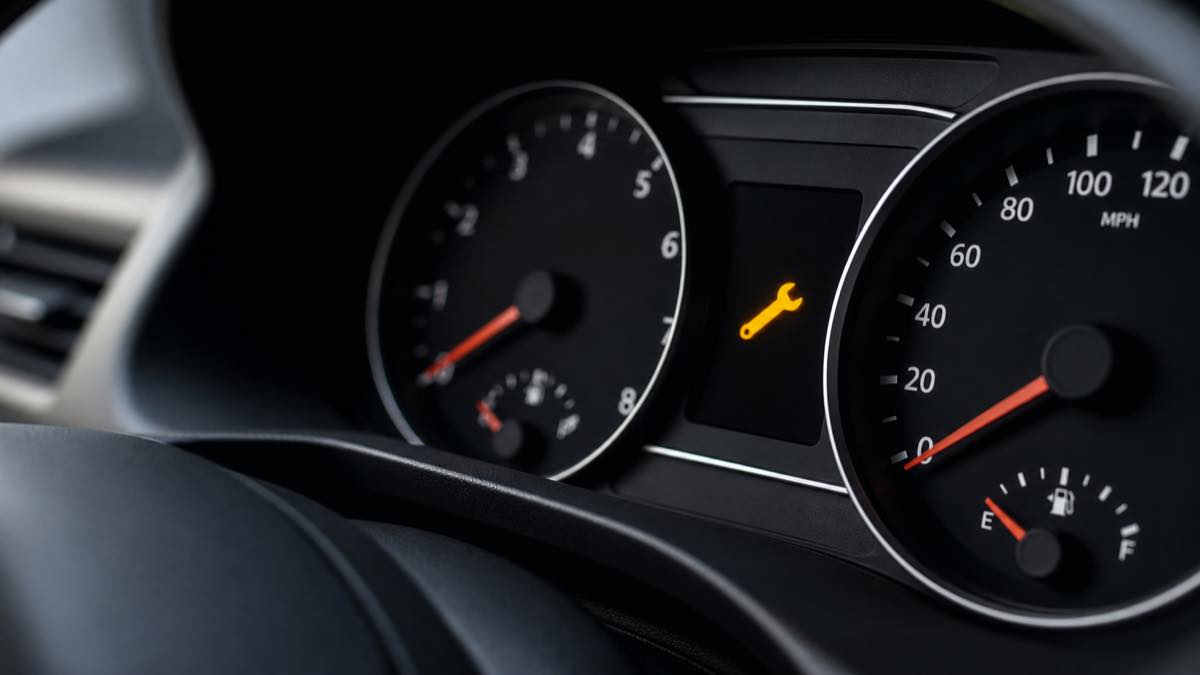
That wrench icon lighting up on your dashboard can trigger instant worry. Is your car about to break down? Do you need to pull over immediately? The good news: a wrench light usually isn’t an emergency, but it does mean your vehicle needs attention soon.
We’ll walk you through what this warning light actually means, why it appears, and the practical steps you should take right now.
What Does the Wrench Light Mean?
The wrench light (sometimes called the service light or maintenance light) is your vehicle’s way of telling you that the onboard diagnostic system has detected a problem. Unlike the check engine light, which signals emissions or engine-related issues, the wrench light typically indicates that your car needs scheduled maintenance or has detected a powertrain fault.
Different manufacturers use slightly different meanings for this light. Ford, for example, uses a wrench icon to indicate that your vehicle needs service or that a powertrain fault has been detected. Other brands might use it to signal transmission issues, engine problems, or routine maintenance needs.
Common Reasons Your Wrench Light Appears
Scheduled Maintenance Due
The most common reason for a wrench light is that your vehicle’s maintenance interval has been reached. This could mean:
- Oil change needed
- Filter replacement (air, cabin, or fuel)
- Fluid checks or top-ups
- Tire rotation time
- Spark plug service
Modern vehicles track your driving habits and mileage, automatically calculating when maintenance is due. If you’ve been putting off that oil change, the wrench light is your reminder.
Transmission Problems
A wrench light can indicate transmission issues ranging from minor to serious. You might notice:
- Rough shifting between gears
- Delayed response when accelerating
- Transmission fluid leaks under your car
- Burning smell from the transmission
- Slipping gears or loss of power
Transmission repairs can be expensive, so addressing this early is important. Don’t ignore symptoms like these.
Engine Misfires or Performance Issues
Sometimes the wrench light appears when your engine isn’t running smoothly. This could be caused by:
- Faulty spark plugs
- Bad ignition coils
- Fuel injector problems
- Vacuum leaks
- Catalytic converter issues
Engine misfires reduce fuel efficiency and can damage your catalytic converter if left untreated, so getting a diagnostic scan is worthwhile.
Loose or Faulty Gas Cap
Believe it or not, a loose gas cap can trigger warning lights on some vehicles. The cap helps maintain fuel system pressure and prevents fuel vapor leaks. If it’s loose or damaged, your vehicle’s sensors will detect the problem.
This is the easiest fix: simply tighten your gas cap or replace it if it’s cracked. Drive for a few miles, and the light may reset automatically.
Electrical or Sensor Faults
Your vehicle has dozens of sensors monitoring engine performance, emissions, and transmission function. A faulty sensor can trigger the wrench light even if nothing is mechanically wrong. Common culprits include:
- Oxygen sensors
- Mass airflow sensors
- Throttle position sensors
- Temperature sensors
Is It Safe to Drive With the Wrench Light On?
In most cases, yes—but with caution. A wrench light is typically not an emergency warning like a red oil pressure light or temperature warning. However, the safety depends on what triggered it.
Safe to drive: If the light appeared and your car is running normally with no unusual sounds, smells, or performance changes, you can usually drive to a mechanic or dealership for diagnosis.
Drive carefully: If you notice any of these symptoms alongside the wrench light, reduce speed and head to a repair shop immediately:
- Rough idling or stalling
- Loss of power or acceleration
- Transmission slipping or grinding
- Burning smells
- Fluid leaks
- Unusual noises from the engine or transmission
Pull over immediately: If your vehicle shows signs of serious trouble (smoking, severe loss of power, brake failure), don’t attempt to drive it. Call for roadside assistance instead.
Step-by-Step: What To Do When Your Wrench Light Comes On
Step 1: Check for Obvious Issues
Before panicking, do a quick inspection:
- Tighten your gas cap if it’s loose
- Check your oil level (consult your owner’s manual for how)
- Look under the car for fluid leaks
- Listen for unusual engine or transmission noises
- Note any changes in how the car drives
Step 2: Get a Diagnostic Scan
The wrench light is vague by design—it could mean dozens of things. To know what’s actually wrong, you need a diagnostic scan. This reads the trouble codes stored in your vehicle’s computer.
You have three options:
- Dealership: Most expensive but uses manufacturer-specific diagnostic tools. Good if your car is under warranty.
- Independent mechanic: Usually cheaper and can handle most issues. Ask for recommendations from friends or check online reviews.
- Auto parts store: Many offer free or cheap diagnostic scans. This gives you the trouble codes to discuss with a mechanic.
Step 3: Review the Trouble Codes
Once you have the diagnostic codes, ask your mechanic to explain what they mean. Codes are formatted like “P0300” or “P0401.” Understanding the code helps you know whether the issue is urgent or can wait.
Don’t be afraid to ask questions. A good mechanic will explain the problem in plain language and give you repair options.
Step 4: Decide on Repairs
Once you know what’s wrong, you can decide whether to repair it immediately or schedule it for later. Consider:
- Is it a safety issue? (Brakes, steering, suspension)
- Will it get worse if ignored?
- What’s the cost of repair?
- How old is your vehicle?
- Do you have warranty coverage?
Routine maintenance issues can usually wait a week or two. Transmission or engine problems should be addressed sooner.
Wrench Light vs. Other Dashboard Warnings
Your dashboard has several warning lights, and it’s important to know which ones demand immediate attention.
- Wrench light (yellow/amber): Service needed soon, not usually an emergency
- Check engine light (yellow/amber): Emissions or engine issue, get scanned soon
- Oil pressure light (red): Stop driving immediately—engine damage risk
- Temperature light (red): Engine overheating—pull over and let cool
- Battery light (red): Charging system failure—get to a mechanic soon
- Brake warning light (red): Brake system issue—drive carefully to a mechanic
Red lights mean stop. Yellow lights mean service soon. This is a good rule of thumb for any warning light.
How to Prevent the Wrench Light From Coming On
Follow Your Maintenance Schedule
The easiest way to avoid warning lights is to stay on top of scheduled maintenance. Check your owner’s manual for the recommended service intervals. Most vehicles need:
- Oil changes every 3,000–10,000 miles (depending on oil type)
- Air filter replacement every 15,000–30,000 miles
- Tire rotation every 5,000–7,000 miles
- Transmission fluid service every 30,000–100,000 miles
- Spark plug replacement every 30,000–100,000 miles
Keep Your Vehicle Well-Maintained
Beyond scheduled maintenance, good habits prevent problems:
- Check fluid levels monthly (oil, coolant, brake fluid, transmission fluid)
- Inspect tires for wear and proper pressure
- Listen for unusual sounds and address them early
- Keep your gas tank at least a quarter full
- Drive smoothly and avoid aggressive acceleration
Address Warning Lights Promptly
Don’t ignore warning lights, even if your car seems fine. Small problems become big (and expensive) ones when ignored. A wrench light today might prevent an engine failure tomorrow.
Frequently Asked Questions
Can I Reset the Wrench Light Myself?
You can try disconnecting your car battery for 15 minutes to reset the light, but this only clears the code—it doesn’t fix the underlying problem. The light will come back on if the issue isn’t resolved. It’s better to diagnose and fix the actual problem.
How Much Does It Cost to Fix a Wrench Light Issue?
Costs vary wildly depending on the cause. A loose gas cap costs nothing. An oil change might be $30–$75. Transmission repairs can run $1,500–$4,000. Get a diagnostic scan first to know what you’re dealing with before committing to repairs.
Will My Car Fail Inspection With the Wrench Light On?
Yes, in most states. Any illuminated warning light will cause your vehicle to fail emissions or safety inspection. You’ll need to fix the issue and clear the code before passing inspection.
Is the Wrench Light the Same as the Check Engine Light?
No. The check engine light (usually a picture of an engine) indicates emissions or engine performance issues. The wrench light indicates service is needed or a powertrain fault has been detected. They’re separate warnings, though both require diagnostic attention.
Can I Ignore the Wrench Light if My Car Runs Fine?
Not recommended. Even if your car feels normal, the light indicates a problem your vehicle’s computer has detected. It might be something minor now, but ignoring it could lead to bigger issues. Get it scanned to be sure.
Final Thoughts
A wrench light on your dashboard isn’t the end of the world, but it does deserve your attention. In most cases, it’s telling you that routine maintenance is due or that a minor issue needs diagnosis. The key is to act promptly rather than ignore it.
Start with a diagnostic scan to understand what’s actually wrong. From there, you can make an informed decision about repairs. And going forward, stick to your maintenance schedule to keep warning lights from appearing in the first place.
Your vehicle is trying to communicate with you. Listen to what it’s saying, and you’ll avoid bigger problems down the road.