
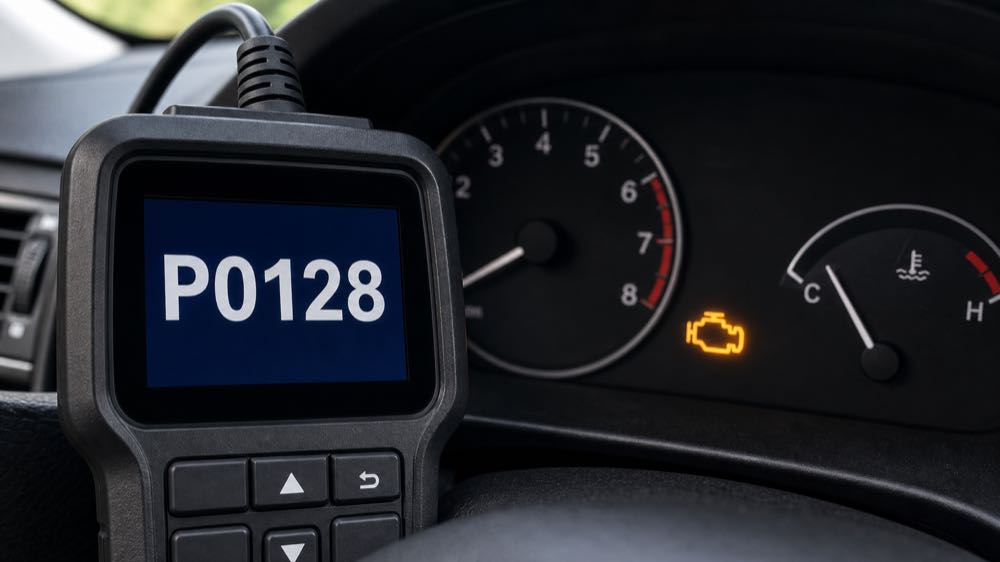
P0128 is an OBD2 diagnostic trouble code that means the engine is not reaching the expected operating temperature quickly enough. The formal definition is “coolant thermostat below regulating temperature.” In simple terms, the engine computer thinks the coolant is staying too cool for too long.
Most drivers see P0128 after the check engine light comes on. The car may still drive normally, but you may notice weak cabin heat, lower fuel economy, a temperature gauge that stays low, or a cooling fan that behaves strangely.
The most common cause is a thermostat stuck open, but P0128 can also come from low coolant, air trapped in the cooling system, a faulty engine coolant temperature sensor, wiring issues, or incorrect temperature readings.
P0128 Quick Facts
| Item | Details |
|---|---|
| Code | P0128 |
| Definition | Coolant thermostat below regulating temperature |
| System | Cooling system / engine temperature control |
| Common symptom | Check engine light with low or slow-rising temperature |
| Common cause | Thermostat stuck open |
| Driving risk | Usually low short-term if coolant level is normal |
| Best first step | Check coolant level and scan live coolant temperature data |
What P0128 Means
The engine control module expects the engine to warm up within a certain time after startup. It watches data such as engine coolant temperature, intake air temperature, run time, vehicle speed, and driving conditions. If coolant temperature stays below the expected range for too long, P0128 can set.
This does not mean the engine is overheating. It usually means the opposite: the engine is running cooler than expected or the computer thinks it is.
A modern engine is designed to run within a controlled temperature range. When it stays too cool, the computer may keep the fuel mixture richer than normal, emissions may increase, and fuel economy can drop.
Common Symptoms of P0128
P0128 symptoms are often mild.
- Check engine light on
- Temperature gauge stays low
- Engine warms up slowly
- Cabin heater feels weak or takes too long to get hot
- Lower fuel economy
- Cooling fan runs more than expected on some vehicles
- Failed emissions or inspection readiness
- No obvious drivability problem
If you see a red coolant warning or the engine temperature climbs too high, that is different from a normal P0128 situation. Read our coolant temperature warning light guide if the vehicle is overheating or showing a red temperature warning.
Can You Drive With a P0128 Code?
You can usually drive short-term with P0128 if the engine is not overheating, coolant level is correct, and the vehicle runs normally. However, you should still diagnose it soon.
Driving for a long time with the engine running too cool can reduce fuel economy, increase emissions, and keep the check engine light on. In cold weather, heater performance may also be poor.
Do not keep driving if the coolant level is low, the temperature gauge suddenly rises, steam appears, coolant leaks are visible, or the red temperature warning light comes on.
Common Causes of P0128
Thermostat Stuck Open
The thermostat controls coolant flow between the engine and radiator. When the engine is cold, the thermostat should stay closed so the engine warms up quickly. As the engine reaches operating temperature, it opens to regulate coolant flow.
If the thermostat sticks open, coolant circulates through the radiator too soon. The engine may take too long to warm up or may never reach the expected temperature in cold weather. This is the classic P0128 cause.
Low Coolant Level
Low coolant can affect temperature readings and heater performance. It can also create air pockets that confuse sensor data or reduce proper coolant flow.
Always check coolant only when the engine is cool. Opening a hot cooling system can be dangerous.
Air Pocket in the Cooling System
Air trapped in the cooling system can happen after coolant service, hose replacement, thermostat replacement, radiator work, or a leak. An air pocket can cause inconsistent temperature readings, weak heat, gurgling sounds, or uneven warm-up behavior.
Some vehicles require a specific bleeding procedure after cooling system repairs.
Faulty Coolant Temperature Sensor
The engine coolant temperature sensor, often called the ECT sensor, tells the computer how hot the coolant is. If the sensor reads colder than reality, the computer may set P0128 even if the thermostat is working.
Sensor diagnosis should compare scan-tool coolant temperature to actual conditions. For example, after sitting overnight, coolant temperature should be close to ambient temperature before startup.
Wiring or Connector Problem
A damaged ECT sensor connector, corroded terminals, or wiring issue can create incorrect temperature readings. This may happen near the sensor, thermostat housing, or engine harness.
Cooling Fan Running Too Much
If a cooling fan runs constantly when it should not, the engine may take longer to warm up. This is less common than a thermostat issue, but it can happen with fan control faults, relay problems, or sensor data issues.
Wrong Thermostat Temperature
If the wrong thermostat was installed, the engine may regulate at the wrong temperature. Some aftermarket thermostats may also open too early or fail sooner than expected.
Diagnostic Order: What to Check First
Use this order before replacing parts blindly.
- Confirm P0128 with an OBD2 scanner.
- Check for other cooling system or temperature sensor codes.
- Check coolant level when the engine is fully cool.
- Look for visible coolant leaks.
- Review freeze frame data to see when the code set.
- Compare live coolant temperature to ambient temperature before a cold start.
- Watch warm-up temperature data during the first several minutes of driving.
- Check heater performance and radiator hose temperature behavior.
- Inspect ECT sensor wiring and connector.
- Replace the thermostat if data supports slow warm-up or a stuck-open condition.
This process helps separate a bad thermostat from a bad temperature reading.
What Scan Data Can Show
Live data is very useful for P0128. A scan tool can show engine coolant temperature as the car warms up. A healthy engine should climb steadily toward normal operating temperature. The exact temperature varies by vehicle, but many engines operate around the 190-220 degree Fahrenheit range.
If temperature rises very slowly and stays low, the thermostat may be stuck open. If the displayed temperature is unrealistic, jumps around, or does not match a cold engine after sitting overnight, the ECT sensor or wiring may be suspect.
P0128 vs Overheating Warning
P0128 usually means the engine is too cool or warming too slowly. An overheating warning means the engine is too hot. They are opposite problems, but both involve the cooling system.
A car with P0128 may have a low temperature gauge. A car with an overheating warning may show a high gauge, steam, coolant loss, or a red warning light. Do not treat them the same way.
How Much Does P0128 Cost to Fix?
P0128 repair cost depends on the cause and vehicle layout.
| Possible repair | Typical U.S. cost range |
|---|---|
| Diagnostic scan and inspection | $75-$180 |
| Coolant top-off or bleed | $50-$200+ |
| Thermostat replacement | $200-$600+ |
| Coolant temperature sensor replacement | $100-$350+ |
| Wiring or connector repair | $100-$500+ |
| Cooling fan diagnosis/repair | $150-$800+ |
Some thermostats are easy to access, while others are built into housings or buried under intake components. Labor can change the final price a lot.
What Not to Do
Do not ignore low coolant. Do not open the radiator cap when the engine is hot. Do not replace the coolant temperature sensor just because P0128 mentions temperature. Do not assume overheating and P0128 are the same problem.
P0128 is usually manageable, but the cooling system still deserves careful checks.
FAQ
What does code P0128 mean?
P0128 means coolant thermostat below regulating temperature. The engine is not reaching expected operating temperature quickly enough, or the computer believes it is staying too cool.
Is P0128 usually a bad thermostat?
Yes, a thermostat stuck open is one of the most common causes. However, low coolant, air pockets, coolant temperature sensor issues, wiring problems, and cooling fan faults can also cause P0128.
Can I drive with a P0128 code?
You can usually drive short-term if coolant level is correct and the engine is not overheating. Diagnose it soon because running too cool can hurt fuel economy and emissions readiness.
Will P0128 cause bad gas mileage?
Yes, it can. If the engine stays too cool, the computer may use a richer fuel strategy longer than normal, which can reduce fuel economy.
Can low coolant cause P0128?
Yes. Low coolant or air pockets can affect temperature readings and warm-up behavior. Check coolant only when the engine is cool.
Will P0128 fail emissions?
It can. An active check engine light or incomplete readiness monitor can cause emissions or inspection failure.