
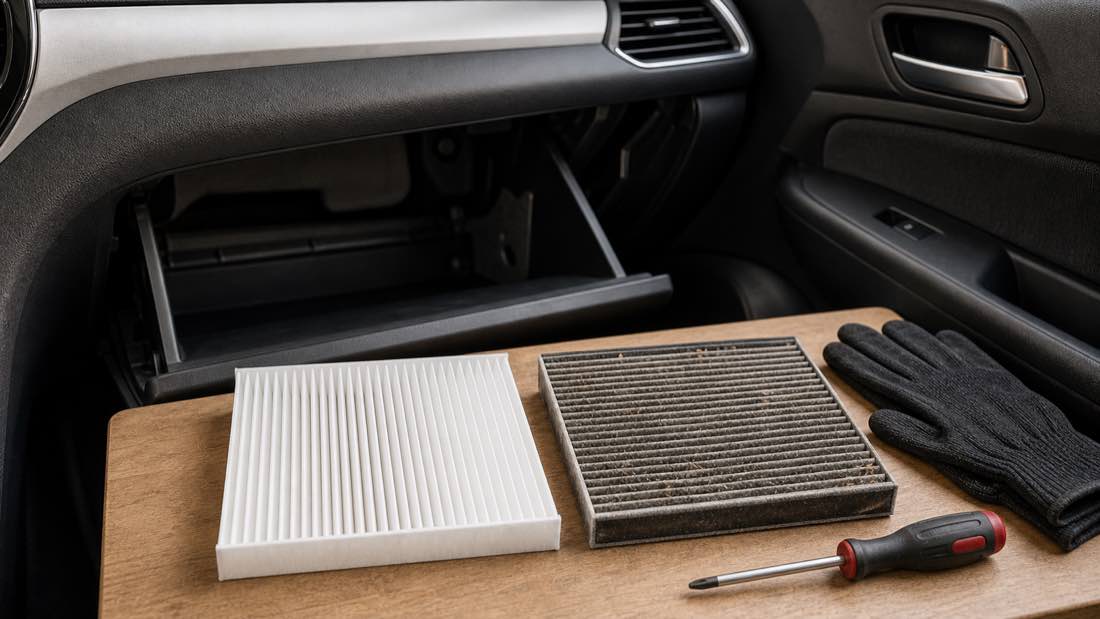
Most vehicles need a cabin air filter replacement every 12,000 to 15,000 miles, or about once a year. Some drivers can go longer, while drivers in dusty, high-pollen, smoky, or polluted areas may need a new cabin filter sooner.
The cabin air filter cleans air that enters the passenger compartment through the heating, ventilation, and air conditioning system. It does not protect the engine. That job belongs to the engine air filter. If you are planning routine service, see our complete car maintenance schedule by mileage and our engine air filter replacement interval guide so the two filters do not get mixed up.
Quick Cabin Air Filter Replacement Interval
| Driving or climate situation | Common cabin air filter interval |
|---|---|
| Normal driving | 12,000-15,000 miles or once a year |
| Heavy pollen season | Inspect every 6 months |
| Dusty roads or construction areas | Replace sooner if dirty |
| Wildfire smoke or heavy pollution | Inspect after the season/event |
| Rideshare, delivery, or high-mileage use | 2 times per year may be reasonable |
| Weak airflow or musty odor | Inspect now |
| Unknown used-car history | Replace now as baseline maintenance |
These are general ranges. Your owner’s manual gives the official interval, and your local air quality decides how quickly the filter loads up.
What a Cabin Air Filter Does
The cabin air filter sits in the HVAC air path and traps dust, pollen, leaves, soot, road debris, and other particles before they blow through the vents. On many vehicles, it is behind the glove box. On others, it may be under the dash or near the cowl below the windshield.
A clean cabin filter helps the blower motor move air through the heater and air conditioner. A dirty filter can restrict airflow, make the fan work harder, and make the interior feel stuffy even when the AC system itself is working.
Some filters are basic particulate filters. Others include activated carbon to help reduce odors. The correct choice depends on your vehicle, budget, and driving environment.
Cabin Air Filter vs Engine Air Filter
The cabin air filter and engine air filter are separate parts.
| Filter | Main job | Common symptom when dirty |
|---|---|---|
| Cabin air filter | Cleans air entering the cabin | Weak vent airflow, dust, odors |
| Engine air filter | Cleans air entering the engine | Reduced power if badly restricted |
Replacing the cabin air filter will not directly improve engine power. Replacing the engine air filter will not directly clean the air you breathe inside the car. Both matter, but they solve different problems.
Signs the Cabin Air Filter Is Dirty
Inspect or replace the cabin air filter if you notice:
- weak airflow from vents
- musty or dusty smell
- more dust on the dashboard
- windows fogging more easily
- noisy blower fan
- reduced AC or heater comfort
- allergy symptoms getting worse in the car
- leaves or debris around the cowl area
- filter looks dark, packed, damp, or moldy
Weak airflow does not always mean the cabin filter is the only problem. A blower motor, blend door, AC issue, or clogged evaporator drain can also affect comfort. But the filter is cheap and easy to inspect first.
Why Some Drivers Need It Sooner
Cabin filter life depends on the air outside the car. Drivers in Arizona dust, California wildfire smoke, rural gravel roads, high-pollen spring weather, urban traffic, and construction zones may load the filter much faster than drivers in cleaner areas.
Parking under trees can also matter. Leaves and seed pods can collect near the cowl intake and break down into debris. If water reaches the filter, it may smell musty or grow mildew.
If you use the vehicle for rideshare or delivery, the HVAC system runs more hours per year. In that case, replacing the filter twice a year can be a reasonable comfort choice even if mileage is not high.
A Simple Seasonal Schedule
For many US drivers, the easiest routine is to inspect the cabin filter twice a year: once before heavy AC season and once before winter. Spring inspection catches pollen and leaf debris. Fall inspection catches dust, smoke, and summer debris before you rely on defrost and heat.
If you only want one reminder, replace it once a year with another easy maintenance task. Many drivers pair it with an oil change, tire rotation, or annual inspection. The exact month matters less than not forgetting it for several years.
Drivers with allergies, asthma, or sensitivity to dust may prefer a shorter interval. A fresh filter will not make the car a medical-grade clean room, but it can reduce the amount of pollen and dust blowing directly through the vents.
Does It Affect AC Performance?
A clogged cabin filter can reduce airflow, which makes the AC feel weaker. The air may still be cold, but less of it reaches the cabin. The heater can feel weaker for the same reason.
If the airflow is strong but the air is not cold, the cabin filter is probably not the main issue. That points more toward AC refrigerant level, compressor operation, blend door problems, or cooling fan issues.
If airflow is weak on all fan speeds, inspect the cabin filter first. If a new filter does not improve airflow, the blower motor, resistor, ducting, or HVAC doors may need diagnosis.
What It Will Not Fix
A cabin air filter is important, but it is not a cure for every comfort problem. If the air smells sweet, the issue may be coolant from a heater core leak. If the carpet is wet, there may be a clogged AC drain, water leak, or weatherstrip problem. If the air is warm with strong airflow, the AC system may need diagnosis.
Musty odor can improve after a filter change if the old filter was damp or dirty. If the odor returns quickly, the source may be moisture on the evaporator, leaves in the cowl area, or mold in the HVAC case. In that situation, replacing filters repeatedly will not solve the root cause.
Do not spray strong cleaners into the vents without knowing the vehicle layout. Some products can damage trim, electronics, or leave a smell that bothers passengers.
How to Inspect It
Many cabin filters are easy to inspect:
- open the glove box
- release the glove box stops or damper arm if required
- remove the cabin filter cover
- slide the old filter out carefully
- note the airflow arrow direction
- check for dust, leaves, insects, dampness, or moldy smell
- install the new filter in the same airflow direction
- make sure the cover and glove box close correctly
Do not shake a dirty cabin filter inside the car. That can spread dust into the footwell and vents. If there is heavy debris in the housing, remove it carefully before installing the new filter.
Choosing the Right Cabin Filter
Use the filter listed for your exact vehicle. Cabin filters can look similar but differ in length, width, thickness, tab shape, and airflow direction.
Common cabin filter types include:
- standard particulate filters
- carbon cabin filters for odor reduction
- premium filters with finer media
- washable or reusable filters
Carbon filters can help with some odors from traffic and outside air, but they will not fix mold in the HVAC box, a water leak, or old food spilled in the car. If the smell returns quickly after replacement, look for moisture or HVAC problems.
Used Car Baseline
On a used car with no maintenance records, replacing the cabin air filter is a cheap reset. It is also a good inspection point. A filter packed with leaves, rodent debris, or moisture suggests the cowl area and HVAC intake should be checked more carefully.
If the car has a strong odor during a test drive, ask whether the cabin filter has been changed. Also check for wet carpet, water stains, and poor airflow. A $20 filter is easy. A leaking heater core, clogged drain, or moldy HVAC box is a different conversation.
For a newly purchased used vehicle, replace both the cabin air filter and engine air filter unless records show they were done recently. The two filters are inexpensive baseline items and remove one unknown from the maintenance list.
DIY or Repair Shop?
Cabin air filter replacement is often DIY-friendly. Many vehicles need no tools or only a small screwdriver. Some vehicles are less friendly because the filter is under the dash, behind trim panels, or in a tight cowl area.
Use a repair shop if:
- the glove box stops feel like they may break
- trim panels must be removed
- the filter housing is hard to access
- the old filter is wet or moldy
- the blower fan is noisy
- airflow stays weak after replacement
- there is water on the passenger floor
- you are not sure about airflow direction
Installing the filter backward is usually not catastrophic, but it can reduce fit or performance. Follow the arrow on the filter and the manual.
Cabin Air Filter Replacement Cost
Cabin air filter cost depends on filter type and labor access.
| Service | Typical US cost range |
|---|---|
| DIY standard cabin filter | $10-$30+ |
| DIY carbon or premium filter | $20-$60+ |
| Shop replacement | $40-$120+ |
| Difficult-access vehicle | Higher labor |
| HVAC odor or water diagnosis | Often $100-$200+ |
For many cars, DIY replacement is cheaper than having it added to a shop visit. But if the filter is buried behind panels, paying for labor may be worth avoiding broken clips.
When to Buy the Filter Ahead of Time
If your vehicle uses a common cabin filter, keeping one spare at home is handy. You can inspect the old filter during a weekend, compare it with the new one, and replace it immediately if it is packed with debris. For less common vehicles, check the part number before opening the glove box so the car is not left apart while you search for the correct replacement filter.
Always compare the old and new filters before installation. The pleat direction can differ, but the outer size, tabs, seal shape, and airflow direction should make sense for the housing.
Common Mistakes
Avoid these cabin filter mistakes:
- confusing it with the engine air filter
- ignoring the airflow arrow
- forcing the glove box stops
- leaving the filter cover loose
- buying the wrong size
- shaking dust into the cabin
- ignoring water or mold on the filter
- assuming a filter fixes every AC issue
- forgetting it for several years
- installing a scented filter to hide a real odor problem
The cabin air filter is a comfort and air-quality maintenance item. It is inexpensive, easy to forget, and very noticeable once it gets truly dirty.
FAQ
How often should you replace a cabin air filter?
Most vehicles need a cabin air filter every 12,000 to 15,000 miles or about once a year. Dust, pollen, smoke, and heavy use can shorten the interval.
What happens if you do not replace the cabin air filter?
Airflow can become weak, odors can build up, dust can increase inside the cabin, and the blower motor may work harder to move air.
Does a cabin air filter affect AC?
Yes, a clogged cabin filter can reduce airflow through the vents and make AC feel weaker, even if the air conditioning system is cooling properly.
Is the cabin air filter the same as the engine air filter?
No. The cabin air filter cleans air entering the passenger cabin. The engine air filter cleans air entering the engine.
Can I replace a cabin air filter myself?
Often yes. Many cabin filters are behind the glove box and can be replaced with no tools or a small screwdriver.
Why does my car smell musty after replacing the cabin filter?
The odor may be coming from moisture, mold, leaves, or bacteria in the HVAC box or evaporator area, not only from the filter.
Should I buy a carbon cabin air filter?
A carbon cabin filter can help reduce some outside odors, traffic smells, and smoke, but it costs more and still needs regular replacement.
How much does cabin air filter replacement cost?
A DIY cabin filter often costs $10-$60+. Shop replacement commonly costs about $40-$120+, depending on access and filter type.