
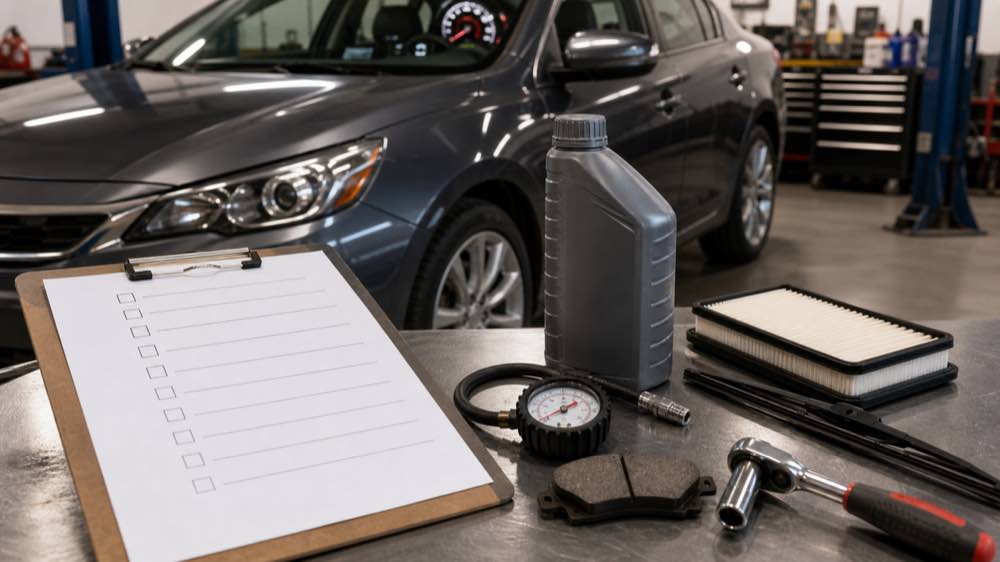
A complete car maintenance schedule by mileage gives you a simple way to prevent expensive repairs before they start. The exact interval for your vehicle should come from the owner’s manual, but most US drivers can use mileage ranges to plan oil changes, tire rotations, brake checks, fluid service, filters, batteries, spark plugs, belts, and inspections.
The important rule is mileage or time, whichever comes first. A car that only drives 4,000 miles a year still needs regular maintenance because oil, rubber, coolant, brake fluid, batteries, and tires age even when mileage is low.
Use this guide as a practical maintenance framework. Then compare it with your owner’s manual, especially if you drive a turbocharged engine, hybrid, EV, truck, severe-duty vehicle, or anything still under warranty.
Quick Maintenance Schedule
| Interval | Maintenance tasks to consider |
|---|---|
| Monthly | Tire pressure, lights, wipers, fluid levels, leaks, tire condition |
| Every 3,000-7,500 miles | Oil level, oil change if due, tire rotation, basic inspection |
| Every 10,000-15,000 miles | Cabin air filter, engine air filter inspection, brake inspection |
| Every 20,000-30,000 miles | Brake fluid check, coolant check, battery test, alignment check |
| Every 30,000-60,000 miles | Transmission fluid service if required, spark plugs on some vehicles, belts/hoses |
| Every 60,000-100,000 miles | Coolant service, differential fluid, transfer case fluid, spark plugs, timing belt if equipped |
| 100,000 miles and beyond | Full high-mileage inspection, suspension, mounts, leaks, cooling system, ignition, drivetrain |
These are general ranges. Some vehicles use longer intervals, while severe driving may require shorter service.
Normal vs Severe Driving
Many drivers think “severe service” means towing heavy loads or off-roading. It can, but it also includes common everyday driving.
Severe driving can include:
- repeated short trips
- stop-and-go traffic
- extreme heat or cold
- dusty roads
- mountain driving
- frequent idling
- towing or carrying heavy loads
- rideshare, delivery, or commercial use
If your driving fits those conditions, follow the severe-service schedule in the owner’s manual. It often shortens oil, transmission fluid, coolant, brake fluid, and filter intervals.
Monthly Checks
Monthly maintenance is simple but powerful. Check tire pressure before long trips or when temperatures change. Low tire pressure can trigger the TPMS light and can reduce fuel economy, tire life, and handling.
Look for fluid leaks under the car, uneven tire wear, cracked wiper blades, weak lights, unusual smells, and low fluid levels. A quick walkaround can catch problems before they become warning lights.
Also check the battery terminals for corrosion and make sure the battery is secure. A loose or corroded battery connection can create starting and charging problems.
Every 3,000 to 7,500 Miles
Oil service is the maintenance item most drivers know best. Many modern cars using synthetic oil can go 5,000 to 10,000 miles, but the right interval depends on the vehicle, oil type, driving conditions, and manufacturer recommendation.
At this interval, also rotate tires if your owner’s manual recommends it. Tire rotation helps even out wear between front and rear tires. It is especially important for front-wheel-drive vehicles, performance tires, trucks, and SUVs.
Use this visit for a quick inspection: tire tread depth, brake pad thickness, fluid leaks, belts, hoses, lights, and wipers.
If the oil pressure light comes on, that is not normal maintenance anymore. Read the oil pressure warning light guide and stop driving safely.
Every 10,000 to 15,000 Miles
Inspect or replace the cabin air filter and engine air filter. The cabin air filter affects HVAC airflow and interior air quality. The engine air filter helps keep dirt out of the intake.
A dirty engine air filter can reduce performance on some vehicles, especially under load. A clogged cabin filter can make the fan noisy, reduce defrost performance, and make the air conditioning feel weak.
Brake inspection also belongs here. A shop can measure brake pad thickness, inspect rotors, check calipers, and look for brake fluid leaks.
Every 20,000 to 30,000 Miles
This is a good range for deeper checks: brake fluid condition, coolant condition, battery health, wheel alignment, suspension wear, and fluid leaks.
Brake fluid absorbs moisture over time. That can lower boiling point and contribute to corrosion inside the brake system. If the brake warning light appears or the pedal feels soft, read the brake warning light guide and avoid normal driving until the brake system is checked.
Battery testing is also smart around this mileage range, especially if the battery is more than three years old or the car cranks slowly.
Every 30,000 to 60,000 Miles
Many vehicles need important fluid and ignition checks between 30,000 and 60,000 miles. This may include transmission fluid service, spark plugs on some engines, power steering fluid, differential fluid, transfer case fluid, serpentine belt inspection, and fuel filter service if applicable.
Transmission fluid intervals vary widely. Some vehicles list a service interval; others call the fluid “lifetime” under normal conditions but still require service under severe driving. If you tow, drive in heat, or sit in traffic often, transmission fluid deserves closer attention.
Spark plug intervals also vary. Some plugs last 30,000 miles, while long-life iridium plugs may last much longer. Do not guess; use the vehicle-specific interval.
Every 60,000 to 100,000 Miles
At this stage, focus on long-life fluids and wear items. Coolant service may be due, spark plugs may be due, belts and hoses need close inspection, and timing belt replacement may be required on engines that use one.
Do not ignore coolant. Old coolant can lose corrosion protection and contribute to cooling-system problems. If the car overheats or shows a coolant temperature warning, use the coolant temperature warning light guide and stop driving safely.
Timing belts are especially important. If a timing belt fails on an interference engine, it can cause serious engine damage. Follow the exact manufacturer interval.
100,000 Miles and Beyond
High-mileage vehicles need more inspection, not less. A 100,000-mile service should look at suspension parts, wheel bearings, engine mounts, fluid leaks, cooling system condition, ignition components, drivetrain fluids, exhaust leaks, and rubber hoses.
At this mileage, maintenance records matter. If you bought the car used and do not know what was done, treat missing records as a reason to inspect and baseline key fluids and wear items.
Avoid replacing everything at once without diagnosis, but do not let small leaks, worn tires, weak brakes, or overheating symptoms pile up.
DIY vs Mechanic
| Task | DIY-friendly? | Notes |
|---|---|---|
| Tire pressure check | Yes | Use a reliable gauge when tires are cold |
| Wiper blade replacement | Yes | Match blade size and connector type |
| Engine air filter | Usually | Make sure the airbox seals correctly |
| Cabin air filter | Usually | Some vehicles require glovebox removal |
| Oil change | Sometimes | Requires safe lifting, drain pan, correct oil, and disposal |
| Tire rotation | Sometimes | Requires safe jack stands and torque wrench |
| Brake inspection | Sometimes | Pad replacement requires more skill and safety care |
| Brake fluid, transmission fluid, timing belt | Usually mechanic | Higher risk if done incorrectly |
DIY is fine for simple inspections and maintenance if you have the right tools and understand the procedure. Brakes, fuel systems, airbags, high-voltage hybrid/EV parts, and major drivetrain work need more caution.
Warning Lights Mean You Are Past Routine Maintenance
Maintenance should prevent warning lights, not wait for them. A TPMS light may mean low tire pressure. A brake warning light may mean low brake fluid, parking brake issues, or brake system trouble. An oil pressure light can mean immediate engine risk. A coolant temperature warning can mean overheating.
If a warning light appears, treat it as diagnosis, not routine maintenance. The schedule helps you stay ahead of those problems.
Maintenance Cost Context
| Maintenance item | Typical U.S. cost range |
|---|---|
| Oil change | $40-$120+ |
| Tire rotation | $20-$80 |
| Cabin air filter | $25-$100+ |
| Engine air filter | $25-$100+ |
| Brake inspection | $0-$150 |
| Brake fluid service | $100-$250+ |
| Coolant service | $120-$300+ |
| Transmission fluid service | $150-$400+ |
| Spark plug replacement | $150-$600+ |
| Timing belt service | $600-$1,500+ |
Costs vary by vehicle, region, labor rate, fluid type, and whether other repairs are found.
Maintenance Records
Keep records for every oil change, tire rotation, brake job, fluid service, battery replacement, and major repair. Records help you avoid duplicate work, support warranty claims, and make the car easier to sell.
At minimum, record the date, mileage, service performed, parts used, shop name, and receipt. A phone note, spreadsheet, maintenance app, or folder in the glovebox can work.
FAQ
What is the best car maintenance schedule by mileage?
The best schedule is the one in your owner’s manual. As a general guide, check basics monthly, service oil and rotate tires around 3,000-7,500 miles if due, inspect filters and brakes around 10,000-15,000 miles, and plan larger fluid and spark plug services between 30,000 and 100,000 miles.
Should I follow mileage or time for maintenance?
Follow whichever comes first. Low-mileage cars still need maintenance because oil, brake fluid, coolant, tires, batteries, belts, and rubber parts age over time.
How often should I change my oil?
Many modern vehicles use 5,000-10,000 mile oil intervals with synthetic oil, but the correct interval depends on your vehicle, oil type, driving conditions, and owner’s manual.
How often should I rotate tires?
Many drivers rotate tires every 5,000-7,500 miles, often with oil service. Check your owner’s manual and tire wear pattern.
What maintenance is due at 60,000 miles?
Common 60,000-mile items can include coolant service, spark plugs on some vehicles, transmission fluid service if required, brake fluid, belts, hoses, filters, and a full inspection.
What maintenance is due at 100,000 miles?
A 100,000-mile service may include spark plugs, coolant, timing belt if equipped, drivetrain fluids, belts, hoses, suspension inspection, brake inspection, battery test, and leak checks.
Can I do car maintenance myself?
Some tasks are DIY-friendly, such as tire pressure, wipers, air filters, and basic fluid checks. Oil changes and tire rotations require proper tools and safety. Brake fluid, timing belts, transmission service, and hybrid/EV high-voltage work are usually better left to a mechanic.