
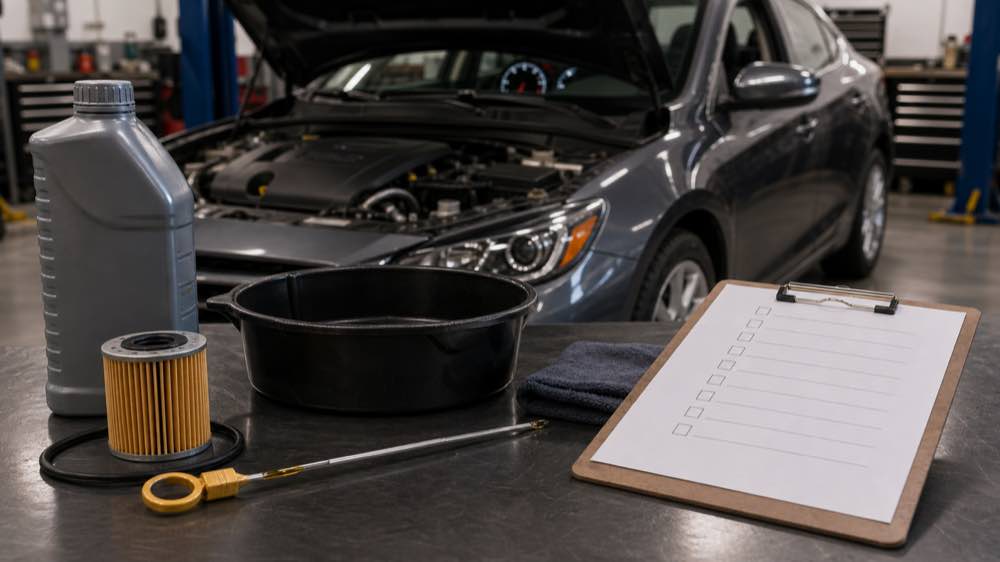
Most drivers should change engine oil based on the owner’s manual, oil-life monitor, and driving conditions. A common modern range is about 5,000 to 10,000 miles with synthetic oil, but some vehicles need shorter intervals and some allow longer ones. Time matters too: if you do not drive much, many cars still need an oil change about every 6 to 12 months.
The old “every 3,000 miles” rule is not wrong for every car, but it is not the right answer for every car either. Modern engines, better oil, and oil-life monitoring systems have changed the interval for many vehicles.
The safest answer is simple: follow the owner’s manual first, shorten the interval for severe driving, and do not keep driving if the oil pressure warning light comes on.
For the broader service plan, see our complete car maintenance schedule by mileage.
Quick Answer
| Vehicle/use case | Common oil change interval |
|---|---|
| Older vehicle or conventional oil | About 3,000-5,000 miles |
| Modern vehicle with synthetic blend | About 5,000-7,500 miles |
| Modern vehicle with full synthetic oil | About 5,000-10,000 miles |
| Severe driving, towing, short trips, heavy traffic | Use the severe-service interval |
| Low-mileage car | Often every 6-12 months even if mileage is low |
| Oil-life monitor equipped vehicle | Follow the monitor, but still respect time and severe-use guidance |
These are general ranges, not a substitute for your vehicle-specific manual.
Mileage vs Time: Which Matters More?
Both matter. Mileage tells you how much the engine has been used, but time tells you how long oil has been exposed to moisture, fuel dilution, temperature cycles, and aging.
A driver who puts 12,000 highway miles on a car in a year may have a different oil schedule than someone who drives 3,000 miles of short city trips. Short trips can be harder on oil because the engine may not stay hot long enough to burn off moisture and fuel.
If you drive very little, do not wait several years for the odometer to reach the mileage limit. Use the time interval in the owner’s manual.
Normal vs Severe Driving
Many US drivers fall into severe-service conditions without realizing it. Severe driving can include:
- frequent short trips
- stop-and-go traffic
- extreme heat or cold
- dusty roads
- towing or hauling
- long idling
- mountain driving
- rideshare, delivery, or commercial use
If your driving fits these conditions, change oil closer to the severe-service interval. Severe driving can break down oil faster and increase contamination.
Synthetic vs Conventional Oil
Synthetic oil usually lasts longer and performs better under heat, cold starts, and heavy load than conventional oil. Many modern engines require synthetic oil or a specific oil specification.
Conventional oil may still be used in some older vehicles if the manufacturer allows it, but the interval is often shorter. Synthetic blend sits between conventional and full synthetic.
Do not choose oil only by price. Use the correct viscosity and specification listed in the owner’s manual or oil cap. The wrong oil can affect lubrication, fuel economy, variable valve timing, turbocharger protection, and warranty coverage.
Should You Trust the Oil-Life Monitor?
Many modern cars use an oil-life monitor instead of a fixed mileage sticker. These systems estimate oil life based on driving conditions, temperature, engine load, trip length, and other data. They do not usually test the oil directly.
Oil-life monitors are useful, but they still need common sense. If you tow, idle heavily, take many short trips, or drive in severe heat, make sure the monitor and the manual agree with your use. Also reset the monitor only after the oil is actually changed.
Signs Your Oil Change Is Overdue
You may be overdue for service if you notice:
- maintenance required light or oil life near zero
- oil level repeatedly low
- oil looks extremely dirty or thick
- engine sounds louder than usual
- burning oil smell
- oil leaks under the vehicle
- poor maintenance records
- overdue mileage or time interval
If you see oil leaking, use our car leaking fluid color guide to help identify it.
When It Is Not Just Routine Maintenance
An oil change is routine maintenance. Low oil pressure is not.
If the oil pressure warning light comes on, pull over safely and shut the engine off. Do not assume an oil change will fix it. Low oil pressure can mean low oil level, oil pump trouble, engine wear, a clogged pickup screen, wrong oil, or a sensor problem. Read our oil pressure warning light guide before driving further.
If the engine knocks, loses power, or the oil light stays on, call roadside assistance.
DIY or Mechanic?
| Oil change option | Best for | Watch out for |
|---|---|---|
| DIY oil change | Drivers with safe lifting tools and correct oil/filter | Drain plug damage, wrong oil, overfilling, poor disposal |
| Quick-lube shop | Convenience and basic service | Confirm oil type/spec and filter quality |
| Independent mechanic | Inspection plus oil service | Usually costs more than quick-lube but may catch issues |
| Dealer service | Warranty, recalls, model-specific procedures | Often higher cost |
DIY can save money, but only if you can lift the car safely, use the right oil and filter, torque the drain plug correctly, and dispose of used oil properly.
Oil Change Cost
| Service type | Typical U.S. cost range |
|---|---|
| Conventional oil change | $30-$70 |
| Synthetic blend oil change | $40-$90 |
| Full synthetic oil change | $60-$140+ |
| High-mileage oil change | $60-$150+ |
| Dealer oil service | $80-$180+ |
| DIY oil and filter | $30-$90+ |
Costs vary by oil capacity, oil specification, filter type, labor rate, region, and whether extra inspection or fluid top-off is included.
Before You Extend the Interval
Before stretching an oil change interval, check the oil level at least monthly and look at your maintenance records. Some engines consume oil between services, even when nothing is visibly leaking. If the level drops near the low mark before the next scheduled oil change, the interval may be too long for that engine or driving pattern.
Also think about warranty coverage. If your vehicle is still under warranty, keep receipts and use oil that meets the exact manufacturer specification. A longer interval is not worth it if it creates documentation problems later.
Common Mistakes
Do not make these oil maintenance mistakes:
- using the wrong viscosity
- ignoring the oil specification
- extending intervals without checking oil level
- resetting the oil-life monitor without changing oil
- overfilling the engine
- overtightening the drain plug
- using a low-quality filter on a long interval
- ignoring oil leaks
- waiting for an oil pressure light before service
Oil is cheaper than engine repair. A little discipline here saves real money later.
FAQ
How often should you change your oil?
Many modern vehicles need oil changes around 5,000 to 10,000 miles with synthetic oil, but the correct interval depends on your owner’s manual, oil type, driving conditions, and time interval.
Is 3,000 miles still necessary for oil changes?
Sometimes, but not for every car. Older vehicles, conventional oil, severe driving, or unknown maintenance history may justify shorter intervals. Many modern vehicles can go longer when the manual allows it.
How often should you change synthetic oil?
Synthetic oil intervals often fall around 5,000 to 10,000 miles, depending on the vehicle and driving conditions. Always follow the manufacturer recommendation.
Should I change oil by mileage or date?
Use whichever comes first. Low-mileage cars still need oil changes because oil ages and can collect moisture and fuel contamination.
Can I go a year without changing oil?
Some vehicles allow yearly oil changes under low-mileage normal driving, but others do not. Check the owner’s manual. Severe driving or many short trips may require more frequent service.
What happens if I wait too long to change oil?
Old oil can lose protection, collect contamination, form sludge, increase wear, and contribute to engine damage. Low oil level or low oil pressure can become urgent quickly.
Does the oil pressure light mean I need an oil change?
Not usually. The oil pressure light can mean the engine is not getting proper oil pressure. Stop driving safely and diagnose the cause instead of treating it as a normal oil change reminder.