
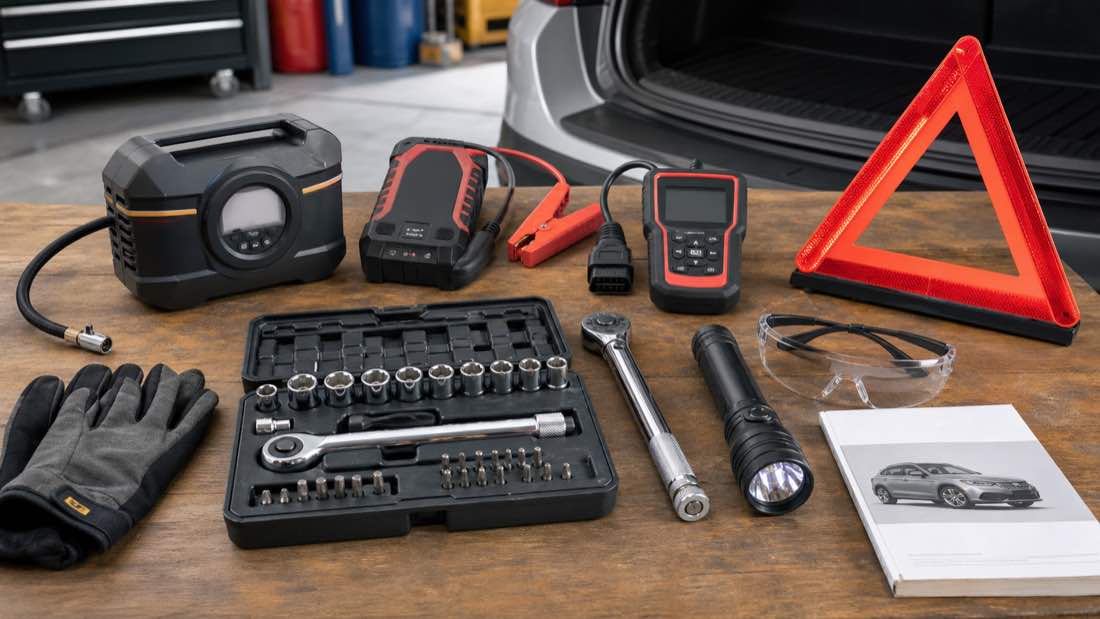
You do not need a mechanic’s toolbox to be a prepared driver. The basic car tools every driver should own are the tools that help you check tire pressure, handle a dead battery, stay visible on the shoulder, read a check engine light, and avoid making a small problem worse.
For most US drivers, the best starting point is a small car kit in the trunk plus a slightly larger garage kit at home. The trunk kit is for safety and simple roadside problems. The home kit is for basic maintenance, inspection, and small repairs. That split keeps the car organized and stops you from hauling 60 pounds of tools every day.
If you are building your first kit, start with safety, tire tools, battery tools, lighting, and a few hand tools. Then add diagnostic and maintenance tools as you get more comfortable.
Quick Starter List
| Tool or item | Keep in car? | Best use |
|---|---|---|
| Tire pressure gauge | Yes | Checking PSI before TPMS warnings or long trips |
| Portable tire inflator | Yes | Adding air at home, work, or roadside |
| Jump starter or jumper cables | Yes | Dead battery help |
| Flashlight or work light | Yes | Nighttime checks and roadside visibility |
| Gloves and safety glasses | Yes | Protecting hands and eyes |
| Reflective triangle or road flares | Yes | Warning traffic when stopped |
| OBD2 scanner | Optional in car | Reading check engine codes |
| Basic socket set | Home or car | Small repairs and battery terminals |
| Screwdriver set | Home or car | Trim panels, clamps, battery covers |
| Pliers | Home or car | Clips, hoses, stuck caps, small adjustments |
| Torque wrench | Home | Tightening wheels and parts correctly |
| Jack stands and wheel chocks | Home | Safer wheel-off work |
You can buy everything at once, but you do not have to. A pressure gauge, inflator, jump starter, flashlight, gloves, and reflective triangle are the most useful first buys for everyday drivers.
The Tools to Keep in Your Car
The car kit should be small, durable, and easy to reach. If the tool only makes sense in a garage, leave it at home. If it helps during a flat tire, dead battery, warning light, or dark roadside stop, it belongs in the car.
Tire Pressure Gauge
A tire pressure gauge is one of the cheapest tools with the biggest payoff. Low tire pressure can hurt fuel economy, wear tires unevenly, and make the car feel unstable. It can also trigger the TPMS warning light after pressure drops enough.
Check tire pressure when the tires are cold, using the PSI listed on the driver’s door jamb sticker, not the maximum pressure printed on the tire sidewall. A simple pencil gauge works, but a digital gauge is easier to read in poor light.
For a wider tire routine, pair this with our tire and rotation guidance in the how often should you rotate tires guide.
Portable Tire Inflator
A portable tire inflator lets you add air without hunting for a working gas-station pump. It is useful before a road trip, after a cold-weather pressure drop, or when one tire is slowly losing air.
Choose an inflator that shows PSI clearly and plugs into a 12-volt outlet or uses a reliable battery. It does not replace a real repair. If a tire keeps losing air, you still need inspection for a nail, bead leak, valve stem leak, or wheel damage.
Jump Starter or Jumper Cables
A compact lithium jump starter is easier than relying on another driver and a set of jumper cables. Keep it charged and read the instructions before you need it. Some units also work as a phone power bank or flashlight.
Jumper cables are still useful, especially if you buy a thick, long set. The downside is that you need another vehicle and you must connect the clamps correctly. If your battery is often weak, do not stop at jump-starting. Read our guide on how long a car battery lasts and test the battery and charging system.
Flashlight or Work Light
Your phone flashlight is fine for finding a dropped receipt. It is not ideal for checking a tire, reading a fuse box, or setting up a warning triangle at night. Keep a real flashlight or rechargeable work light in the car.
A headlamp is even better because it keeps both hands free. Store spare batteries if the light is not rechargeable.
Reflective Triangle, Vest, or Road Flares
Visibility is a safety tool. A reflective triangle, LED flare, or high-visibility vest helps other drivers see you when your vehicle is stopped on the shoulder. This matters at night, in rain, on curves, and near fast traffic.
Do not stand behind the car while setting things up. Move carefully, stay as far from traffic as possible, and call roadside help if the location feels unsafe.
Gloves and Safety Glasses
Gloves keep your hands cleaner and reduce cuts from sharp edges, hot parts, and dirty wheels. Safety glasses matter when you are inflating a tire, checking a battery area, working under the hood, or dealing with road debris.
Nitrile gloves are useful for fluids and grime. Mechanic gloves are better for handling tools and tire changes.
OBD2 Scanner
An OBD2 scanner plugs into the diagnostic port on most 1996 and newer vehicles sold in the US. It can read check engine codes and help you understand whether the car has a misfire, emissions fault, oxygen sensor issue, EVAP leak, or other stored code.
A scanner does not diagnose the car by itself. It gives a starting point. If the check engine light is flashing, that can mean an active misfire and possible catalytic converter damage. Start with our check engine light guide before driving far.
The Basic Tools to Keep at Home
Your home kit is where you can keep heavier tools and anything that requires a flat, safe workspace. These tools are useful for inspection, simple maintenance, and beginner DIY.
Socket Set and Ratchet
A metric socket set with a ratchet, extensions, and common sizes is the backbone of a beginner car tool kit. Most modern vehicles use metric fasteners. A 3/8-inch drive set is a good middle ground for general work.
Look for six-point sockets for stubborn fasteners because they grip better than many 12-point sockets. Add extensions so you can reach battery hold-downs, engine covers, underbody panels, and other awkward spots.
Wrench Set
Combination wrenches help where a socket cannot fit. A set from 8mm to 19mm covers many common jobs. The closed ring end is usually safer for tight bolts because it grips more sides of the fastener.
Adjustable wrenches are handy, but they should not be your main wrench for stuck bolts. They can slip and round a fastener if they do not fit tightly.
Screwdrivers and Bit Set
Buy a small set with flathead, Phillips, Torx, and trim-friendly bits. Cars use many screws, clips, clamps, and small covers. A magnetic bit driver saves space and makes it easier to keep sizes organized.
Do not use a screwdriver as a pry bar on painted trim or plastic clips. That is how small jobs turn into broken tabs and rattles.
Pliers
A basic plier set should include regular pliers, needle-nose pliers, and diagonal cutters. Add locking pliers later if you start doing more DIY work.
Pliers help with hose clamps, small clips, cotter pins, stuck caps, and light electrical work. They are not a substitute for the correct wrench on nuts and bolts.
Torque Wrench
A torque wrench tightens a fastener to a specific torque value. This is important for wheel lug nuts, spark plugs, drain plugs, brake parts, and other fasteners where too loose or too tight can cause problems.
For most beginners, a 1/2-inch drive torque wrench is useful for wheels, and a 3/8-inch drive torque wrench is useful for smaller jobs. Store a click-style torque wrench at its lowest setting, not cranked high.
Jack Stands and Wheel Chocks
The spare-tire jack that comes with a vehicle is for emergency tire changes, not comfortable garage work. If you plan to remove a wheel at home, use a quality floor jack, jack stands, and wheel chocks on a flat surface.
Never crawl under a vehicle supported only by a jack. That rule is not negotiable. If the job requires getting under the car and you do not have the right support equipment, pay a shop.
Useful Upgrades After the Basics
Once the starter kit is handled, a few small upgrades make sense. A tire tread depth gauge helps you track tire wear instead of guessing from a quick glance. A multimeter can help check battery voltage, fuses, and simple electrical problems, but only use it after learning the basics of voltage, resistance, and meter settings.
A breaker bar can help loosen tight wheel lug nuts at home, but it should not be used to tighten them. Tightening is the torque wrench’s job. A tire plug kit may be useful for some drivers, yet it is easy to misuse and it does not fix sidewall damage, large punctures, or tires driven flat.
A first aid kit is not a car repair tool, but it belongs near your roadside kit. Keep bandages, antiseptic wipes, gloves, basic pain reliever, and any personal medical items your household may need. Tools help the car; a first aid kit helps people.
What Not to Buy First
New drivers and beginner DIY owners often overspend on tools they rarely use. Skip the huge mechanic chest, specialty pullers, cheap “300-piece” kits with odd filler pieces, and power tools until you know what jobs you actually do.
Also avoid very cheap safety gear. A weak jack stand, bargain jumper cable with thin wire, or no-name inflator that overheats can fail exactly when you need it.
Spend first on tools that solve common problems well. Then upgrade the tools you use often.
A Smart Beginner Budget
You can build a useful kit in stages:
| Budget level | What to buy |
|---|---|
| $50-$100 | Tire gauge, flashlight, gloves, reflective triangle, basic first aid kit |
| $100-$200 | Add portable inflator and jumper cables or entry jump starter |
| $200-$350 | Add better jump starter, OBD2 scanner, screwdriver set, pliers |
| $350-$600+ | Add socket set, wrench set, torque wrench, floor jack, jack stands, wheel chocks |
Prices move around, and quality varies. The important point is not the exact number. It is buying the tool for the job you are likely to face.
How to Store Your Car Tool Kit
Use a small zip bag, trunk organizer, or hard case. Keep heavy tools low so they do not fly around during hard braking. Keep the flashlight, gloves, triangle, inflator, and jump starter easy to reach without emptying the trunk.
Check the kit every few months. Recharge the jump starter, test the flashlight, check inflator cables, replace dead batteries, and make sure the pressure gauge still reads clearly.
For winter states, add a blanket, small shovel, hand warmers, ice scraper, and extra washer fluid. For hot climates, think more about water, gloves, sun exposure, and keeping batteries out of extreme heat when possible.
What Basic Tools Can Actually Help You Do
A beginner kit can help you:
- check and correct tire pressure
- inspect tread and visible tire damage
- jump-start a weak battery
- read a check engine code
- tighten a loose battery terminal
- replace some wiper blades
- change some air filters
- inspect fluid levels
- remove small covers or panels
- tighten basic fasteners to spec
- stay visible during a roadside stop
It should not make you overconfident. Brakes, steering, suspension, fuel leaks, high-voltage hybrid systems, and major electrical faults need more care than a starter kit can provide.
For routine service planning, use the complete car maintenance schedule by mileage so your tools support an actual maintenance plan instead of random weekend guessing.
When to Stop and Call a Mechanic
Call a professional if the car is on an unsafe shoulder, the jack point is damaged, the wheel will not come loose, fuel is leaking, smoke is present, the battery is swollen, the check engine light is flashing, or the repair requires going under the vehicle without proper stands.
Also stop if a bolt starts rounding, a plastic connector feels like it will break, or you are unsure whether the part is safety-critical. A careful pause is cheaper than breaking a hidden clip, stripping a bolt, or making the car unsafe.
Final Recommendation
The basic car tools every driver should own are not about becoming a full-time mechanic. They are about being prepared for the problems drivers actually face: low tires, dead batteries, dark roadside stops, warning lights, and small maintenance checks.
Start with the in-car safety kit. Add the garage tools when you are ready to do simple maintenance. Buy decent quality once, learn how each tool is used, and keep the kit organized so it is ready when the car is not.
FAQ
What is the most important car tool for every driver?
A tire pressure gauge is one of the most important tools because low tire pressure is common, easy to check, and affects safety, tire wear, and fuel economy.
Should I keep tools in my car or at home?
Keep emergency and quick-use tools in the car, such as a pressure gauge, inflator, jump starter, flashlight, gloves, and warning triangle. Keep heavier repair tools at home.
Do I need an OBD2 scanner?
An OBD2 scanner is useful if you want to read check engine codes, but it is not a complete diagnosis. It gives a starting point for research or repair.
Is a portable jump starter better than jumper cables?
A portable jump starter is easier because it does not require another vehicle. Jumper cables are still useful, but they depend on another driver and correct clamp connection.
What tools do I need to change a tire?
You need the vehicle jack, lug wrench, spare tire or temporary spare, wheel lock key if equipped, gloves, light, and a safe flat location. A reflective triangle is strongly recommended.
Should beginners buy a torque wrench?
Yes, if they plan to tighten wheel lug nuts, spark plugs, drain plugs, or other fasteners with a specified torque. Guessing can leave parts too loose or too tight.
What should I avoid in a beginner car tool kit?
Avoid very cheap safety gear, oversized tool sets full of pieces you will not use, and specialty tools before you know which jobs you plan to do.
How often should I check my car tool kit?
Check it every few months. Recharge the jump starter, test lights, inspect batteries, confirm the inflator works, and replace damaged or missing items.