
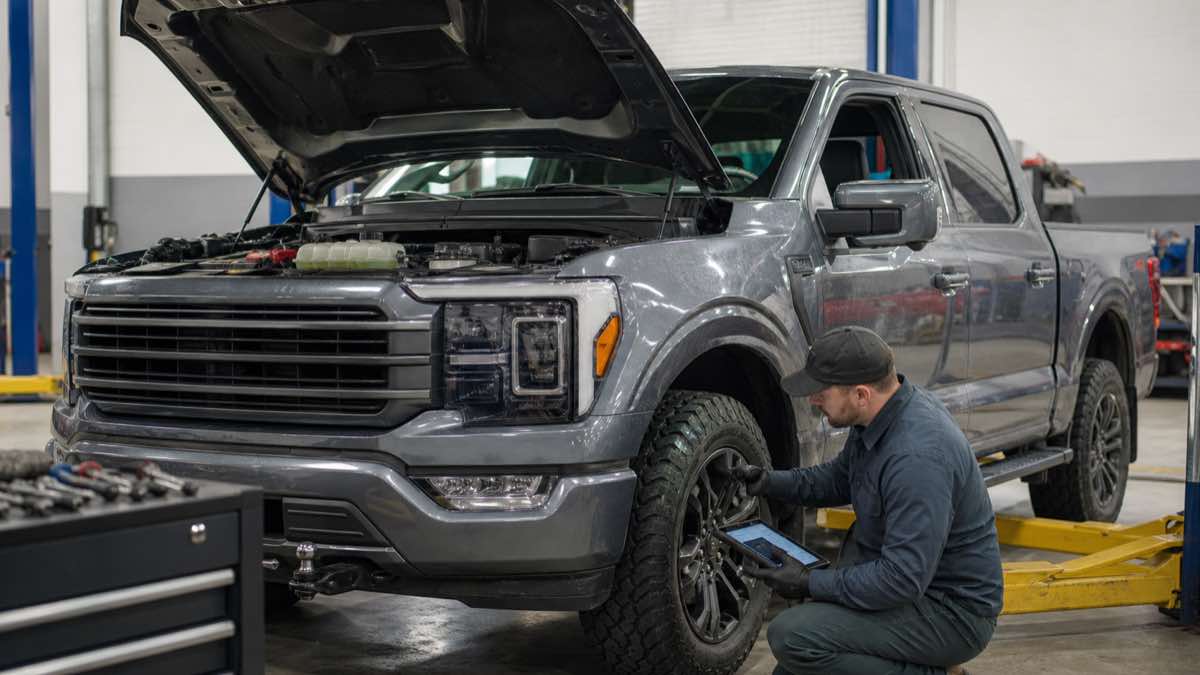
The correct Ford F-150 maintenance schedule depends on model year, engine, transmission, 2WD or 4WD hardware, hybrid equipment, towing, payload, idling, dust, temperature, and off-road use. Modern trucks also use Ford’s Intelligent Oil-Life Monitor, so a universal “change everything every 7,500 miles” chart can be wrong for your specific F-150.
Start with the VIN-specific owner’s manual and Scheduled Maintenance chapter. This guide explains how to organize it; it does not replace the requirements for your engine or axle.
Use Ford’s Oil-Life Monitor
Ford says its Intelligent Oil-Life Monitor calculates service from vehicle use, operating conditions, and time since the last oil service. “Change Engine Oil Soon” appears at about 5% life; “Oil Change Required” means no calculated oil life remains.
Towing, frequent idling, engine temperature, short trips, and driving pattern can shorten the estimate. Ford gives an example in which substantial idling produces a reminder around seven months and 4,000 miles. Do not reset the monitor until oil and filter service is actually complete.
F-150 Maintenance Checklist
| Area | What to track | Why truck configuration matters |
|---|---|---|
| Engine oil and filter | IOLM, time limit, correct specification and capacity | Engine and usage change oil demand |
| Tires | Cold pressure, rotation, tread, damage, spare | Load, towing, LT tires, and axle position affect wear |
| Brakes | Pad/rotor condition, lines, parking brake, fluid | Towing and payload create more heat |
| Transmission | Fluid inspection/replacement under manual schedule | Transmission and severe-use rules differ |
| 4WD driveline | Transfer case, front/rear axle, driveshaft and joints | 2WD trucks do not share every component |
| Cooling | Coolant, hoses, leaks, charge-air cooling where equipped | Engine, turbo, hybrid, towing, and climate matter |
| Filters and plugs | Engine air, cabin filter, spark plugs | Dust and engine type change service needs |
| PowerBoost systems | Hybrid warnings, cooling and high-voltage inspection requirements | High-voltage service requires trained technicians |
Routine Checks Between Services
- Check engine oil level using the manual procedure and inspect for leaks.
- Check tire pressure cold, including the spare, and adjust to the doorjamb placard for the truck’s loading configuration.
- Inspect tread, cuts, bulges, uneven wear, and embedded objects.
- Check coolant reservoir only when safe and monitor for falling level or residue.
- Test lights, wipers, washer, horn, trailer connections, and backup camera.
- Look under the truck for fluid, damaged shields, loose wiring, and impact damage after off-road use.
- Record warning messages rather than clearing them.
If tire pressure warnings appear, use our TPMS light guide. A repeated warning may indicate a leak, wheel damage, or sensor issue rather than normal pressure loss.
Towing and Severe Use
Regular towing, heavy payload, low-speed mountain driving, dusty roads, off-road operation, prolonged idling, and commercial use can trigger shorter fluid and inspection intervals. Use the “special operating conditions” section of the exact manual. Do not copy an axle, transfer-case, or transmission interval from another F-150 powertrain.
Before towing, inspect tires and pressures for truck and trailer, hitch and safety chains, lights, brake controller, fluid levels, mirrors, and load distribution. Maintenance does not increase the ratings on the certification label, hitch, tires, axle, or owner’s manual.
Gas, Diesel, and PowerBoost Differences
F-150 engine availability has changed across model years. Gas engines can require different oil grades, capacities, plugs, belts, and cooling parts. Diesel-equipped years add diesel fuel, emissions, filtration, and fluid requirements. PowerBoost trucks add a high-voltage hybrid system and unique cooling/electrical procedures.
Never open or probe orange high-voltage components. Use trained hybrid technicians for those systems. For any engine, purchase fluids and filters by VIN and specification, not merely “F-150.”
Warning Signs That Should Not Wait
Stop and assess red oil-pressure warnings, overheating, fuel leaks, reduced braking, smoke, severe vibration, grinding, or a high-voltage stop message. These are not routine reminders. Our oil-pressure warning guide explains why an oil can symbol is different from the oil-life monitor.
Service Records That Matter
Record date, mileage, engine hours if relevant, oil-life percentage, towing or severe-use pattern, fluid specification, quantity, filter or part number, tire measurements, and receipts. Note which reminders were reset. Complete records prevent duplicated work and help the next owner understand the truck’s actual use.
Frequently Asked Questions
How often should an F-150 get an oil change?
Follow the Intelligent Oil-Life Monitor and the time limit in your model-year manual. Usage can move the reminder earlier; Ford says the system considers operating conditions and time.
Does towing change F-150 maintenance?
Yes. Regular towing can shorten engine-oil, transmission, axle, transfer-case, and inspection intervals depending on the exact truck. Use its special-operating-conditions schedule.
Should I service an F-150 every 7,500 miles?
Not as a universal rule. A dealer chart may be a planning aid, but the truck’s IOLM, owner’s manual, time limits, and usage conditions are authoritative.
When should transmission fluid be changed?
Use the interval for the exact model year, transmission, and operating condition. Towing or severe service may require earlier work. Use only the specified fluid.
Does a PowerBoost use the same schedule as a gas F-150?
It shares some routine items but adds hybrid-specific systems and procedures. Use the PowerBoost manual and trained service for high-voltage components.
Can I reset oil life myself?
Yes, using the exact owner’s-manual procedure after service. Resetting before the oil and filter are changed makes the future estimate inaccurate.
Bottom Line
A dependable Ford F-150 maintenance schedule is configuration- and use-specific. Follow the VIN manual and Intelligent Oil-Life Monitor, then adjust for towing, payload, idling, dust, off-road use, and climate. Track engine, transmission, axle, transfer-case, tire, brake, cooling, and hybrid requirements separately, and never let a generic mileage chart override Ford’s instructions for your truck.