
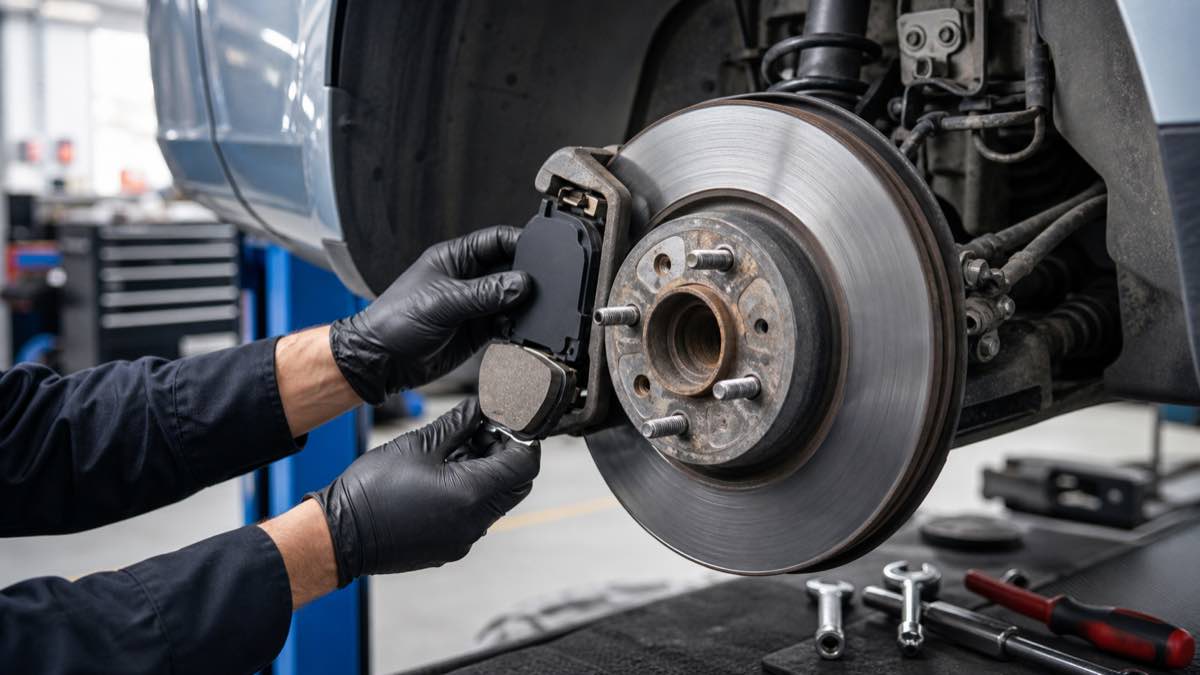
Brake pad replacement is one of the most common maintenance tasks you’ll face as a vehicle owner. Unlike some repairs that catch you off guard, brake service is predictable—but the cost can vary wildly depending on your vehicle, location, and where you get the work done.
We’ve broken down real pricing data to help you understand what you should expect to pay and how to avoid overpaying for this essential safety service.
Average Brake Pad Replacement Cost in the US
Most drivers pay between $150 and $300 per axle for brake pad replacement at a professional shop. This typically includes both the parts and labor. However, the total cost depends on several factors:
- Parts alone: $50–$150 per axle (front or rear)
- Labor: $100–$200 per axle
- Additional services: Rotor resurfacing or replacement can add $150–$400
If you need brake pads on both front and rear axles—which is common—you’re looking at a total bill of $300–$600 for a standard sedan. Luxury vehicles, performance cars, and trucks often cost significantly more.
Brake Pad Costs by Vehicle Type
The type of vehicle you drive has a major impact on replacement costs. Here’s what owners typically pay:
Economy Sedans and Compact Cars
Vehicles like Honda Civic, Toyota Corolla, and Hyundai Elantra have straightforward brake systems and affordable parts. Expect to pay $150–$250 per axle at an independent shop, or $200–$350 at a dealership.
Mid-Size and Full-Size Sedans
Models like Ford Fusion, Chevrolet Malibu, and Toyota Camry typically run $200–$350 per axle. These vehicles often have larger brake systems, which means more expensive pads and sometimes additional labor.
SUVs and Trucks
Larger vehicles with heavier braking demands—like Ford F-150, Chevrolet Silverado, and Toyota 4Runner—cost more to service. Budget $250–$400 per axle due to larger brake components and increased labor time.
Luxury and Performance Vehicles
BMW, Mercedes-Benz, Audi, and sports cars often have premium brake systems with specialized pads. Costs can range from $300–$600+ per axle. Some high-performance models require OEM parts, which pushes prices even higher.
Where You Get Service Matters
Your choice of service provider significantly affects the final bill. Here’s how the main options compare:
Dealerships
Dealerships typically charge the highest rates, with labor running $150–$250 per hour. They use OEM (original equipment manufacturer) parts, which are more expensive but guaranteed to match your vehicle’s specifications. Total cost: $300–$500+ per axle.
Pros: Factory parts, warranty coverage, manufacturer expertise
Cons: Highest labor rates, less negotiation room
Independent Repair Shops
Local mechanics and independent shops offer the best value for most drivers. Labor rates typically run $75–$150 per hour, and they use quality aftermarket parts. Total cost: $150–$300 per axle.
Pros: Lower labor rates, personalized service, flexible scheduling
Cons: Quality varies by shop, less standardized warranty
National Chains (Firestone, Midas, Jiffy Lube)
Chain shops fall in the middle, with labor rates around $100–$150 per hour. They often run promotions and bundle services. Total cost: $200–$350 per axle.
Pros: Consistent pricing, warranties, convenient locations
Cons: Less personalized, may upsell additional services
DIY Replacement
If you’re mechanically inclined, you can buy brake pads online for $40–$100 per axle and install them yourself. This saves labor costs entirely, but requires basic tools and mechanical confidence. Not recommended for beginners or if your rotors need replacement.
When Brake Pad Costs Go Up
Sometimes your brake pad replacement bill is higher than expected. Here’s why:
Rotor Damage or Wear
If your rotors are worn, warped, or damaged, they need resurfacing or replacement. This adds $150–$400 to your bill. Many shops recommend replacing rotors when pads are changed, especially if there’s visible damage.
Brake Fluid Service
Some shops recommend flushing and replacing brake fluid during pad service. This adds $100–$200 but isn’t always necessary unless your fluid is contaminated or your vehicle is older.
Caliper Replacement
If calipers are stuck, leaking, or damaged, they must be replaced. This can add $200–$600 per wheel and significantly extends labor time.
Specialty Brake Pads
Premium ceramic or semi-metallic pads cost more than standard organic pads. Ceramic pads ($80–$150 per axle) last longer and produce less dust, while organic pads ($50–$80) are budget-friendly but wear faster.
Signs You Need Brake Pad Replacement
Don’t wait for a complete brake failure. Watch for these warning signs that it’s time to schedule service:
- Squealing or squeaking noise: Most modern pads have wear indicators that squeal when pads are thin
- Grinding sound: Metal-on-metal grinding means pads are completely worn and rotors are being damaged
- Soft or spongy brake pedal: May indicate air in the brake lines or worn pads affecting pressure
- Brake warning light: Dashboard light signals low pad thickness or brake system issues
- Reduced stopping power: Car takes longer to stop or requires harder pedal pressure
- Vibration when braking: Often caused by warped rotors, which may need replacement alongside pads
For more details on recognizing brake problems, check our guide on signs you need new brake pads.
How to Save Money on Brake Pad Replacement
Brake service is necessary, but you don’t have to overpay. Here are practical ways to reduce costs:
Get Multiple Quotes
Call 3–4 local shops and ask for written estimates. Prices vary significantly, and you might save $100+ by shopping around. Many shops offer free brake inspections.
Ask About Promotions
National chains and dealerships frequently run seasonal promotions on brake service. Check their websites or call ahead to ask about current deals.
Choose Aftermarket Parts
Quality aftermarket brake pads are 20–40% cheaper than OEM parts and perform just as well. Ask your mechanic about brands like Bosch, Wagner, or Akebono.
Skip Unnecessary Services
Not every brake service requires rotor replacement or fluid flushing. Ask your mechanic if these services are truly needed or just recommended for upselling.
Maintain Your Brakes Regularly
Gentle driving habits and regular inspections extend brake pad life. Avoid hard braking when possible, and have brakes checked annually. This prevents expensive rotor damage down the road.
How Long Do Brake Pads Last?
Most brake pads last 25,000–70,000 miles, depending on driving habits and pad quality. Aggressive drivers in stop-and-go traffic may need replacement every 2–3 years, while highway drivers might go 4–5 years between services.
Premium ceramic pads typically outlast budget organic pads, making them a better long-term investment despite higher upfront costs.
Key Takeaways
- Expect to pay $150–$300 per axle for professional brake pad replacement
- Total cost varies by vehicle type, with trucks and luxury cars costing more
- Independent shops offer the best value; dealerships charge premium rates
- Additional services like rotor replacement can significantly increase your bill
- Get multiple quotes and ask about promotions to save money
- Address brake problems early to avoid expensive rotor damage
Frequently Asked Questions
How much does it cost to replace brake pads on all four wheels?
If you’re replacing pads on both front and rear axles, expect to pay $300–$600 at an independent shop, or $400–$800 at a dealership. Some vehicles only need front pad replacement, which costs less.
Can I replace just the front brake pads?
Yes, many vehicles only need front pad replacement because front brakes do 70% of the braking work. However, if rear pads are also worn, replacing both ensures balanced braking performance and safety.
Is it cheaper to replace brake pads at a dealership or independent shop?
Independent shops are typically 30–50% cheaper than dealerships. However, dealerships offer OEM parts and manufacturer warranties. For most drivers, independent shops provide the best value.
Do I need to replace rotors when I replace brake pads?
Not always. If rotors are in good condition with no visible damage or warping, you can replace just the pads. However, if rotors are worn, warped, or damaged, replacement is necessary for safe braking.
How do I know if my brake pads need replacement?
Common signs include squealing noises, grinding sounds, soft brake pedal, dashboard warning lights, and reduced stopping power. If you notice any of these, have your brakes inspected immediately.
Can I replace brake pads myself?
If you have basic mechanical skills and the right tools, DIY brake pad replacement is possible and saves labor costs. However, if you’re unsure about the process or your rotors need attention, professional service is safer and more reliable.
What’s the difference between ceramic and metallic brake pads?
Ceramic pads are quieter, produce less dust, and last longer but cost more. Metallic pads are cheaper, provide better heat dissipation, and work well for performance driving but generate more noise and dust. Organic pads are the budget option but wear fastest.
How often should I have my brakes inspected?
Most manufacturers recommend annual brake inspections. For broader budgeting, compare this with our true cost of owning a car guide. If you drive in heavy traffic or mountainous terrain, inspect brakes every 6 months. Regular inspections catch problems early and prevent costly rotor damage.
For more information on brake maintenance, see our article on complete brake system maintenance.