
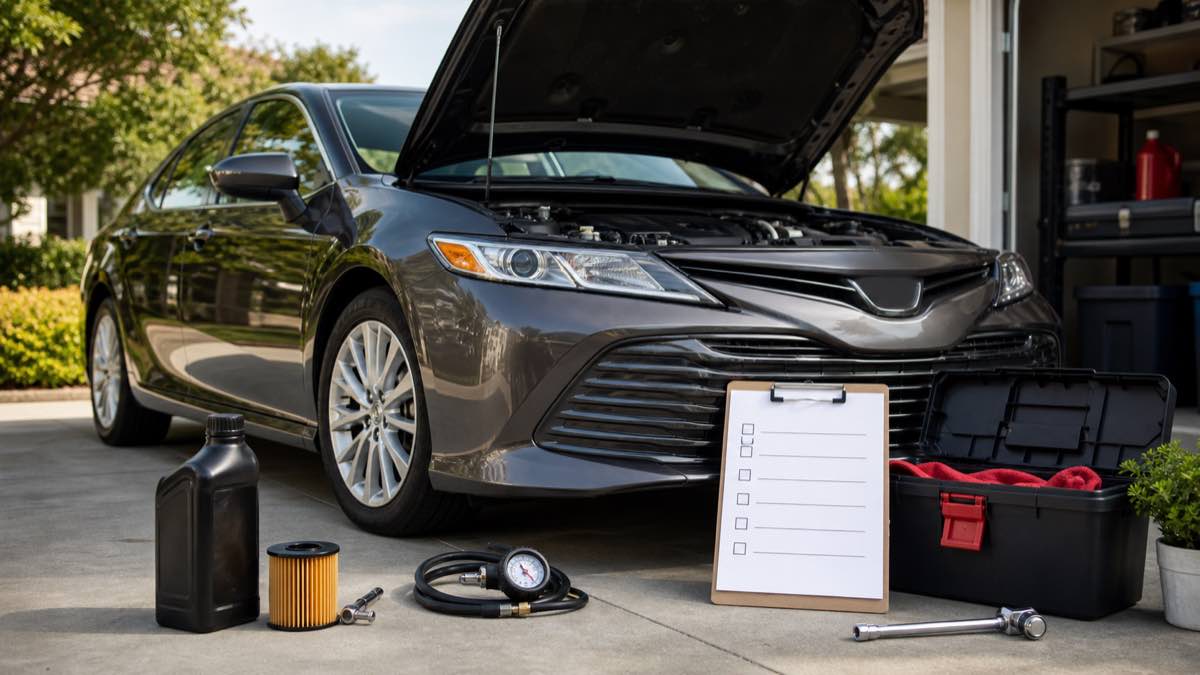
Your Toyota Camry is built to last, but only if you stick to a proper maintenance schedule. Whether you’re driving a 2024 model or an older generation, following manufacturer-recommended service intervals keeps your engine running smoothly, protects your warranty, and helps you avoid expensive repairs down the road.
This guide breaks down everything you need to know about Camry maintenance—from oil changes to transmission fluid flushes—so you can take control of your vehicle’s health.
Understanding Toyota’s Maintenance Schedule
Toyota publishes detailed maintenance schedules in your owner’s manual, and they’re designed around real-world driving conditions. The schedule typically includes two tracks: normal maintenance and severe driving conditions.
Normal maintenance applies if you mostly drive on highways, don’t tow, and operate in moderate climates. Severe driving includes frequent short trips, towing, dusty conditions, or extreme temperatures—and it requires more frequent service intervals.
Most Camry owners fall somewhere in between, so review your specific driving habits when deciding which schedule fits your situation.
Oil and Filter Changes: The Foundation of Maintenance
Oil changes are the most frequent maintenance task, and they’re critical. Fresh oil lubricates engine components, reduces friction, and carries away contaminants.
For 2015 and newer Camrys: Toyota recommends oil changes every 10,000 miles or 12 months, whichever comes first. If your Camry has the Toyota Genuine engine oil with extended-life formulation, you may stretch to 10,000 miles between changes.
For older models (2010-2014): Follow the 5,000-mile or 3-month interval unless your owner’s manual specifies otherwise.
Always use the correct oil grade specified in your manual—typically 0W-20 or 5W-30 for Camrys. Using the wrong viscosity can affect fuel economy and engine protection.
Fluid Checks and Replacements
Beyond oil, your Camry relies on several other fluids to operate safely and efficiently.
Transmission Fluid
Toyota’s automatic transmissions are known for reliability, but transmission fluid breaks down over time. Modern Camrys use synthetic transmission fluid that can last longer than older formulations.
Check your manual for specific intervals—some newer models claim “lifetime” fluid, but many technicians recommend inspection every 60,000 miles. If the fluid appears dark or smells burnt, a flush is overdue.
Coolant System
Your Camry’s cooling system prevents overheating and protects against corrosion. Toyota recommends flushing and refilling coolant every 100,000 miles or 10 years, whichever comes first. Use only Toyota-approved coolant—mixing types can cause sludge buildup.
Brake Fluid
Brake fluid absorbs moisture over time, which reduces braking performance and can damage brake components. Replace it every two years regardless of mileage. This is a safety-critical service—don’t skip it.
Power Steering Fluid
Check power steering fluid at every oil change. If it’s dark or has a burnt smell, have it flushed. Most Camrys need power steering fluid replacement around 100,000 miles.
Air Filter and Cabin Air Filter Replacement
Your engine’s air filter prevents dust and debris from entering the combustion chamber. A clogged filter reduces fuel economy and power.
Engine air filter: Replace every 15,000-30,000 miles depending on driving conditions. If you drive in dusty areas, check it more frequently.
Cabin air filter: This filter keeps pollen and dust out of your interior. Replace every 15,000-30,000 miles. If you notice reduced airflow from vents or musty odors, it’s time for a change.
Brake Inspection and Pad Replacement
Brake pads wear gradually, and replacement timing depends on your driving style. Aggressive braking wears pads faster than gentle, predictive driving.
Toyota recommends inspecting brakes every 20,000 miles. Most Camry owners get 40,000-60,000 miles from a set of brake pads, but this varies. Listen for squealing noises or feel for soft brake pedal—both signal it’s time to replace pads.
When pads wear down, rotors can be damaged. Replacing pads early prevents costly rotor replacement.
Tire Rotation and Alignment
Tires wear unevenly depending on driving patterns and suspension geometry. Rotating tires every 5,000-7,000 miles (usually at oil change intervals) extends tire life and improves safety.
Check wheel alignment every 20,000 miles or whenever you notice pulling to one side. Misalignment causes uneven tire wear and reduces fuel economy.
Spark Plugs and Ignition System
Modern Camrys use long-life spark plugs rated for 100,000 miles or more. However, actual lifespan depends on engine type and driving conditions.
If you notice rough idle, hesitation during acceleration, or poor fuel economy, have spark plugs inspected. Replacing them before they fail prevents misfires and catalytic converter damage.
Battery Maintenance
Your Camry’s battery typically lasts 3-5 years. Have it tested annually after three years of service. Clean corrosion from battery terminals if you notice white or blue crusty buildup.
Cold weather accelerates battery failure, so winter is when most batteries die. Keep jumper cables in your car and know how to jump-start safely.
Suspension and Steering Components
Your Camry’s suspension keeps you comfortable and safe. Inspect shocks and struts every 50,000 miles. Signs of wear include bouncy ride, nose-diving during braking, or excessive body roll in corners.
Ball joints, tie rods, and control arm bushings wear over time. Have the suspension inspected during routine service, especially if you hear clunking noises or feel vibration in the steering wheel.
Maintenance Schedule by Mileage
Every 5,000-10,000 miles: Oil and filter change, tire rotation, fluid level checks
Every 15,000-30,000 miles: Air filter replacement, cabin air filter replacement, brake inspection
Every 50,000 miles: Suspension inspection, spark plug evaluation, transmission fluid check
Every 100,000 miles: Coolant flush, transmission fluid flush (if not lifetime), power steering fluid flush, brake fluid replacement
Where to Get Service
You have three main options: Toyota dealerships, independent mechanics, and quick-lube shops.
Dealerships use genuine parts and factory-trained technicians, but cost more. They’re best for warranty work and complex repairs.
Independent mechanics often charge less and provide personalized service. Find one with good reviews and ASE certification.
Quick-lube shops are convenient for oil changes but may not catch other issues. Use them only for basic services.
DIY Maintenance You Can Handle
Some maintenance tasks are DIY-friendly if you have basic tools and mechanical confidence:
Air filter replacement: Usually takes 5-10 minutes and requires no special tools.
Cabin air filter replacement: Similar difficulty, though location varies by model year.
Fluid level checks: Check oil, coolant, and brake fluid monthly. Top off as needed with correct fluids.
Battery cleaning: Disconnect the negative terminal, clean corrosion with baking soda and water, and reconnect.
Leave oil changes, fluid flushes, and brake work to professionals unless you’re experienced.
Keeping Records and Using Your Owner’s Manual
Your owner’s manual is the authoritative source for your specific Camry model. Maintenance intervals can vary between model years and engine types, so always reference your manual first.
Keep detailed service records. They prove maintenance history if you sell your Camry and help identify patterns if problems develop. If a warning appears, use our dashboard warning lights guide to decide what to check first. Many service shops provide receipts, but organize them in a folder or digital file.
Frequently Asked Questions
How often should I change my Camry’s oil?
Modern Camrys (2015+) need oil changes every 10,000 miles or 12 months. Older models typically require changes every 5,000 miles. Check your owner’s manual for your specific model year.
What happens if I skip maintenance?
Skipping maintenance voids your warranty, reduces fuel economy, increases emissions, and can lead to catastrophic engine failure. A $100 oil change is far cheaper than a $5,000 engine rebuild.
Can I use aftermarket parts instead of Toyota genuine parts?
Yes, but quality varies. Genuine Toyota parts guarantee fit and performance. Quality aftermarket parts work fine for most services, but use genuine parts for critical components like transmission fluid, coolant, and brake components.
Is transmission fluid really a “lifetime” fluid?
Toyota claims some transmissions use lifetime fluid, but “lifetime” means the life of the transmission under normal conditions—not the life of the car. Many mechanics recommend inspection every 60,000 miles and replacement if fluid appears dark or smells burnt.
How much does Camry maintenance typically cost?
Annual maintenance costs vary, but budget $500-$1,000 per year for routine service on a well-maintained Camry. Major services like transmission flushes or coolant replacement cost more but happen less frequently.
What’s the difference between “normal” and “severe” maintenance schedules?
Severe schedules apply to towing, frequent short trips, dusty conditions, or extreme temperatures. They require more frequent oil changes, filter replacements, and fluid checks. Review your driving habits to determine which applies to you.
Staying on top of your Toyota Camry’s maintenance schedule is one of the best investments you can make in vehicle longevity and reliability. Whether you handle basic tasks yourself or trust a professional, regular service keeps your Camry running strong for 200,000 miles and beyond.