
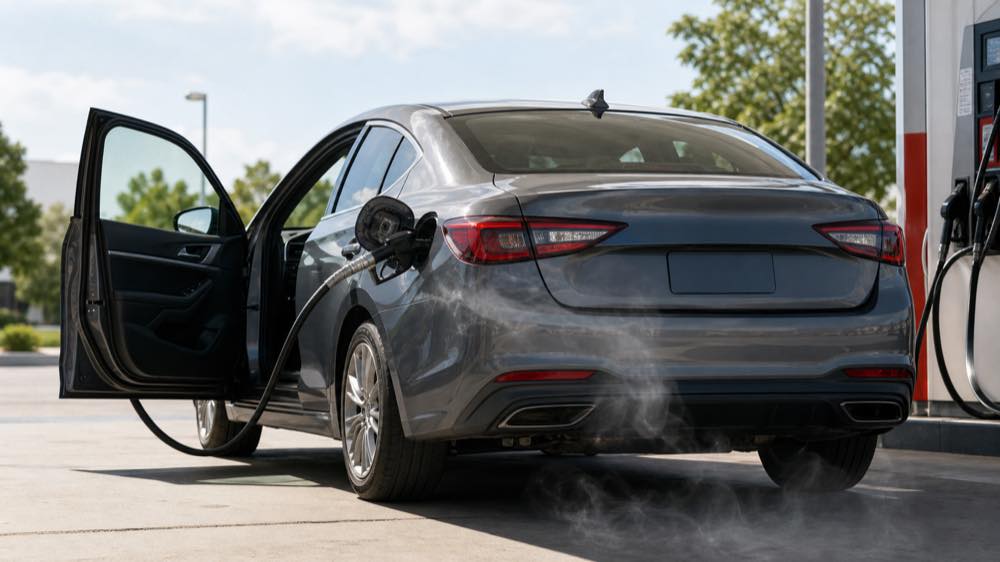
If your car smells like gas, treat it as a safety issue until you know the source. A faint odor right after refueling can come from a small spill or fuel on your shoes, but a strong raw fuel smell inside the cabin, under the car, near the engine bay, or around the fuel tank can mean a leak or fuel vapor problem.
Gasoline evaporates easily, and fuel vapor is flammable. Do not ignore the smell just because the car still runs normally. A bad gas cap, EVAP system fault, leaking fuel line, injector leak, fuel pump seal problem, rich exhaust, or gas-contaminated oil can all make a car smell like gas.
The safest way to start is by locating when and where the smell happens. Does it appear after filling the tank? Is it strongest inside the cabin? Does it come from the rear of the car, the engine bay, or the exhaust? That pattern usually points you toward the right system.
Quick Safety Answer
If the gas smell is strong, persistent, or coming from inside the cabin, do not keep driving normally. Park outside, shut the engine off, avoid smoking or open flames, and look for visible fuel leaks only from a safe distance.
Call roadside assistance or a tow truck if you see wet fuel, fuel dripping, fuel spraying, a strong smell near the engine bay, or symptoms like rough running and a flashing check engine light. Fuel-system diagnosis often requires professional inspection because leaks can ignite.
Smell Location Guide
| Where or when you smell gas | What it may suggest | First safe check |
|---|---|---|
| Right after refueling | Fuel spill, loose gas cap, overfilled tank | Check cap and let spilled fuel evaporate outside |
| Near the fuel door or rear of car | Gas cap seal, filler neck, fuel tank, pump module seal | Inspect from outside, do not crawl under a leaking car |
| Inside the cabin | Fuel vapor entering cabin, rear tank seal, exhaust/fuel fumes | Stop driving if strong or persistent |
| Engine bay | Fuel injector, fuel rail, line, regulator, hose leak | Shut engine off and avoid heat/flames |
| From exhaust | Rich fuel mixture, misfire, oxygen sensor issue | Scan codes and check engine performance |
| Oil dipstick smells like gas | Fuel dilution, short trips, misfire, injector leak | Avoid driving until oil/fuel issue is checked |
Common Causes
Loose or Faulty Gas Cap
A loose gas cap is one of the simplest reasons a car smells like gas, especially near the fuel door or right after refueling. The cap seals fuel vapor inside the tank. If it is loose, cracked, missing, or has a worn seal, vapors can escape.
Tighten the cap until it clicks if your cap is designed that way. If the smell stays near the fuel filler area or the check engine light appears, the cap may need replacement. EVAP leak codes such as P0442 or P0455 can also be related to vapor leaks.
Fuel Spill After Refueling
Sometimes the smell is not from the car at all. Gasoline on your shoes, clothes, floor mat, or the side of the car can create a strong odor after a stop at the gas station.
If the smell fades quickly after parking outside with ventilation, a small spill may be the cause. If the odor remains strong after the car sits, assume there may be a leak or vapor problem.
EVAP System Problem
The EVAP system captures fuel vapors from the fuel tank and routes them to be burned by the engine. Key parts include the charcoal canister, purge valve, vent valve, hoses, fuel tank, and gas cap.
If the EVAP system leaks or vents vapors when it should not, you may smell fuel even without seeing liquid gasoline. You may also see a check engine light. Common EVAP-related codes include P0442 for a small leak and P0455 for a large leak.
Fuel Leak Under the Car
A liquid fuel leak is more urgent than a vapor smell. Fuel can leak from a rusted fuel line, cracked hose, damaged fuel tank, bad connection, fuel filter area, or fuel pump module seal.
Do not drive if you see liquid fuel dripping or a wet fuel trail. Park away from buildings if safe, shut the engine off, and call for help. Do not use a lighter, match, space heater, or high-heat tool anywhere near the vehicle.
Fuel Injector or Fuel Rail Leak
If the smell is strongest near the engine bay, suspect a fuel injector seal, fuel rail connection, fuel line, or fuel pressure regulator issue. These parts may be under pressure while the engine runs.
This is not a good place for guesswork. Fuel leaking onto a hot engine can create a fire risk. If you smell raw gas under the hood, shut the engine off and have the vehicle inspected.
Rich Fuel Mixture
A rich fuel mixture means the engine is using too much fuel for the amount of air. That can send unburned fuel odor through the exhaust. You may notice black smoke, poor fuel economy, rough running, or a check engine light.
Possible causes include a bad oxygen sensor, mass airflow sensor issue, leaking injector, high fuel pressure, coolant temperature sensor problem, or engine control issue. A scan tool can help confirm whether fuel trims are abnormal.
Engine Misfire
A misfire can leave unburned fuel in the exhaust, making the car smell like gas. It may also cause shaking, hesitation, poor acceleration, or a flashing check engine light.
If the car smells like gas and runs rough, scan for misfire codes. A P0300 code means random or multiple cylinder misfire. A flashing check engine light can mean catalytic converter damage risk, so avoid normal driving.
Oil Smells Like Gas
If the dipstick or oil fill cap smells strongly like gasoline, fuel may be diluting the engine oil. Short trips can leave some fuel contamination, but a strong gas smell in the oil can also point to misfires, injector leakage, piston ring blow-by, or a fuel system problem.
Fuel-diluted oil cannot protect the engine properly. Avoid extended driving until the cause is checked and the oil is changed if needed.
Exhaust Leak Bringing Fumes Into the Cabin
Sometimes the smell inside the car is not a liquid fuel leak but exhaust or fuel-rich fumes entering through the floor, trunk area, vents, or body openings. Exhaust leaks can also carry carbon monoxide, which is dangerous because it may not have a strong odor.
If the smell is worse with the windows up, heater on, or while sitting still, have the exhaust and body seals inspected.
What to Check First
Use safe checks only:
- Park outside in a well-ventilated area.
- Shut the engine off if the smell is strong.
- Avoid smoking, open flames, sparks, and high-heat tools.
- Check the gas cap and fuel door area.
- Look from a safe distance for wet spots under the rear, middle, or engine bay.
- Note whether the smell started after refueling.
- Scan for check engine light codes if available.
- Smell the oil dipstick only after the engine is off and safely parked.
- Call roadside assistance if fuel is dripping or the smell is strong inside the cabin.
Do not crawl under a vehicle that may be leaking gasoline. Do not run the engine while inspecting a suspected engine-bay fuel leak.
Is It Safe to Drive?
It may be safe to drive a short distance if the smell is faint, started right after refueling, there is no visible leak, the smell fades quickly, and the car runs normally. Even then, keep monitoring it.
It is not safe to keep driving if the smell is strong, the cabin smells like raw fuel, you see liquid fuel, the engine bay smells like gas, the check engine light is flashing, or the car runs rough. In those cases, stop and arrange inspection or towing.
Repair Cost Context
| Possible fix | Typical U.S. cost range |
|---|---|
| Gas cap replacement | $15-$60 |
| Diagnostic inspection | $100-$250 |
| EVAP smoke test | $100-$250+ |
| EVAP purge or vent valve | $120-$450+ |
| Charcoal canister replacement | $250-$700+ |
| Fuel line or hose repair | $150-$800+ |
| Fuel injector seal repair | $150-$500+ |
| Fuel injector replacement | $250-$1,000+ |
| Fuel pump module seal/pump repair | $400-$1,200+ |
| Exhaust leak repair | $150-$1,000+ |
Costs vary by vehicle, leak location, rust level, parts access, and whether the fuel tank must be lowered.
FAQ
Why does my car smell like gas?
Common causes include a loose gas cap, fuel spill, EVAP system leak, leaking fuel line, fuel injector leak, rich fuel mixture, engine misfire, exhaust leak, or gas-contaminated oil.
Is it safe to drive a car that smells like gas?
Not if the smell is strong, persistent, inside the cabin, near the engine bay, or paired with visible fuel. Park safely, avoid flames, and call for inspection or towing.
Can a loose gas cap cause a gas smell?
Yes. A loose, cracked, missing, or faulty gas cap can let fuel vapor escape near the filler area. It can also trigger EVAP-related check engine codes.
Why does my car smell like gas after filling up?
It may be a fuel spill, overfilled tank, loose cap, filler neck issue, or EVAP system problem. If the smell fades quickly, a small spill is possible. If it stays strong, inspect the vehicle.
Why does my car smell like gas inside the cabin?
Fuel vapor may be entering through the rear seat area, trunk, floor, vents, or body openings. A fuel leak, EVAP fault, or exhaust leak can also bring fumes inside. Strong cabin fuel smell is not normal.
Can a misfire make my car smell like gas?
Yes. A misfire can send unburned fuel into the exhaust, causing a gas smell, rough running, poor acceleration, or a flashing check engine light.
What should I do if I see fuel leaking?
Do not drive. Shut the engine off, avoid sparks and open flames, park away from buildings if safe, and call roadside assistance or a tow truck.