
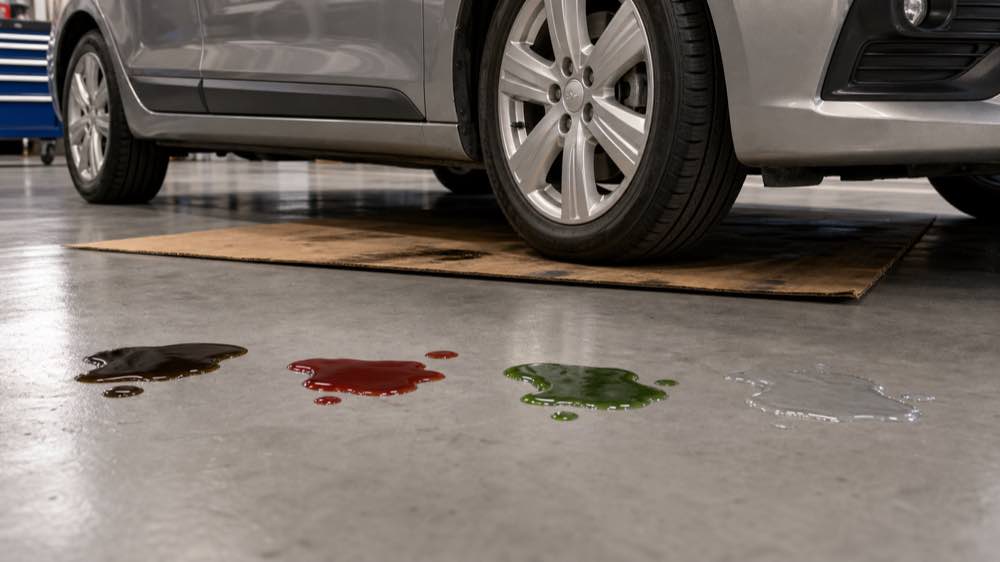
A puddle under your car is not always an emergency, but the color, smell, texture, and location can tell you a lot. This car leaking fluid color guide helps you identify the most likely fluid and decide whether you can keep driving, check a level, or call for a tow.
Color is a useful first clue, but it is not enough by itself. Coolant can be green, orange, pink, blue, or yellow. Transmission fluid can start red or pink and turn brown as it ages. Brake fluid may look light yellow, amber, or brown. Clear fluid might be harmless A/C condensation, washer fluid, brake fluid, or fuel depending on smell and location.
Use this guide as a starting point. If the leak is large, smells like gasoline, affects braking or steering, or appears with a warning light, treat it as urgent.
Quick Color Chart
| Fluid color | Likely fluid | Texture or smell | Typical location |
|---|---|---|---|
| Clear, watery | A/C condensation or water | No smell, watery | Under passenger side/front area |
| Blue, green, orange, pink, yellow | Coolant or washer fluid | Coolant is slick/sweet; washer fluid smells like cleaner | Front/engine bay or washer reservoir area |
| Amber, brown, black | Engine oil | Oily, slippery, burnt or petroleum smell | Under engine, oil pan, drain plug |
| Red, pink, light brown | Transmission fluid or power steering fluid | Oily, sometimes sweet or burnt | Middle/front for transmission, front steering area |
| Clear to amber, slippery | Brake fluid | Slick, sharp chemical smell | Near wheels, brake lines, master cylinder |
| Dark brown, thick, strong smell | Gear oil/differential fluid | Thick, sulfur or burnt smell | Rear differential or axle area |
| Clear with strong gas smell | Gasoline/fuel | Thin, evaporates quickly, fuel odor | Fuel tank, fuel lines, engine bay |
First Safety Rules
Do not taste any fluid. Do not touch gasoline. Do not open a hot radiator cap. Do not keep driving if the brake pedal feels soft, the oil pressure light is on, the temperature warning appears, or you see fuel dripping.
If the leak is large, spreading quickly, or paired with smoke, steam, strong fuel smell, loss of steering assist, poor braking, or overheating, park safely and call roadside assistance.
The Cardboard Test
If the leak is not urgent, slide a clean piece of cardboard under the car after parking. Leave it for a few hours or overnight. The cardboard helps show color, location, and drip pattern.
Check three things:
- Color: clear, red, green, brown, black, blue, yellow, or orange.
- Location: front, middle, rear, near a wheel, under the engine, or under the transmission.
- Feel and smell: watery, oily, slick, sweet, burnt, chemical, or fuel-like.
Use gloves and a paper towel. Keep the test outside or in a ventilated area if the smell is strong.
Clear Fluid Under the Car
Clear watery fluid is often normal A/C condensation, especially on hot or humid days. It usually drips near the passenger-side front area after the air conditioning has been running. It should feel like water and have little or no smell.
Clear fluid is more concerning if it feels slippery, smells like fuel, appears near a wheel, or comes with a low brake fluid level. Brake fluid can be light-colored, and gasoline can look clear too. If you smell fuel, see our guide to a car that smells like gas.
Green, Orange, Pink, Blue, or Yellow Fluid
Bright green, orange, pink, blue, or yellow fluid is often coolant or windshield washer fluid. Coolant usually feels slippery and may smell sweet. Washer fluid is usually watery and may smell like glass cleaner.
Coolant leaks often appear near the radiator, coolant reservoir, water pump, hoses, heater core area, or under the front of the engine. If coolant is leaking, the engine can overheat or show an up-and-down temperature pattern. For that pattern, see our guide to a car overheating then going back to normal. If the temperature light comes on, read our coolant temperature warning light guide and stop driving safely.
Washer fluid leaks are usually less urgent. They may come from the washer reservoir, hose, or nozzle line. The main clue is a cleaner-like smell and watery texture.
Brown or Black Fluid
Amber, brown, or black oily fluid is usually engine oil. Fresh oil may look honey-colored or amber. Older oil often turns dark brown or black. It feels slippery and may smell like petroleum or burnt oil.
Common oil leak areas include the oil pan, drain plug, valve cover gasket, oil filter, timing cover, rear main seal, and oil pressure sensor. Small oil seepage may not strand you immediately, but a fast leak can damage the engine.
If the oil pressure warning light appears, do not keep driving. Low oil pressure can destroy an engine quickly. Use our oil pressure warning light guide for the safety steps.
Red or Pink Fluid
Red or pink fluid is commonly transmission fluid, but it can also be power steering fluid or some types of coolant. Transmission fluid feels oily and may smell slightly sweet when fresh or burnt when old.
Transmission leaks may appear under the center of the car, near the transmission pan, cooler lines, axle seals, or front of the transmission. Low transmission fluid can cause slipping, delayed shifting, overheating, and expensive internal damage.
Power steering fluid can also be red, amber, or brown depending on the vehicle. It may leak near the steering rack, pump, hoses, or front wheels. If steering suddenly becomes heavy or noisy, avoid driving until it is checked.
Yellow or Light Brown Slippery Fluid
Brake fluid can look clear, yellow, amber, or brown. It is slippery and may have a sharp chemical smell. Brake fluid leaks are serious because they can reduce braking pressure.
Check around the inside of each wheel, brake lines, calipers, wheel cylinders, and under the master cylinder area. If the brake pedal feels soft, sinks, or the brake warning light is on, do not drive. Have the car towed.
Thick Dark Brown Fluid With Strong Smell
Thick dark brown fluid with a strong sulfur or burnt smell may be gear oil from a differential, transfer case, or manual transmission. This is common near the rear axle on rear-wheel-drive and four-wheel-drive vehicles.
Gear oil leaks should be repaired before the fluid level gets low. Low gear oil can damage gears and bearings.
Gasoline or Fuel Leak
Gasoline is usually clear or slightly amber and evaporates quickly. The smell is the main clue. A fuel leak can come from the fuel tank, fuel filler neck, fuel pump module, fuel line, injector rail, or engine bay connection.
Do not drive if you see fuel dripping or smell strong gasoline. Fuel leaks are a fire risk. Park outside if safe and call for help.
Drive or Tow?
| Leak situation | Safer choice |
|---|---|
| Clear water after A/C use, no smell | Usually safe to monitor |
| Small oil seep, oil level normal, no warning light | Drive cautiously to inspection |
| Coolant leak with rising temperature | Stop driving and inspect when cool |
| Brake fluid leak or soft brake pedal | Tow the vehicle |
| Fuel smell or visible gasoline | Tow the vehicle |
| Transmission fluid leak with slipping | Avoid driving; arrange inspection |
| Power steering leak with heavy steering | Avoid normal driving |
| Oil pressure light on | Stop engine and tow |
What to Check Before Calling a Mechanic
Gather details without taking risks:
- Take a photo of the puddle and cardboard test.
- Note the color in daylight.
- Note the smell without leaning into vapors.
- Note where the puddle sits under the vehicle.
- Check dashboard warning lights.
- Check fluid levels only if the car is cool and parked safely.
- Tell the mechanic when the leak appears: after driving, overnight, with A/C on, after refueling, or only when parked on a slope.
The more specific your observations are, the faster a shop can narrow the leak.
Can Stop-Leak Products Fix It?
Be careful with stop-leak products. They may temporarily slow some minor leaks, but they can also clog small passages or hide a problem that needs a real repair. Avoid using stop-leak in safety systems like brakes, fuel, or steering.
For coolant leaks, stop-leak can sometimes create new problems in radiators, heater cores, and small coolant passages. If the leak affects driving safety or warning lights, diagnosis is a better choice.
Repair Cost Context
| Possible repair | Typical U.S. cost range |
|---|---|
| Leak inspection/diagnosis | $100-$250 |
| Oil drain plug or filter leak | $20-$150+ |
| Valve cover gasket | $200-$700+ |
| Coolant hose replacement | $150-$500+ |
| Radiator replacement | $500-$1,200+ |
| Water pump replacement | $500-$1,200+ |
| Transmission pan gasket | $200-$600+ |
| Power steering hose | $250-$800+ |
| Brake line or caliper leak | $200-$1,000+ |
| Fuel line or fuel system leak | $150-$1,200+ |
Costs vary by vehicle, leak location, rust, labor access, and whether other damaged parts are found.
FAQ
What color is engine oil when it leaks?
Engine oil is usually amber, brown, or black. Fresh oil may look honey-colored, while old oil often appears dark brown or black and feels slippery.
What does green fluid under a car mean?
Green fluid is often coolant or windshield washer fluid. Coolant usually feels slick and may smell sweet. Washer fluid is watery and often smells like glass cleaner.
Is clear fluid under my car normal?
Clear water under the passenger-side front area after using A/C is usually normal condensation. Clear slippery fluid, clear fuel-smelling liquid, or clear fluid near a wheel may be more serious.
What color is transmission fluid?
Transmission fluid is often red or pink when fresh and can turn brown as it ages. It feels oily and may smell burnt if overheated or old.
What color is brake fluid?
Brake fluid can look clear, yellow, amber, or brown. A brake fluid leak is serious because it can reduce braking pressure.
Can I drive with fluid leaking under my car?
It depends on the fluid and leak size. Clear A/C water is usually fine, but brake fluid, fuel, active coolant leaks, transmission leaks, and oil leaks with a warning light can be unsafe.
Should I taste the fluid to identify it?
No. Never taste automotive fluid. Some fluids are toxic, corrosive, flammable, or contaminated. Use color, smell from a safe distance, texture with gloves, and leak location instead.