
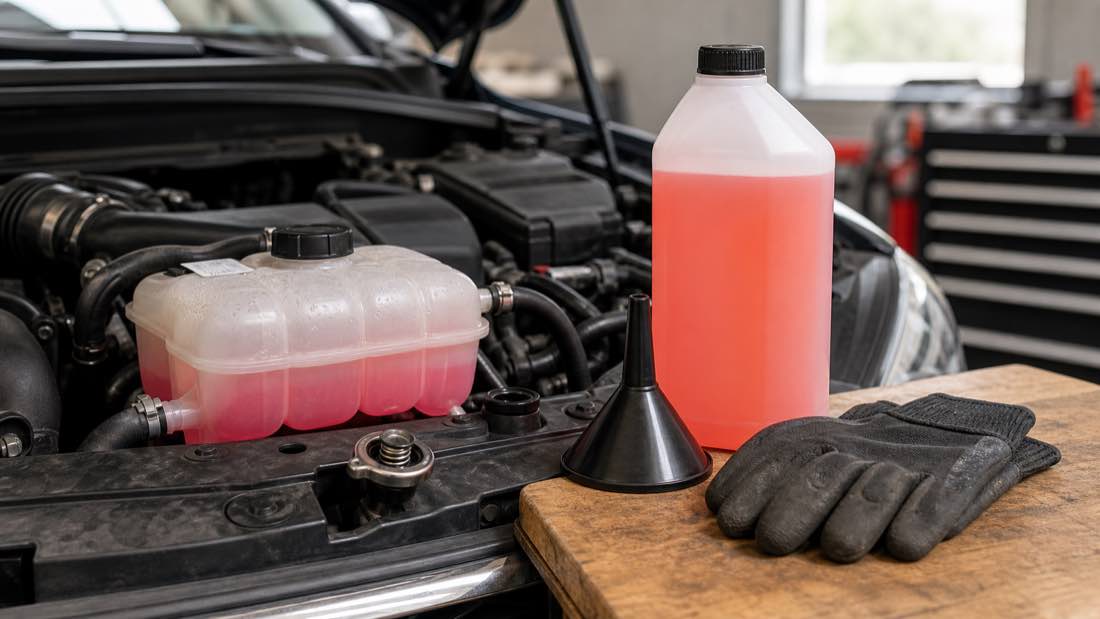
Most modern vehicles need coolant service somewhere around every 5 years or 100,000 miles, but the correct coolant flush interval depends on the vehicle, coolant type, driving conditions, and service history. Older vehicles and some conventional coolants may need service closer to every 2 to 3 years or 30,000 to 50,000 miles.
The safest answer is simple: follow the owner’s manual first, use the correct coolant type, and do not wait until the engine overheats. Coolant can look acceptable after its corrosion protection is already weakening, so interval-based service matters.
For the broader service plan, see our complete car maintenance schedule by mileage. If the temperature warning light is already on, read our coolant temperature warning light guide before treating this as routine maintenance.
Quick Coolant Flush Interval
| Vehicle or coolant situation | Common coolant service interval |
|---|---|
| Many modern vehicles | About 5 years or 100,000 miles |
| Extended-life OAT/HOAT coolant | Often 5 years or longer, depending on manual |
| Older green IAT coolant | Often 2 years or 30,000 miles |
| Unknown used-car history | Test/inspect now; service if unsure |
| After overheating or contamination | Inspect immediately |
| Brown, rusty, oily, or sediment-filled coolant | Do not wait for mileage |
| Coolant leak repair | Refill/bleed with correct coolant after repair |
These are general ranges. Your vehicle-specific manual is the final source.
How to Choose the Right Interval
Start with the maintenance schedule for your exact year, make, model, engine, and coolant specification. A long-life coolant interval on one vehicle does not automatically apply to another vehicle, even if the coolant color looks similar.
Use time as well as mileage. A car that only drives 4,000 miles a year can still need coolant service because corrosion inhibitors age while the car sits. Short trips, stop-and-go driving, towing, hot climates, mountain driving, and repeated idling can also make cooling-system condition more important than the calendar interval alone.
For a used vehicle with no records, treat the coolant as unknown until proven otherwise. Check the reservoir, radiator cap area, hoses, and service records. If the coolant is clean and the type is known, a shop may recommend testing it first. If it is brown, rusty, mixed, low, or overdue, service is usually smarter than guessing.
There is also a difference between routine service and problem-solving. If the vehicle is running normally and the coolant is simply due by time or mileage, a scheduled coolant service makes sense. If the car is overheating, losing coolant, blowing cold air from the heater, or showing a warning light, diagnose the cause before assuming a flush will solve it.
What Coolant Actually Does
Engine coolant is more than colored liquid in a plastic reservoir. It circulates through the engine, radiator, heater core, hoses, and water pump to control temperature and protect metal parts.
Coolant does four important jobs:
- carries heat away from the engine
- raises the boiling point under pressure
- lowers the freezing point in cold weather
- protects the cooling system from corrosion, rust, and cavitation
The corrosion inhibitors are the part many drivers forget. Old coolant may still look bright enough in the reservoir while its additive package is no longer protecting aluminum, steel, copper, rubber, and gasket surfaces as well as it should.
Coolant Flush vs Drain and Fill
A coolant drain and fill removes the old coolant that drains by gravity, then refills the system with fresh coolant. Some old coolant remains in the engine block, heater core, and passages.
A full coolant flush pushes or exchanges more old coolant out of the system. It can be useful when coolant is old, contaminated, rusty, mixed with the wrong type, or the vehicle has unknown service history.
| Service | Best for | Limitation |
|---|---|---|
| Drain and fill | Routine maintenance on a clean system | Does not replace all old coolant |
| Full flush | Old, dirty, mixed, or unknown coolant | Costs more and must be done correctly |
| Top-off only | Small level correction with known coolant | Does not renew corrosion protection |
| Repair and refill | After hose, radiator, water pump, or thermostat work | Air must be bled from the system |
For a well-maintained vehicle, a drain and fill at the recommended interval may be enough. For a used car with brown coolant or no records, a full flush may be the better choice.
Coolant Type Matters
Do not choose coolant by color alone. Green, orange, red, pink, blue, yellow, and turquoise coolants can mean different chemistries depending on the manufacturer.
Common coolant types include:
- IAT coolant: older conventional technology, often shorter service life
- OAT coolant: extended-life organic acid technology
- HOAT coolant: hybrid organic acid technology
- Dex-Cool style coolant: used in many GM applications
- Asian and European formulas: often vehicle-specific
Use the coolant specification listed in the owner’s manual or on the coolant reservoir cap. Mixing incompatible coolant types can reduce corrosion protection, create deposits, or make future service harder. If you do not know what is in the system, ask a repair shop before topping off with a random bottle.
Premixed coolant is already diluted, often 50/50 with water. Concentrated coolant must usually be mixed with distilled water. Tap water can add minerals that contribute to scale.
Severe Use Can Shorten the Interval
Many owner’s manuals separate normal service from severe service. For coolant, severe use does not always mean racing or abuse. It can mean repeated short trips, long idle time, dusty conditions, towing, steep grades, extreme heat, or work use where the engine spends a lot of time under load.
The reason is simple: the cooling system is working harder, heat cycles are more frequent, and small weaknesses show up sooner. Hoses age, the pressure cap weakens, the thermostat can stick, and coolant can lose reserve protection. If your driving pattern is harder than average, inspect coolant condition more often even if the printed interval looks far away.
This is especially important on vehicles with turbocharged engines, trucks used for towing, older high-mileage cars, and cars bought without maintenance records. In those cases, a conservative coolant change interval can prevent bigger problems later.
When Coolant Testing Helps
Coolant does not always need to be judged by color alone. A repair shop can test freeze protection, boiling protection, acidity, and sometimes contamination. A hydrometer or refractometer can estimate the freeze point, while test strips can give clues about pH and additive condition. These tests are useful when the coolant looks clean but the service history is unclear.
Testing is not magic, though. If the coolant is full of rust, sludge, oil, or floating debris, the decision is no longer about whether the freeze point looks acceptable. The system needs inspection. Dirty coolant can point to neglected service, mixed coolant types, internal corrosion, or a mechanical problem that should be found before fresh coolant is added.
Coolant level also matters. A low reservoir may simply mean a small leak, but repeatedly adding coolant without finding the cause can hide a bigger issue. The cooling system is sealed when healthy. If the level keeps dropping, the next step is leak diagnosis, pressure testing, and inspection around the radiator, water pump, hose connections, heater core area, and overflow reservoir.
What a Shop Should Do During Service
A good coolant service is more than draining fluid and pouring in a new bottle. The technician should verify the correct coolant specification, inspect the old coolant, check for visible leaks, look at hoses and clamps, confirm the radiator or pressure cap is in good condition, refill with the correct mix, and bleed air from the system when required.
Air bleeding is important because trapped air can cause overheating, poor heater performance, gurgling noises, and unstable temperature readings. Some vehicles have bleeder screws or special vacuum-fill procedures. Others are more forgiving. This is one reason the same coolant flush interval can feel simple on one car and more complicated on another.
After service, the engine should reach normal operating temperature, the heater should blow warm air, the coolant level should be rechecked after cooling, and there should be no leaks. If the temperature gauge moves strangely after a coolant service, stop and recheck the system before driving far.
Signs Coolant Needs Changing
Coolant may need service before the normal interval if you notice:
- brown, rusty, or muddy coolant
- visible particles or sediment
- oily film on top of coolant
- sweet smell from the engine bay
- coolant level repeatedly low
- heater not warming normally
- engine temperature running high
- coolant temperature warning light
- low coolant warning light
- unknown coolant type or service history
If you see fluid under the car, use our car leaking fluid color guide to help identify whether it may be coolant.
Warning Signs a Flush Will Not Fix
A coolant flush is maintenance, not a repair for every cooling-system problem.
Do not assume a flush will fix:
- active coolant leaks
- overheating from a bad thermostat
- a failing water pump
- a clogged or damaged radiator
- collapsed coolant hoses
- a bad radiator cap or pressure cap
- head gasket failure
- oil mixed into coolant
- white exhaust smoke from coolant burning
If coolant is milky, oily, or disappearing with no visible leak, the vehicle needs diagnosis. A flush may be part of the final repair, but it is not the first answer.
Coolant Flush Cost
Coolant service cost depends on the vehicle, coolant type, labor rate, and whether the system needs a simple drain and fill or a full exchange.
| Service | Typical US cost range |
|---|---|
| DIY coolant drain and fill | $25-$80+ in coolant/supplies |
| Shop drain and fill | $80-$150+ |
| Full coolant flush/exchange | $120-$250+ |
| Diagnosis for leak/overheating | Often $100-$200+ |
| Specialty coolant or large capacity system | Higher |
Coolant itself is not always expensive, but skipped coolant service can contribute to costly repairs like radiator, heater core, water pump, thermostat, or head gasket work.
DIY or Repair Shop?
A basic drain and fill can be DIY-friendly on some vehicles, but cooling systems can be messy and risky. Coolant is toxic, slippery, and harmful to pets and wildlife. Used coolant must be captured and disposed of properly.
Use a repair shop if:
- the vehicle has overheated
- coolant is contaminated or oily
- the coolant type is unknown
- the system needs air bleeding
- the radiator cap is hard to access
- the vehicle uses special fill procedures
- you see leaks
- you are not sure how to dispose of old coolant
Never open a hot radiator cap or pressurized coolant reservoir. Hot coolant can spray out and cause serious burns. Let the engine cool fully before inspection.
How to Make Coolant Service Last
Good coolant maintenance is partly about using the right fluid and partly about keeping the rest of the cooling system healthy.
Helpful habits:
- check coolant level when the engine is cold
- use only the specified coolant type
- use distilled water if mixing concentrate
- keep the radiator cap or pressure cap in good condition
- repair coolant leaks quickly
- do not mix unknown coolants
- record coolant service date and mileage
- inspect hoses during oil changes
- watch for temperature warning lights
- service after overheating events
If the coolant level keeps dropping, do not keep topping it off forever. Find the leak or internal cause.
Common Mistakes
Avoid these coolant maintenance mistakes:
- assuming color alone identifies coolant type
- opening the cooling system hot
- topping off repeatedly without finding a leak
- using tap water with concentrate
- mixing incompatible coolants
- ignoring brown or rusty coolant
- treating overheating as a simple flush job
- skipping air bleeding after service
- dumping used coolant
- waiting for the temperature light before service
A coolant flush is cheaper than many cooling-system repairs, but only when it is done on time and with the correct coolant.
FAQ
What is the normal coolant flush interval?
Many modern vehicles need coolant service around every 5 years or 100,000 miles, but some older vehicles or coolant types need shorter intervals.
Is a coolant flush the same as a drain and fill?
No. A drain and fill replaces part of the coolant by gravity. A full flush replaces more of the coolant throughout the cooling system.
Can I just top off coolant instead of flushing it?
Topping off corrects the level but does not renew old corrosion inhibitors. If the coolant is old or contaminated, service is still needed.
What happens if you never change coolant?
Old coolant can lose corrosion protection, allowing rust, sediment, water pump wear, radiator clogging, heater core problems, and overheating risk.
What color should coolant be?
Coolant should usually be bright and clear, but color varies by formula. Brown, rusty, muddy, oily, or milky coolant needs inspection.
Can I mix different coolant colors?
Avoid mixing coolant types unless the product and vehicle manual specifically allow it. Use the correct specification, not just the same color.
How much does a coolant flush cost?
A shop coolant service often costs about $80-$250+, depending on whether it is a drain and fill or full flush and what coolant the vehicle requires.
Is it safe to drive with old coolant?
Old coolant may not cause an immediate breakdown, but it can lose corrosion protection. If the engine overheats or the warning light comes on, stop and diagnose the problem.