
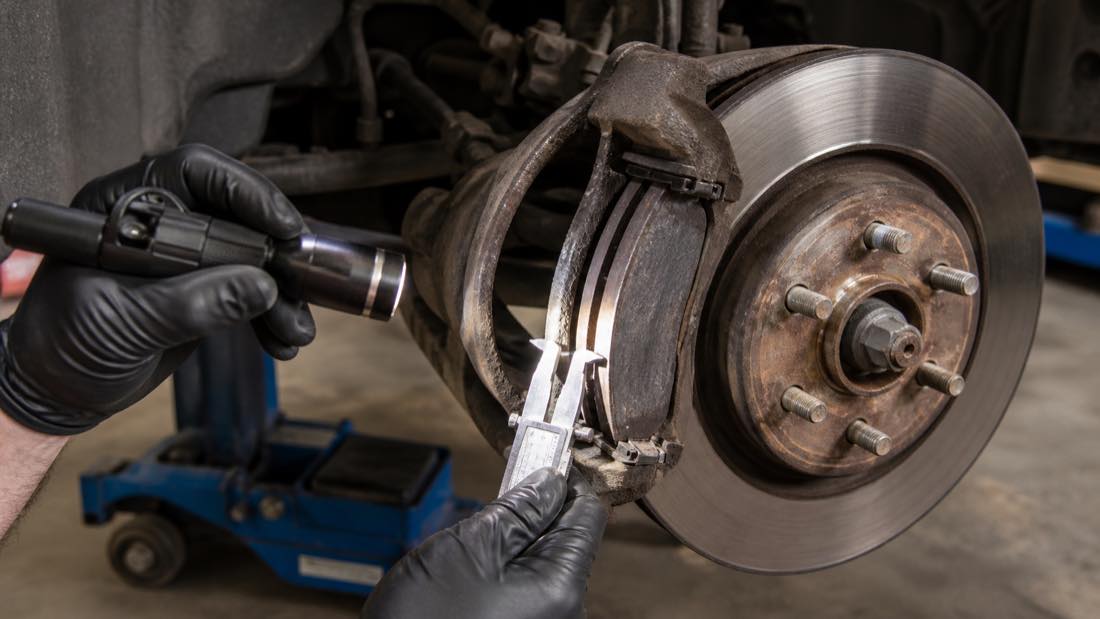
You may need new brake pads if your brakes squeal, grind, vibrate, take longer to stop, feel spongy, or the brake pad material looks thin through the wheel. Grinding, a sinking brake pedal, leaking brake fluid, or a red brake warning light should be treated as urgent.
Brake pads are wear items. Every time you slow down, the pads press against the brake rotors and create friction. That friction is what stops the car, but it also wears the pad material down over time. Some drivers get tens of thousands of miles from a set of pads. Others wear them faster because of city driving, hills, towing, heavy traffic, aggressive braking, or a stuck caliper.
If you are building a broader service routine, see our complete car maintenance schedule by mileage. If your brake warning light is on, read our brake warning light guide before assuming this is only a pad issue.
Quick Triage: How Urgent Is It?
| Symptom | Likely urgency | What to do |
|---|---|---|
| Light squeak only when cold or wet | Low to medium | Monitor, inspect if it continues |
| High-pitched squeal while braking | Medium | Schedule a brake inspection soon |
| Grinding noise | High | Avoid driving and inspect immediately |
| Longer stopping distance | High | Have the brake system checked quickly |
| Pedal feels soft, spongy, or sinks | High | Do not delay; fluid or hydraulic issue possible |
| Vehicle pulls while braking | Medium to high | Inspect pads, calipers, tires, and suspension |
| Red brake warning light | High | Stop and check before driving further |
| ABS light only | Medium | Brakes may still work, but anti-lock function needs diagnosis |
Brake symptoms are not a place to gamble. If stopping distance changes or the pedal feels wrong, treat it as a safety issue.
1. Squealing or Squeaking Brakes
A high-pitched squeal is one of the most common signs of worn brake pads. Many pads have a small metal wear indicator that touches the rotor when the pad material gets low. That sound is designed to get your attention before the pads are completely gone.
Not every squeak means immediate danger. Brakes can make brief noise from moisture, dust, rust film, or cold weather. But repeated squealing during normal braking should be inspected. If the sound is getting louder or more frequent, the pads may be near the end of their life.
2. Grinding Noise
Grinding is more serious than squealing. It can mean the brake pad material is worn down so far that metal is contacting the rotor. At that point, the repair can quickly become more expensive because the rotors may be damaged.
If you hear a harsh scraping or grinding sound when braking, do not keep driving for days to see if it goes away. Have the car inspected as soon as possible. Metal-on-metal braking can reduce stopping power and damage rotors, calipers, and other brake hardware.
3. Longer Stopping Distance
If the car takes longer to stop than it used to, something is wrong. Worn brake pads are one possible cause, but not the only one. Low-quality pads, overheated brakes, contaminated pads, worn rotors, old brake fluid, low tire traction, or a hydraulic problem can also increase stopping distance.
This symptom matters because it shows up when you need the brakes most. If you notice you are pressing harder than usual or stopping later than expected, schedule a brake inspection.
4. Vibration When Braking
Vibration through the brake pedal or steering wheel can point to rotor problems, uneven pad deposits, loose parts, suspension wear, or tire issues. Brake pads can contribute if they are unevenly worn or contaminated, but vibration is often more than a simple pad-only problem.
Do not ignore vibration that appears only while braking. A mechanic may need to measure rotor thickness, inspect pad wear, check caliper movement, and look for loose or worn components.
5. Thin Brake Pad Material
You may be able to see the outer brake pad through the wheel spokes. If the friction material looks very thin, the pads are probably due soon. A common rough guide is that pads near 3 mm or less should be replaced soon, while pads around 1-2 mm are urgent.
Visual checks are useful, but they are not perfect. The inner pad can wear faster than the outer pad, especially if a caliper slide is sticking. That is why a proper brake inspection looks at both inner and outer pads, the rotor surface, and hardware condition.
On disc brakes, the brake pad thickness and brake lining are usually easier to measure than on drum brakes. Drum brakes use shoes instead of pads, so the inspection process is different. If you see deep rotor grooves, heavy brake dust, or a brake caliper that looks wet from fluid, get a professional inspection instead of guessing from the outside of the wheel.
6. Brake Warning Light or ABS Light
A brake warning light can point to low brake fluid, parking brake issues, hydraulic problems, or other brake system faults. It is not just a brake pad reminder. If a red brake light appears while driving, stop safely and check the parking brake and fluid level if you know how.
The ABS light is different. It usually means the anti-lock braking system needs diagnosis. The car may still stop, but ABS may not work correctly in a panic stop or slippery condition. Either warning light deserves attention.
7. Soft or Spongy Brake Pedal
A soft brake pedal is not a normal brake pad wear symptom. It can mean air in the brake lines, old brake fluid, a leak, master cylinder trouble, or another hydraulic issue. It may also appear with longer stopping distance.
If the pedal sinks toward the floor, feels spongy, or suddenly changes, do not treat it as a routine pad appointment. The brake hydraulic system should be checked quickly.
8. Pulling, Burning Smell, or Uneven Wear
If the car pulls to one side while braking, one wheel may be doing more work than the others. Possible causes include uneven brake pad wear, a sticking caliper, contaminated pads, tire problems, or suspension issues.
A burning smell after normal driving can mean overheated brakes, a dragging caliper, or riding the brakes downhill. If one wheel is much hotter than the others, stop driving and let it cool before inspection. A stuck caliper can destroy a new set of pads quickly.
Brake Pad Wear vs Other Brake Problems
| Symptom | Could be brake pads? | Other possible causes |
|---|---|---|
| Squealing | Yes | Dust, moisture, glazed pads, hardware |
| Grinding | Yes | Rotor damage, debris, backing plate contact |
| Soft pedal | Usually not just pads | Brake fluid leak, air, master cylinder |
| Vibration | Sometimes | Warped rotor, tire, suspension, hub issue |
| Pulling | Sometimes | Caliper, tire pressure, alignment, suspension |
| Red brake light | Sometimes related | Low fluid, parking brake, hydraulic fault |
This is why a brake inspection is more useful than guessing from one symptom.
How Long Do Brake Pads Last?
Many brake pads last somewhere around 30,000 to 70,000 miles, but mileage varies widely. City driving wears pads faster than highway driving. Hills, towing, heavy loads, aggressive braking, and stop-and-go traffic all shorten brake pad life.
Front brakes often wear faster than rear brakes because the front axle handles more braking load. Some vehicles, however, wear rear pads quickly because of stability control, electronic parking brake design, or driving conditions.
It is smart to have brakes checked during tire rotation because the wheels may already be off. See our tire rotation interval guide if you want to pair both services.
Is It Safe to Drive With Worn Brake Pads?
It depends on the symptom. A light occasional squeak may not be an emergency, but grinding, longer stopping distance, a soft pedal, fluid leaking, or a red brake warning light is not safe to ignore.
Avoid driving if:
- the brake pedal sinks or feels very soft
- the car will not stop normally
- you hear grinding
- brake fluid is leaking
- smoke or burning smell comes from a wheel
- the red brake warning light stays on
- the vehicle pulls hard when braking
If you are unsure, call a repair shop or roadside assistance. Brakes are too important for guesswork.
Brake Pad Replacement Cost Context
Brake pad replacement cost depends on vehicle type, pad quality, labor rate, and whether rotors also need replacement.
| Service | Typical US cost range |
|---|---|
| Brake pads only, one axle | $150-$350+ |
| Pads and rotors, one axle | $300-$700+ |
| Luxury, truck, or performance brakes | Often higher |
| Brake inspection | Often free to $100 |
If pads are changed before they grind, rotors may last longer. Waiting too long can turn a pad job into pads, rotors, calipers, hardware, and brake fluid work.
This is why metal-on-metal noise should be handled quickly. Once the friction material is gone, brake pad and rotor replacement is more likely than pads alone. Severe brake fade, a burning smell, or steering wheel vibration during braking can also point to heat, rotor, or hardware problems that should be diagnosed before parts are replaced.
Common Mistakes
Do not make these brake maintenance mistakes:
- ignoring grinding because the car still stops
- replacing pads without checking rotors
- assuming every squeak means new pads
- assuming a soft pedal is just worn pads
- forgetting the inner pad can wear faster
- using cheap pads that do not match your driving
- skipping brake fluid inspection
- driving with a red brake warning light
- replacing only one side of an axle
- failing to bed in new pads if the manufacturer requires it
Good brake service is not only about replacing parts. It is about confirming the whole brake system can stop the car safely.
FAQ
What are the first signs you need new brake pads?
The first signs are often squealing, visible thin pad material, longer stopping distance, vibration while braking, or a brake inspection showing low pad thickness.
Do squeaky brakes always mean bad brake pads?
No. Moisture, dust, rust film, pad material, or hardware can cause squeaks. Repeated squealing during braking should still be inspected.
Is grinding brakes dangerous?
Yes. Grinding can mean metal-on-metal contact and possible rotor damage. Have the vehicle inspected immediately and avoid unnecessary driving.
How thin is too thin for brake pads?
Many shops recommend replacement around 3 mm or less. Pads near 1-2 mm are urgent. Always follow the vehicle and pad manufacturer’s guidance.
Can worn brake pads turn on the brake light?
Sometimes indirectly, but the brake light can also mean low brake fluid, parking brake trouble, or a hydraulic issue. Do not assume it is only pad wear.
Should I replace rotors with brake pads?
Not always. Rotors should be measured and inspected. If they are too thin, deeply grooved, warped, or damaged, they should be replaced.
How long can I drive after brake pads start squealing?
Do not plan around a fixed number of miles. Squealing can become grinding quickly depending on pad thickness and driving. Schedule an inspection soon.
Are front brake pads more important than rear pads?
Both matter. Front brakes often do more work, but rear brakes help stability and stopping balance. Replace pads by axle and inspect the full system.