
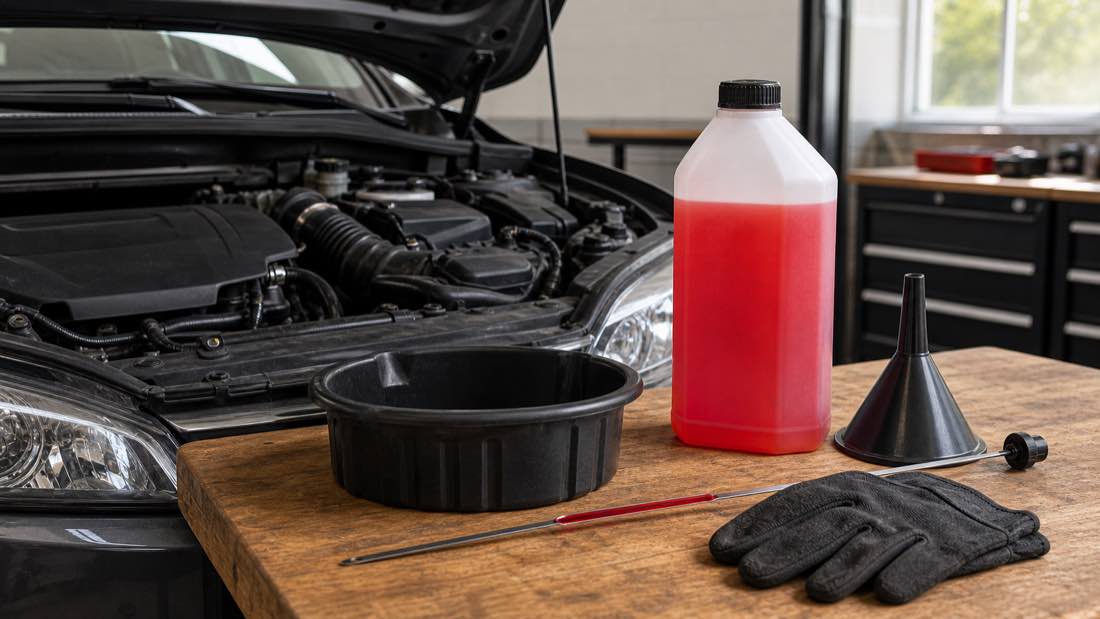
Most vehicles need transmission fluid service somewhere between 30,000 and 100,000 miles, but the right transmission fluid change interval depends heavily on the transmission type, fluid specification, driving conditions, and manufacturer schedule. Some older automatics and severe-use vehicles need shorter intervals. Some newer vehicles use long-life fluid and may list intervals beyond 100,000 miles, or only require service under specific conditions.
The safest rule is this: check the owner’s manual first, use the exact fluid specification, and do not treat transmission fluid like a universal product. The wrong fluid can cause poor shifting, clutch wear, warranty issues, and expensive transmission damage.
For the bigger maintenance picture, see our complete car maintenance schedule by mileage. Transmission fluid is less frequent than an oil change interval, but ignoring it can be much more expensive.
Quick Transmission Fluid Change Interval
| Vehicle or transmission situation | Common service interval |
|---|---|
| Many automatic transmissions | 60,000-100,000 miles |
| Severe-service automatic use | 30,000-60,000 miles |
| Older automatic transmissions | Often 30,000-60,000 miles |
| CVT transmission | Often 30,000-60,000 miles, depending on model |
| Manual transmission | Often 30,000-60,000 miles |
| Sealed or lifetime fluid transmission | Follow the manual; often extended or condition-based |
| Unknown used-car history | Inspect/test now and service if unsure |
| Burnt, dark, contaminated, or low fluid | Diagnose before simply changing fluid |
These are general ranges. The factory maintenance schedule for your exact vehicle is the final source.
Why Transmission Fluid Matters
Transmission fluid does more than lubricate parts. In an automatic transmission, automatic transmission fluid, often called ATF, also helps transfer hydraulic pressure, cool internal parts, operate the valve body, protect clutch packs, and support smooth gear changes.
Manual transmissions may use gear oil, manual transmission fluid, or even a specific ATF depending on the design. CVTs and dual-clutch transmissions have their own fluid requirements. A bottle that works in one vehicle may be wrong for another.
Heat is the main enemy. Every shift creates friction and heat. Over time, fluid additives wear down, the fluid darkens, and tiny wear particles can collect in the pan, filter, and fluid passages. Fresh fluid helps the transmission operate cleanly, but only when the correct fluid and service method are used.
Start With the Owner Manual
The owner’s manual or maintenance guide should tell you three things:
- the correct transmission fluid specification
- the recommended service interval
- whether your driving counts as normal or severe service
Do not rely on fluid color alone. Most automatic transmission fluid starts red or pink, but some fluids are amber, blue, green, or nearly clear depending on the manufacturer. Manual transmission fluid and gear oil may not look like ATF at all.
If the manual says the transmission is sealed, that does not always mean the fluid is impossible to service. It usually means there is no simple dipstick and the level may need to be checked at a specific temperature with a scan tool or fill plug procedure. That is often a shop job, not a driveway guess.
Severe Service Shortens the Interval
Many US drivers fall into severe service without realizing it. Severe service can include:
- frequent stop-and-go commuting
- towing or hauling
- mountain driving
- hot climate driving
- rideshare, delivery, or work use
- repeated short trips
- long idling
- aggressive driving
- heavy traffic with constant shifting
Transmission fluid breaks down faster when the transmission runs hot. Towing, hills, and city traffic can build heat quickly, especially in trucks, SUVs, minivans, and older vehicles. If your manual gives a shorter severe-service interval, use that interval.
For a high-mileage car with unknown records, inspect the fluid condition and service history before waiting for a perfect mileage number. Waiting until shifting feels wrong can turn maintenance into repair.
Drain and Fill vs Transmission Flush
A drain and fill removes the fluid that drains from the pan or drain plug, then refills with fresh fluid. Some old fluid remains inside the torque converter, cooler lines, and internal passages.
A transmission flush or fluid exchange replaces more of the old fluid. It can be useful when the manufacturer recommends it and the transmission is otherwise healthy, but it should be done with the correct equipment and fluid.
| Service type | Best for | Watch out for |
|---|---|---|
| Drain and fill | Routine service on a healthy transmission | Replaces only part of the fluid |
| Pan drop and filter | Vehicles with serviceable pan/filter | More labor and gasket care |
| Fluid exchange | Replacing more old fluid | Must use correct process and fluid |
| Top-off only | Small correction after confirming fluid type | Does not renew old fluid |
| Diagnosis first | Slipping, burnt fluid, metal, or major leaks | Service alone may not fix damage |
If the transmission already slips, bangs into gear, or has burnt fluid with metal debris, a flush is not a cure. It needs diagnosis. A shop may still recommend fluid service later, but the first step is finding the cause.
Do You Need a Transmission Filter Too?
Some transmissions have a serviceable filter inside the pan. Others use a screen, an internal filter that is not normally serviced, or a design that requires more disassembly than a basic fluid change. This is why the service interval and service type need to match the exact transmission, not just the vehicle brand.
If the manual calls for a filter replacement, skipping it can leave old debris in the system. A pan drop may also let the technician inspect the bottom of the pan for fine gray paste, clutch material, or metal pieces. A light coating of fine material can be normal wear. Larger metal flakes, chunks, or a heavy burnt smell are warning signs.
Pan service usually costs more than a simple drain and fill, but it can be worth it on vehicles designed for it. It also gives the shop a chance to replace the pan gasket or sealing surface correctly. If the pan is plastic, integrated with a filter, or uses one-time hardware, the parts cost may be higher.
What About Lifetime Transmission Fluid?
Lifetime transmission fluid is a confusing phrase. It may mean the fluid is designed for a long service life under normal use. It does not mean the fluid is immune to heat, leaks, contamination, or severe driving.
Some manufacturers do not list a routine replacement interval for normal driving, but still list service under severe conditions. Others expect fluid inspection or replacement at high mileage. If you plan to keep the vehicle well past 100,000 miles, it is reasonable to ask a qualified shop whether preventive service makes sense for your exact model.
Be careful with generic advice. A simple drain and fill may be normal maintenance on one sealed transmission and risky on another if the level procedure is done incorrectly. The fill level, fluid temperature, and specification matter.
Signs Transmission Fluid Needs Attention
Transmission fluid may need inspection before the normal interval if you notice:
- delayed engagement when shifting into drive or reverse
- slipping between gears
- harsh or jerky shifting
- shuddering during acceleration
- whining or humming from the transmission area
- burnt smell from the fluid
- dark brown or black fluid
- metal shavings in the pan or fluid
- transmission fluid leak
- low fluid level
- warning lights or transmission temperature warnings
If you see reddish, pink, brown, or oily fluid under the car, use our car leaking fluid color guide to help identify whether it may be transmission fluid.
Used Car With No Records
A used car with no transmission-service records deserves extra care. Do not assume the fluid was changed just because the vehicle drives well during a short test drive. Ask for maintenance receipts, check the owner’s manual interval, inspect for leaks, and look for shift behavior after the vehicle is fully warm.
If the fluid is clean, the transmission shifts normally, and the mileage is near the recommended interval, a normal service may make sense. If the fluid is burnt, black, low, or full of debris, pay for diagnosis before buying or before approving a flush. Fresh fluid cannot undo internal wear, and a badly worn transmission may need repair planning instead of routine maintenance.
For high-mileage vehicles, many shops prefer a conservative drain and fill over an aggressive flush when the service history is unknown. That does not mean old fluid should always be left alone. It means the service method should match the risk level and the condition of the transmission.
How to Check Transmission Fluid
Some vehicles have a transmission dipstick. Others are sealed and require a shop procedure. If your vehicle has a dipstick, the manual may tell you whether to check fluid hot or cold, in park or neutral, and with the engine running or off.
A basic check usually looks at:
- fluid level
- color
- smell
- visible debris
- leaks around the pan, cooler lines, axle seals, or case
- shift behavior during driving
Low fluid can cause serious transmission problems because the pump may pull air instead of fluid. Overfilling can also cause foaming, pressure problems, and poor shifting. If you are not sure about the correct check procedure, do not guess.
Transmission Fluid Change Cost
Costs vary by vehicle, fluid type, labor rate, and whether the service includes a filter, pan gasket, or full exchange.
| Service | Typical US cost range |
|---|---|
| DIY drain and fill | $40-$120+ in fluid and supplies |
| Shop drain and fill | $100-$250+ |
| Pan drop, gasket, and filter | $180-$350+ |
| Full fluid exchange | $180-$400+ |
| Specialty CVT, DCT, or sealed transmission service | Often higher |
| Transmission diagnosis | Often $100-$200+ before repair |
Transmission fluid can be more expensive than engine oil, especially for CVT, dual-clutch, import, and manufacturer-specific formulas. The cost still looks small compared with major transmission repair or replacement.
DIY or Repair Shop?
A simple drain and fill can be DIY-friendly on some older vehicles with clear access, a dipstick, and a published refill amount. It becomes less friendly when the vehicle has no dipstick, requires a scan-tool temperature check, uses a fill plug in a tight location, or needs a special fluid.
Use a repair shop if:
- the transmission is sealed
- the fluid type is unclear
- the vehicle has shifting symptoms
- the fluid smells burnt
- you see metal debris
- there is an active leak
- the service requires a filter or pan gasket
- the vehicle is still under warranty
- you are working with a CVT or dual-clutch transmission
The biggest DIY mistakes are using the wrong fluid, underfilling, overfilling, skipping the filter when it is required, and ignoring leaks. Transmission service is not hard on every vehicle, but mistakes can be expensive.
Common Mistakes
Avoid these transmission-fluid mistakes:
- using universal fluid without checking the specification
- assuming red fluid means the fluid is still good
- waiting until slipping starts
- flushing a damaged transmission without diagnosis
- overfilling the transmission
- checking level with the wrong procedure
- ignoring severe-service intervals
- skipping a serviceable transmission filter
- mixing unknown fluids
- treating lifetime fluid as never-inspect fluid
The goal is not to change transmission fluid as often as possible. The goal is to service it at the right interval, with the right fluid, using the right method.
FAQ
How often should transmission fluid be changed?
Many vehicles need transmission fluid service between 30,000 and 100,000 miles. The exact interval depends on the transmission, fluid type, driving conditions, and owner manual.
Is a transmission flush better than a drain and fill?
Not always. A drain and fill is often safer for routine maintenance, while a fluid exchange replaces more old fluid. The best choice depends on the vehicle and fluid condition.
What happens if you never change transmission fluid?
Old fluid can lose lubrication and cooling ability, collect wear particles, and contribute to harsh shifting, slipping, overheating, and internal transmission wear.
Should I change transmission fluid on a high-mileage car?
If the transmission shifts normally, service records and fluid condition should guide the decision. If the fluid is burnt, full of metal, or the transmission slips, diagnose it before doing a flush.
Can I mix transmission fluids?
Avoid mixing fluids unless the product specifically meets your vehicle’s required specification. Transmission fluid is not universal across all vehicles.
How do I know transmission fluid is bad?
Bad fluid may look dark brown or black, smell burnt, contain metal debris, or come with shifting symptoms such as slipping, shuddering, or delayed engagement.
Do sealed transmissions need fluid changes?
Some sealed transmissions have long service intervals, but many can still be serviced with the correct procedure. Follow the manual and use a qualified shop when special steps are required.
How much does a transmission fluid change cost?
A shop transmission fluid service commonly costs about $100-$400+, depending on the vehicle, fluid type, filter, pan gasket, and whether it is a drain and fill or full exchange.