
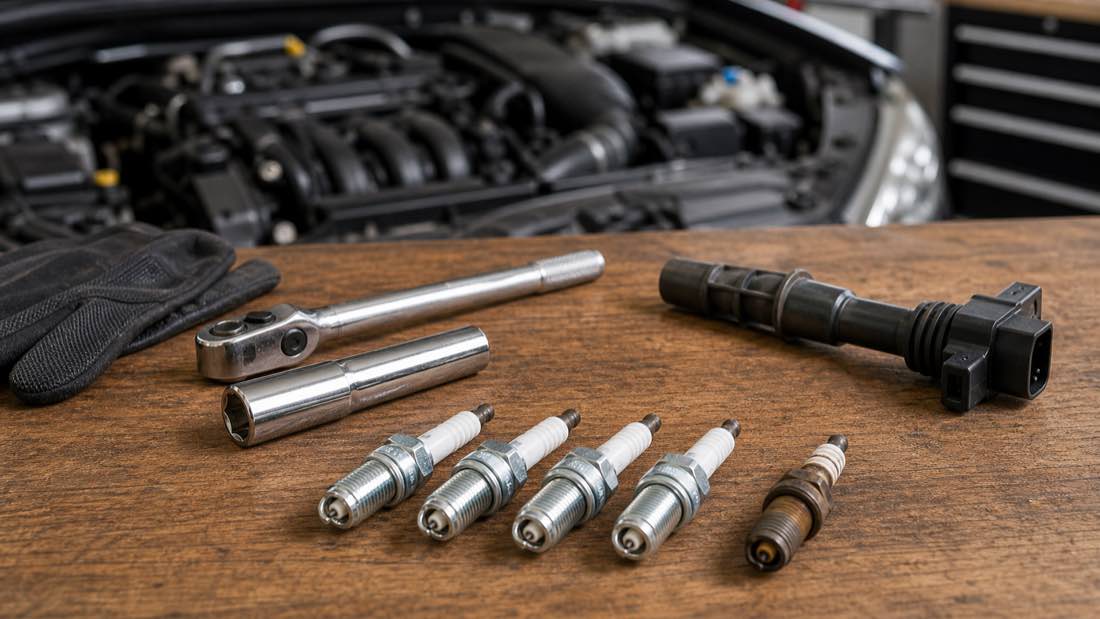
Most modern vehicles need spark plug replacement somewhere between 60,000 and 100,000 miles, but the correct spark plug replacement interval depends on the plug type, engine design, driving conditions, and the maintenance schedule for your exact vehicle. Older copper spark plugs may be due around 20,000 to 30,000 miles, while many iridium plugs can last 100,000 miles or more.
The safest answer is simple: follow the owner’s manual first and use the correct OEM-style spark plug. Spark plugs are small parts, but the wrong plug, wrong gap, or wrong installation torque can create misfires, poor fuel economy, and expensive engine or catalytic converter problems.
For the broader service plan, see our complete car maintenance schedule by mileage. If the check engine light is already on with a misfire code, read our P0300 code guide before treating the job as routine maintenance.
Quick Spark Plug Replacement Interval
| Spark plug or vehicle situation | Common replacement interval |
|---|---|
| Copper spark plugs | 20,000-30,000 miles |
| Platinum spark plugs | 60,000 miles, sometimes longer |
| Double platinum spark plugs | 60,000-100,000 miles |
| Iridium spark plugs | 80,000-120,000 miles |
| Turbocharged or severe-use engines | Check manual; often shorter |
| Used car with no service records | Inspect now; replace if unsure |
| Misfire, rough idle, or hard start | Diagnose before waiting for mileage |
These are general ranges. The maintenance schedule for your exact year, make, model, and engine is the final source.
If you are close to the interval and already paying for related engine access, it can make sense to replace the plugs during the same visit. Labor overlap matters on engines where intake parts must be removed to reach the rear bank plugs.
What Spark Plugs Do
Spark plugs ignite the compressed air-fuel mixture inside each combustion chamber. The ignition coil sends high voltage to the plug, and the spark jumps across the electrode gap at the right moment.
When spark plugs are fresh, the spark is strong and consistent. As plugs wear, the gap can widen, the electrode can erode, and deposits can build up. The engine may still run, but it can need more voltage to fire the plug. That extra demand can stress ignition coils, reduce fuel economy, and cause misfires under load.
This is why spark plugs are interval maintenance, not just “replace when broken” parts. Waiting until the engine runs badly can make the repair more expensive.
Plug Type Changes the Interval
Spark plug material matters. Copper plugs are inexpensive and conduct heat well, but they wear faster. Platinum and double platinum plugs last longer. Iridium plugs usually last the longest and are common in many modern vehicles.
Do not downgrade plug type just to save a few dollars. If the engine was designed for iridium plugs, installing a cheaper plug can shorten the interval and may affect performance. Also avoid choosing plugs only by thread size. Heat range, reach, electrode design, and resistor design all matter.
The best choice is usually the plug type listed by the manufacturer or a direct equivalent from a trusted parts source. If the owner’s manual calls for a specific spark plug gap, confirm it before installation. Some modern fine-wire iridium plugs should not be forced open with an old-style gap tool.
What Shortens Spark Plug Life
Spark plugs can wear early when the engine is not running cleanly. Frequent short trips, long idling, stop-and-go traffic, oil consumption, rich fuel mixture, weak ignition coils, and overheating can all shorten plug life. Turbocharged engines may also be harder on plugs because cylinder pressure and heat are higher.
Driving style matters too. A vehicle that mostly cruises on the highway may reach the normal interval easily. A vehicle used for delivery, rideshare, city commuting, towing, or repeated short trips may show plug wear sooner. If your maintenance schedule has a severe-service section, use it.
Fuel quality and engine condition also matter. A leaking fuel injector, worn piston rings, valve-cover leak into the plug well, or bad PCV system can foul plugs before their normal mileage. When plugs fail early, do not just install another set and move on. Find out why the first set wore out.
Signs Spark Plugs Need Replacement
Spark plugs may need attention before the normal interval if you notice:
- rough idle
- hard starting
- engine misfire
- hesitation during acceleration
- poor fuel economy
- loss of power under load
- engine vibration
- check engine light
- fuel smell from unburned fuel
- failed emissions inspection
A flashing check engine light can mean an active misfire that may damage the catalytic converter. Do not keep driving hard with a flashing light. If the code points to one cylinder, such as P0301, use our P0301 code guide to understand the diagnosis path.
When It Is Not Just Spark Plugs
Old spark plugs can cause misfires, but they are not the only cause. Ignition coils, coil boots, spark plug wires, fuel injectors, vacuum leaks, compression problems, and sensor issues can also make an engine run poorly.
If one cylinder keeps fouling a new plug, look for the cause. Oil fouling may point to valve-cover gasket leaks, worn valve seals, piston-ring wear, or oil entering the combustion chamber. Heavy black carbon can suggest rich running, weak ignition, or too much idling. A clean wet plug may point toward fuel or no-spark issues.
Replacing plugs is reasonable at the interval. Replacing plugs repeatedly without diagnosing why they fail is not.
Coils, Boots, and Wires Matter
Many modern engines use one ignition coil per cylinder. The coil sits above the spark plug and sends voltage through a rubber boot. Older engines may use spark plug wires. Both designs can cause misfires even when the spark plugs are fine.
During plug replacement, inspect coil boots and wires carefully. Look for cracks, carbon tracking, oil swelling, corrosion, and loose fit. A damaged boot can let spark escape before it reaches the plug. Oil in the plug well can soften the boot and cause repeat misfires.
Do not automatically replace every ignition coil just because spark plugs are due. Coils are more expensive than plugs. Replace coils when they test bad, show damage, or match a confirmed misfire pattern. If the boots are sold separately and look worn, replacing boots during plug service can be a smart middle ground.
Used Car With Unknown Records
Spark plugs are often forgotten on used cars because the vehicle can still start and drive. If there is no record of plug replacement and the odometer is near or past the recommended interval, inspection is smart.
On many 4-cylinder engines, plug access is simple. On some V6 and V8 engines, rear plugs can require intake removal or tight access. That labor difference matters when budgeting for a used car.
If the plugs are overdue but the engine runs smoothly, replacement can be preventive maintenance. If the engine already has misfire codes, rough idle, or a flashing check engine light, diagnose the problem first. Our check engine light guide explains when a warning light needs immediate attention.
DIY or Repair Shop?
Spark plug replacement can be DIY-friendly on engines with easy access, coil-on-plug ignition, and clear torque specifications. The job becomes riskier when plugs are deep in the head, stuck, angled awkwardly, or hidden under the intake manifold.
Use a repair shop if:
- rear plugs require major disassembly
- a plug feels seized
- the engine has aluminum cylinder heads and high mileage
- the vehicle has active misfire codes
- you do not have the torque spec
- a coil boot is torn or oil-soaked
- the plug threads look damaged
- you are not sure about the correct plug gap
The biggest DIY mistakes are cross-threading a plug, over-tightening, under-tightening, cracking the ceramic, mixing up coil connectors, and using the wrong plug. A torque wrench is cheap compared with cylinder-head thread repair.
Why Installation Details Matter
Spark plugs thread into the cylinder head. Many modern cylinder heads are aluminum, which means the threads can be damaged if a plug is forced in crooked or tightened too much. Always start spark plugs by hand before using a ratchet. If the plug does not thread smoothly, stop.
Torque matters because the plug must seal heat and compression correctly. Too loose can cause poor heat transfer or compression leakage. Too tight can damage threads or stretch the plug shell. Use the torque spec from the service information or plug maker, especially on aluminum heads.
Anti-seize is another place where old habits can cause trouble. Some modern spark plugs come with plated threads and the manufacturer may say not to use anti-seize. Adding it anyway can change the torque reading and increase the risk of over-tightening. Dielectric grease is different; it may be used lightly inside some boots when recommended, but it does not go on the spark plug electrode.
Spark Plug Replacement Cost
Spark plug replacement cost depends on plug type, engine layout, labor access, and whether coils, boots, wires, or gaskets are also needed.
| Service | Typical US cost range |
|---|---|
| DIY 4-cylinder plug set | $25-$100+ in parts |
| DIY iridium plug set | $40-$140+ |
| Shop replacement on easy 4-cylinder | $100-$250+ |
| Shop replacement on V6/V8 with tight access | $250-$600+ |
| Coil boot or wire replacement | Additional parts/labor |
| Misfire diagnosis before repair | Often $100-$200+ |
Parts are usually not the expensive part. Labor becomes expensive when plugs are hard to reach or when a misfire requires diagnosis.
What to Inspect During Replacement
A good spark plug service should include more than pulling old plugs and installing new ones. Inspect the ignition coil boots or spark plug wires for cracks, oil, swelling, carbon tracking, or loose fit. Check the plug wells for oil or water. Compare old plugs by cylinder so one abnormal plug is not missed.
The removed plugs can tell a story. A normal old plug may have light tan or gray deposits. A black sooty plug may suggest rich running or weak spark. An oily plug can suggest oil entering that cylinder. A white blistered plug can point to overheating, lean running, or the wrong heat range.
These clues do not replace diagnosis, but they help you decide whether the spark plugs were simply due or whether another repair is waiting.
Common Mistakes
Avoid these spark plug maintenance mistakes:
- replacing plugs only after a misfire starts
- installing the wrong plug type
- changing the gap on plugs that should not be adjusted
- using anti-seize when the plug maker says not to
- over-tightening plugs in aluminum heads
- ignoring oil in the plug wells
- replacing one plug when the full set is due
- reusing damaged coil boots
- clearing misfire codes without a test drive
- skipping diagnosis for repeated fouling
Spark plugs are inexpensive compared with the problems they can create when neglected. The right interval keeps the ignition system healthy and helps prevent misfires before they become costly.
FAQ
How often should spark plugs be replaced?
Many modern vehicles need spark plugs every 60,000 to 100,000 miles. Copper plugs may need replacement around 20,000 to 30,000 miles, while iridium plugs may last 100,000 miles or more.
What happens if you wait too long to replace spark plugs?
Worn spark plugs can cause rough idle, hard starts, poor fuel economy, misfires, coil stress, and catalytic converter damage if misfires become severe.
Do iridium spark plugs really last longer?
Yes. Iridium plugs usually last longer than copper or standard platinum plugs because the electrode material resists wear better.
Should I replace ignition coils with spark plugs?
Not automatically. Replace coils or boots if they are damaged, oil-soaked, cracked, or failing. Good coils do not need replacement just because plugs are due.
Can I replace only one spark plug?
If one plug fails early, diagnose why. For normal maintenance, it is usually better to replace the full set so all cylinders have the same plug age and performance.
Can bad spark plugs turn on the check engine light?
Yes. Worn or fouled spark plugs can cause misfire codes and trigger the check engine light, especially under load or during cold starts.
How much does spark plug replacement cost?
DIY parts may cost $25-$140+ depending on plug type. A shop replacement often costs $100-$600+ depending on engine access and labor time.
Is spark plug replacement easy to DIY?
It can be easy on accessible engines, but risky on engines with tight access, stuck plugs, or unclear torque specs. Cross-threading or over-tightening can turn a simple job into an expensive repair.