
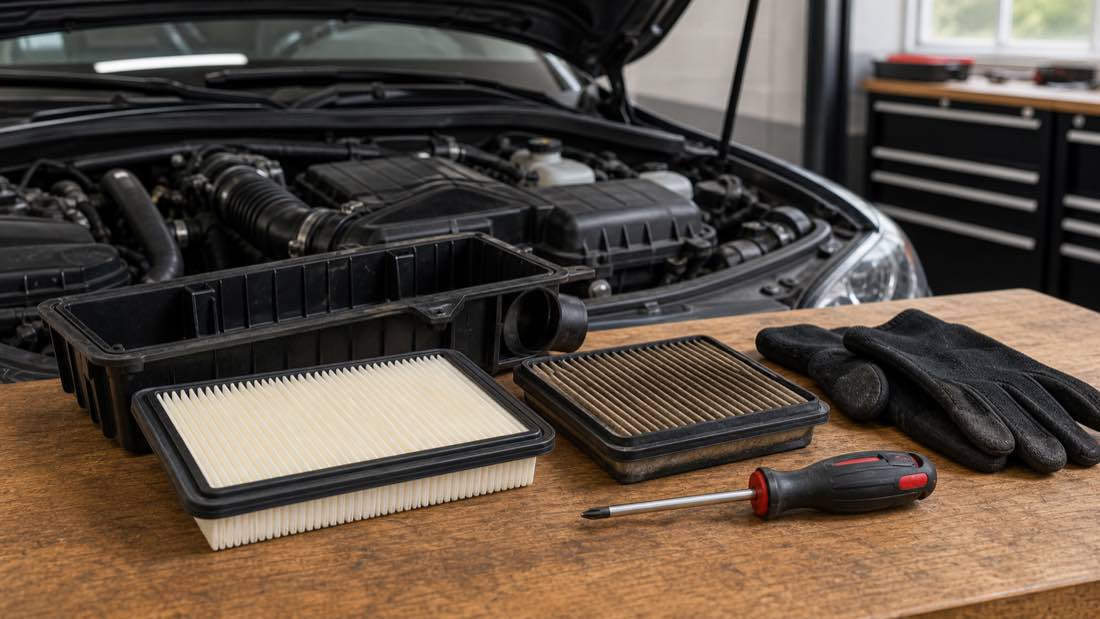
Most vehicles need the engine air filter inspected at every oil change and replaced about every 12,000 to 30,000 miles, but the correct engine air filter replacement interval depends on the vehicle, filter type, driving conditions, and the manufacturer schedule. A car driven on clean suburban roads may go longer. A truck used on dusty rural roads may need a filter much sooner.
The best rule is simple: follow the owner’s manual, inspect the filter regularly, and replace it when it is dirty, damaged, clogged, wet, or past the recommended interval. Do not confuse the engine air filter with the cabin air filter. The engine air filter protects the engine. The cabin air filter cleans air entering the passenger compartment.
For the broader maintenance plan, see our complete car maintenance schedule by mileage. Many drivers inspect the engine air filter during an oil change interval because the hood is already open.
Quick Engine Air Filter Replacement Interval
| Driving situation | Common engine air filter interval |
|---|---|
| Normal city/suburban driving | 15,000-30,000 miles |
| Dusty roads or rural driving | 10,000-15,000 miles, sometimes sooner |
| Heavy pollen, wildfire smoke, or construction dust | Inspect more often |
| Off-road use | Inspect after dusty trips |
| Unknown used-car history | Inspect now and replace if unsure |
| Wet, torn, oily, or poorly sealed filter | Replace immediately |
| Vehicle with filter restriction indicator | Follow the indicator and manual |
These are general ranges. Your owner’s manual and real filter condition matter more than a universal mileage number.
What the Engine Air Filter Does
The engine air filter cleans the air entering the intake system before it reaches the throttle body, mass airflow sensor area, intake manifold, and combustion chambers. The engine needs a large amount of clean air to mix with fuel and burn properly.
A good filter blocks dust, sand, leaves, insects, and other debris. If the filter is missing, torn, poorly sealed, or installed incorrectly, unfiltered air can enter the engine. That can contaminate the intake tract and increase engine wear over time.
The engine air filter is usually inside a plastic air box under the hood. It may be rectangular, square, round, or cone-shaped depending on the vehicle.
Engine Air Filter vs Cabin Air Filter
These two filters are often confused.
| Filter | What it protects | Common location |
|---|---|---|
| Engine air filter | Engine intake air | Air box under the hood |
| Cabin air filter | Passenger compartment air | Behind glove box, cowl, or HVAC area |
Replacing the cabin air filter can improve airflow from the vents and reduce dust or odors inside the car. Replacing the engine air filter helps protect the engine and can restore power if the old filter is severely restricted.
This article is about the engine air filter. Cabin filter service is a separate maintenance item.
Why the Interval Changes
Air filters do not load up at the same speed for every driver. A filter in a car that spends most of its life on paved roads may stay serviceable for a long time. A filter in a truck used on gravel roads, farms, construction sites, or dry desert routes can load with dust quickly.
Short trips and city driving can also matter because the vehicle spends more time idling and pulling air near road dust, pollen, and traffic debris. Seasonal pollen, wildfire smoke, and road salt dust can make a filter look dirty sooner.
If you live in a dusty area, inspect the filter more often than the normal schedule. The mileage interval is a starting point, not a blind rule.
Fuel Economy vs Engine Power
Older advice often claimed that a dirty air filter would dramatically reduce gas mileage. That was more true on older carbureted engines. Most modern fuel injected engines use sensors and computer control to adjust the air-fuel mixture, so a moderately dirty filter may not create a huge fuel economy change.
That does not mean the filter no longer matters. A badly restricted air filter can reduce maximum engine power because the engine cannot breathe freely. The car may feel slower when merging, climbing hills, or accelerating hard. It can also make the engine work harder under load.
Think of the engine air filter as engine protection first and performance support second. Replacing it on time is less about chasing a guaranteed miles-per-gallon gain and more about keeping clean airflow, protecting the intake, and preventing restriction before it becomes severe.
How to Inspect an Engine Air Filter
Inspection is usually simple on many vehicles:
- locate the air filter housing under the hood
- open the clips or screws carefully
- lift the filter without dumping debris into the air box
- check the pleats for heavy dirt, leaves, insects, oil, water, or damage
- check that the rubber seal is intact
- clean loose debris from the lower air box before reinstalling
- make sure the housing closes fully
Do not judge the filter only by surface color. A light coating of dust can be normal. A filter that is packed deep in the pleats, caked with debris, damp, torn, collapsed, or poorly sealed should be replaced.
Some vehicles use a filter restriction indicator. If your vehicle has one, follow the owner’s manual for how to read it.
Signs the Engine Air Filter May Be Dirty
A dirty or restricted engine air filter may cause:
- reduced acceleration
- lower engine power at higher rpm
- rough running in severe cases
- unusual intake noise
- black smoke on some older engines
- check engine light in some situations
- dirty filter visible during inspection
- leaves or debris inside the air box
Modern fuel-injected vehicles can often compensate for a moderately dirty air filter, so fuel economy may not drop as dramatically as older advice suggests. A severely restricted filter can still reduce power and drivability.
If the check engine light is on, do not assume the air filter is the only cause. Read our check engine light guide if there are warning lights or drivability symptoms.
MAF Sensor and Intake Problems
The engine air filter sits upstream of important intake parts. On many vehicles, the mass airflow sensor, often called the MAF sensor, measures the air entering the engine. If the filter is installed poorly, if the air box is loose, or if a reusable filter is over-oiled, the MAF sensor can get dirty or read incorrectly.
That can lead to rough running, hesitation, poor acceleration, or a check engine light. A cracked intake tube after the filter can also let unmetered air enter the engine. In that case, replacing the filter alone may not fix the problem.
When you inspect the filter, also look at the air box, intake tube, clamps, and wiring nearby. The filter should seal before air reaches the MAF sensor and throttle body. Any gap after the filter defeats the point of having a filter.
When Not to Reuse the Filter
Replace the engine air filter immediately if it is:
- wet from water intrusion
- oil-soaked
- torn or collapsed
- chewed by rodents
- missing part of the seal
- packed with sand, leaves, or heavy debris
- the wrong size
- not sitting flat in the air box
A cheap filter can become expensive if it lets unfiltered air past the seal. Fit matters as much as cleanliness.
DIY or Repair Shop?
Engine air filter replacement is one of the easiest DIY maintenance jobs on many vehicles. Some air boxes open with clips. Others use screws or require moving an intake duct. The key is to avoid dropping dirt into the clean side of the intake.
Use a repair shop if:
- the housing clips are broken
- the air box does not close correctly
- the filter is soaked with oil or water
- you see rodent damage
- the intake tube is cracked
- the check engine light is on
- the mass airflow sensor or wiring looks damaged
- access is unusually tight
Do not force the housing closed over the wrong filter. If the filter is too tall, too short, or the gasket does not sit flat, get the correct part.
Choosing the Correct Filter
Use the filter listed for your exact year, make, model, and engine. Many vehicles from the same brand use filters that look similar but have slightly different length, width, height, gasket shape, or air box fit.
A paper air filter is the normal choice for most daily drivers. It is inexpensive, easy to replace, and designed to seal correctly in the factory housing. Premium filters may offer different media or longer service claims, but fit and sealing are still the most important details.
If a filter does not sit flat, do not trim it, crush it, or force the cover closed. The seal is what keeps dirty air out. A poor-fitting filter can allow unfiltered air into the intake even if the filter media itself is clean.
Used Car With Unknown History
The engine air filter is one of the first things to inspect on a used car. It is cheap, quick, and can reveal how the vehicle was treated. A filter packed with leaves, sand, or rodent debris suggests other maintenance may have been neglected too.
If the filter is dirty and the oil change sticker is old, assume the vehicle needs a broader baseline service. Replace the engine air filter, check the cabin air filter separately, inspect fluids, and review the maintenance records. A clean filter does not prove the car is perfect, but a neglected filter is a useful warning sign.
Engine Air Filter Replacement Cost
Engine air filter cost depends on the vehicle and filter type.
| Service | Typical US cost range |
|---|---|
| DIY paper engine air filter | $10-$35+ |
| Premium or larger filter | $25-$70+ |
| Shop replacement | $30-$90+ |
| Reusable performance filter cleaning kit | $15-$30+ |
| Diagnosis for warning light or drivability issue | Often $100-$200+ |
For most cars, this is a low-cost maintenance item. It is often cheaper to replace a questionable filter than to spend time debating a dirty, unknown filter.
Reusable Air Filters
Some vehicles or owners use reusable performance air filters. These filters may require cleaning and re-oiling instead of replacement. Follow the filter maker’s instructions exactly.
Too much oil on an oiled filter can contaminate the mass airflow sensor on some vehicles. Too little maintenance can let the filter become restricted. If the car uses a standard paper filter, do not wash it and reuse it. Replace it.
For daily drivers, a quality paper or OEM-style filter is usually the simplest choice.
Common Mistakes
Avoid these engine air filter mistakes:
- replacing it only by mileage without inspection
- ignoring dusty-road service conditions
- confusing engine and cabin filters
- installing the filter backward or crooked
- leaving air box clips loose
- dropping leaves into the clean side of the intake
- using the wrong filter size
- washing a paper filter
- over-oiling a reusable filter
- assuming a new filter will fix every check engine light
The goal is clean, sealed airflow. A filter that looks new but does not seal correctly is worse than an older filter installed properly.
FAQ
How often should you replace an engine air filter?
Many vehicles need an engine air filter every 12,000 to 30,000 miles, but dusty conditions can shorten the interval. Inspect it regularly and follow the owner’s manual.
Can a dirty engine air filter reduce fuel economy?
On modern fuel-injected vehicles, a moderately dirty filter may not reduce fuel economy much, but a severely restricted filter can reduce power and drivability.
Is the engine air filter the same as the cabin air filter?
No. The engine air filter cleans air going into the engine. The cabin air filter cleans air entering the passenger compartment.
Can I replace an engine air filter myself?
Yes, on many vehicles. Make sure the correct filter is installed flat, the air box closes fully, and no debris falls into the clean side of the intake.
What does a dirty engine air filter look like?
It may have heavy dirt deep in the pleats, leaves, insects, oil, water, or damaged filter media. Light surface dust alone does not always mean it is due.
Can a dirty engine air filter cause a check engine light?
It can in some cases, especially if airflow is severely restricted or the intake is disturbed, but many check engine lights have other causes.
Should I replace the engine air filter at every oil change?
Usually no. Inspect it at oil changes, but replace it based on condition, mileage, driving environment, and the owner’s manual.
How much does an engine air filter replacement cost?
A DIY engine air filter often costs about $10-$35+, while shop replacement commonly runs about $30-$90+ depending on the vehicle and filter.