
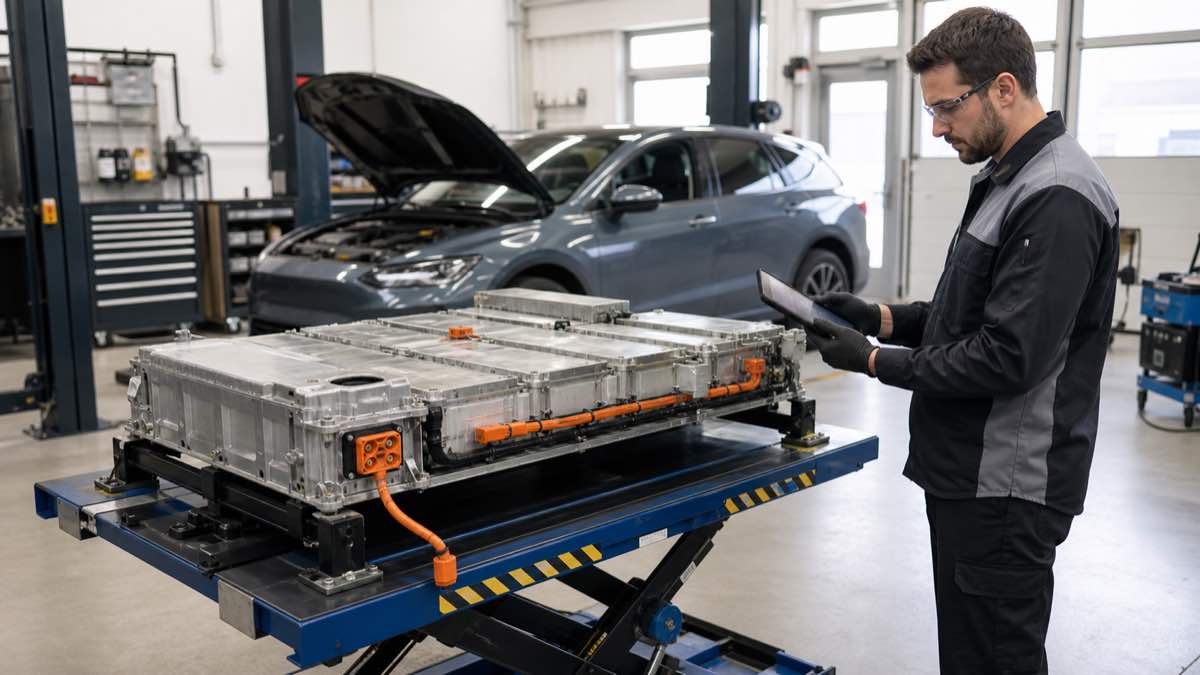
A hybrid battery replacement can cost several thousand dollars, but the number attached to an online estimate is not automatically the price for your car. The vehicle, battery design, labor procedure, part type, warranty, location, and even what the shop means by “battery” can change the quote dramatically.
As a current national reference, RepairPal estimated a $5,053 to $5,253 average for high-voltage hybrid battery replacement on June 18, 2026. Its estimate included about $4,626 in parts and $427 to $626 in labor, before taxes, fees, location adjustments, and related repairs. Some individual vehicles fall well below or above that range, so use it as a benchmark rather than a promise.
Hybrid Battery Replacement Cost at a Glance
| Cost item | Current reference | What can change it |
|---|---|---|
| National high-voltage battery replacement | $5,053-$5,253 | Vehicle, location, battery availability, shop, and related work |
| Parts portion | About $4,626 | New OEM, remanufactured, used, chemistry, capacity, and core charge |
| Labor portion | $427-$626 | Pack location, cooling-system service, programming, and labor rate |
| Taxes and fees | Not included | State, local rules, disposal, towing, diagnosis, and shop supplies |
These figures come from the RepairPal hybrid high-voltage battery estimator. Ask for a VIN-specific written quote before approving work. A generic web range cannot identify your battery part number, warranty eligibility, or whether replacement is actually required.
First, Confirm Which Battery the Quote Covers
Most hybrids have at least two batteries. The small 12-volt auxiliary battery powers computers, accessories, locks, and control systems. The much larger high-voltage traction battery stores energy for electric propulsion and regenerative braking. A 12-volt replacement may cost hundreds of dollars; a traction-pack replacement can cost thousands.
This distinction also prevents a common search mistake. A page advertising a low “battery replacement” price may describe the 12-volt battery rather than the hybrid pack. Likewise, a dashboard battery symbol often points to a charging-system problem, not proof that the traction battery has failed. See our battery light while driving guide for that warning.
Hybrid, plug-in hybrid, and battery-electric packs are not interchangeable cost categories. A plug-in hybrid usually carries a larger pack than a conventional hybrid, while a full EV pack is larger again. Even two trims of the same model may use different chemistry, capacity, cooling, connectors, software, or part numbers.
Why the Price Varies So Much
Vehicle and model year
Pack size, shape, cell chemistry, location, and production volume affect both part price and labor. RepairPal’s vehicle examples illustrate the spread: its listed averages include roughly $4,501-$4,694 for a Toyota Prius, $5,939-$6,139 for a Toyota Camry, $7,308-$7,496 for a Toyota Highlander, and $8,895-$9,128 for a Toyota Sienna. These are estimator values, not dealer quotes for every year.
Model year matters too. On the estimator’s Prius page, some recent model-year ranges differ by thousands of dollars. Never order a pack from the model name alone. The shop should confirm the VIN, build date, original part number, superseded number, battery chemistry, and required software procedures.
New, remanufactured, or used battery
A new original-equipment pack normally offers the clearest provenance and strongest manufacturer-backed option, but it is often the most expensive. A properly remanufactured pack can reduce the upfront bill, although quality depends on how cells are tested, matched, balanced, cooled, and warranted. “Reconditioned” is not one universal standard.
A used salvage pack may be cheaper, but calendar age, storage conditions, collision exposure, water damage, state of charge, and donor mileage matter. A low-mileage pack can still be old. Module-level repair replaces only a weak section; it may restore operation, yet unmatched aging modules can lead to another imbalance and another labor bill.
Labor, programming, cooling, and availability
Some packs are straightforward to access; others require interior trim, seats, underbody shielding, coolant procedures, lifting equipment, or extensive isolation checks. The repair may also involve clearing learned values, software setup, battery-cooling fan and duct cleaning, leak checks, or a road test with manufacturer-level scan data.
Regional labor rates and supply can move the total. Shipping a heavy hazardous component, collecting a refundable core charge, and returning the old pack all affect cash due at pickup. Ask whether the quote includes diagnosis, freight, core, tax, shop fees, coolant, programming, and disposal.
Do Not Replace the Pack Until the Diagnosis Is Proven
A hybrid warning message, reduced electric assistance, louder engine operation, lower fuel economy, or a trouble code can justify testing, but none independently proves the entire pack needs replacement. Battery temperature sensors, cooling fans, blocked air inlets, bus bars, wiring, isolation faults, software, the 12-volt battery, or another hybrid-system component can create overlapping symptoms.
A competent diagnosis starts with the customer’s symptom and a complete vehicle scan, not a code description alone. The technician may compare block voltages, internal resistance, state-of-charge behavior, temperature spread, isolation data, and performance under controlled load. Our check engine light guide explains why a stored code identifies a monitored condition rather than automatically naming the failed part.
Ask the shop to show the test results and explain why a full pack, module repair, cooling repair, wiring repair, or software step is recommended. If the quote is large and the car is stable enough to wait, a second opinion from a hybrid-qualified shop can be worthwhile.
Check Warranty Coverage Before Paying
Hybrid battery coverage varies by manufacturer, model year, vehicle type, original sale date, state, and warranty terms. Do not rely on a blanket internet claim that every hybrid receives the same federal or state coverage. Find the warranty booklet for the exact vehicle and ask a dealer to check the VIN and original in-service date.
For one manufacturer-specific example, Toyota states that the hybrid battery on its model-year 2020 and newer hybrid vehicles is covered for 10 years or 150,000 miles, whichever comes first, subject to warranty terms. Confirm eligibility through Toyota’s official electrified-vehicle warranty page and the vehicle’s documents rather than applying that term to another brand.
Ask whether coverage transfers to later owners, whether commercial use changes terms, and whether a diagnostic fee is refunded if the repair is covered. Also check recalls, service campaigns, emissions coverage where applicable, and prior replacement-part warranties. A previously replaced pack may have a different warranty from the original component.
Compare Replacement Options Carefully
| Option | Potential advantage | Main question to ask |
|---|---|---|
| New OEM pack | New components, exact application, manufacturer channel | What are the parts-and-labor warranty terms? |
| New aftermarket pack | May lower price or improve availability | Who manufactures it, and is capacity validated? |
| Remanufactured pack | Lower upfront cost | How are all modules tested, matched, and balanced? |
| Used salvage pack | Lowest initial price in some cases | What are donor age, mileage, history, test data, and warranty? |
| Module-level repair | Targets a limited failure | What is the risk of another aged module failing? |
Compare total installed cost over the period you expect to keep the vehicle. A cheaper pack with a short parts-only warranty can become expensive if it fails and you pay labor twice. A strong warranty should state duration, mileage, transferability, covered failure criteria, labor coverage, towing, exclusions, and who handles a claim if the installer closes.
What a Complete Written Quote Should Include
- VIN, model year, powertrain, battery part number, and battery chemistry where relevant.
- Whether the pack is new OEM, new aftermarket, remanufactured, used, or module-repaired.
- Parts price, labor hours and rate, diagnostic charge, taxes, fees, freight, and core deposit.
- Cooling fan, filter, duct, coolant, bus-bar, wiring, or connector work included.
- Programming, initialization, calibration, and post-repair scan or road test.
- Parts-and-labor warranty in writing, including mileage, exclusions, and transfer rules.
- Old-pack return, recycling, and what happens if the core is rejected.
- Estimated completion date and what additional work requires your approval.
Do not compare only the bold total at the bottom. Normalize each quote so the battery type, capacity, warranty, labor, core, and supporting service are equivalent. A quote that excludes a large refundable core is not directly comparable with one that includes it.
Can You Replace a Hybrid Battery Yourself?
High-voltage traction-battery replacement is not a routine DIY battery swap. Hybrid systems can retain dangerous voltage even when the vehicle is off. Orange cables, service disconnects, interlocks, insulated tools, personal protective equipment, isolation testing, lifting, and manufacturer procedures require specific training.
RepairPal also advises that high-voltage battery service is not recommended without proper training. Do not open the pack, probe high-voltage circuits, bypass an interlock, or assume pulling a service plug makes every component safe. Use a technician trained for the exact hybrid system. Owners can safely gather records, photograph warnings, check unobstructed cabin air inlets described in the manual, and obtain written quotes without dismantling anything.
Is Replacing the Battery Worth It on an Older Hybrid?
The answer is not simply “repair cost versus trade-in value.” First decide whether the rest of the vehicle is sound. Consider rust, collision damage, engine oil use, cooling-system condition, brakes, tires, suspension, air conditioning, warning lights, title history, and upcoming maintenance. A healthy paid-off car can justify a major repair even when its book value is modest.
Then compare the installed repair and warranty with the real cost of replacement transportation: purchase price, sales tax, registration, financing, insurance, immediate maintenance, and the uncertainty of another used vehicle. Also consider how long you intend to keep the hybrid and whether the repaired car fits your needs.
Walking away may make sense when the battery is one of several large unresolved problems, structural corrosion or collision damage compromises safety, or the required repair exceeds your budget without a useful warranty. Get an independent inspection before making that decision; urgency and fear are poor substitutes for a whole-car assessment.
What to Check When Buying a Used Hybrid
A cleared dashboard and a short test drive cannot establish battery health. Ask for service records, replacement invoices, warranty documents, the original in-service date, and evidence of flood or collision history. Confirm that the battery-cooling inlet is intact and unobstructed, but do not remove high-voltage covers.
Have a hybrid-qualified technician scan all relevant modules and review battery data under appropriate conditions. Check that readiness monitors and fault history make sense. Verify that every dashboard light illuminates during the normal self-test, then goes out as designed; our dashboard warning light guide can help identify the symbols.
No single “battery life percentage” is universal across brands. Ask what the test measures, under what load and temperature it was performed, and what limits the manufacturer uses. Calendar age, mileage, climate, thermal management, storage, and duty cycle all influence deterioration.
How to Reduce Avoidable Battery Stress
An owner cannot stop normal battery aging, but the cooling system should be allowed to work as designed. Keep the cabin air inlet identified in the owner’s manual clear of bags, pet hair, seat covers, and debris. Have a qualified shop inspect a noisy cooling fan or persistent battery-temperature concern. Do not spray cleaner into a vent or dismantle the pack.
Address cooling-system warnings, water intrusion, collision damage, and 12-volt electrical problems promptly. Use the vehicle regularly according to the manual and follow manufacturer instructions for long-term storage. Extreme heat can accelerate battery aging, but improvised cooling modifications may interfere with airflow, safety interlocks, or warranty coverage.
Signs That Do Not Prove the Battery Has Failed
Lower fuel economy deserves investigation, but tire pressure, weather, short trips, speed, heater or air-conditioner use, engine condition, brakes, and fuel can all affect mileage. A gasoline engine running more often may reflect temperature or cabin-heat demand rather than a dead pack. One changed display bar is not a laboratory capacity test.
Likewise, replacing the 12-volt battery, clearing codes, or disconnecting power can temporarily change displays and learned behavior. Record the exact message, mileage, temperature, driving conditions, and any recent work. Preserve trouble-code and freeze-frame data before anyone clears it. Good evidence prevents an expensive battery from being used as a diagnostic experiment.
Frequently Asked Questions
How much does a hybrid battery replacement cost in 2026?
RepairPal’s June 18, 2026 national estimate is $5,053-$5,253 for high-voltage hybrid battery replacement, including about $4,626 in parts and $427-$626 in labor. Taxes, fees, location, vehicle differences, and related repairs can change the final total.
Can I drive with a bad hybrid battery?
There is no universal safe-driving answer. Follow the owner’s manual for the exact warning. Reduced power, overheating, unusual odor, smoke, severe drivability problems, or a stop-vehicle message can require an immediate safe stop and tow. Have warning codes diagnosed rather than assuming the pack is bad.
Is a remanufactured hybrid battery worth buying?
It can be a reasonable lower-cost option when the supplier documents testing, module matching, balancing, capacity, and a meaningful parts-and-labor warranty. Compare expected ownership time and repeat-labor risk with a new pack, not price alone.
Does insurance cover hybrid battery replacement?
Ordinary wear or age-related capacity loss is generally a maintenance or mechanical issue, not an auto-insurance claim. Collision, fire, flood, or other covered events depend on the policy and investigation. Ask the insurer before authorizing event-related repairs.
How long does a hybrid battery last?
There is no accurate lifespan for every hybrid. Design, climate, age, mileage, cooling, storage, and use vary. Many packs last well beyond their basic warranty, while an individual pack can fail sooner. Test the actual vehicle instead of relying on a fixed-year rule.
Will replacing one module fix the battery?
It may restore a pack with a limited fault, but the remaining modules have the same age and may be mismatched after repair. Ask for before-and-after test data, balancing method, warranty, and the cost if another module fails.
Bottom Line
A realistic hybrid battery replacement budget begins with a VIN-specific diagnosis, not the cheapest online number. Use the current $5,053-$5,253 national estimate as context, then identify the exact battery, check manufacturer warranty coverage, compare equivalent new and remanufactured options, and demand a complete written quote. Keep high-voltage work with trained professionals. The best choice is the one that matches the car’s verified condition, the warranty behind the repair, and how long you plan to own it.